
It’s 2010. I’m wearing my backpack, ready to go to school, but my eyes are still stuck to our television. In just a few seconds, the Filipino pay-television channel, Myx will announce who won first place in the coveted segment, the Myx Daily Top 10. Breathing a sigh of contentment, I hear the first few notes of Taylor Swift’s ‘Back to December’.
In my younger years, it was hard to listen to the music I loved. MP3 players and official CDs of my favourite artists were not within my budget, so I would resort to voting via my phone for my favourite songs on Myx. It was this channel that aided my musical discovery and helped shape a musical culture at my school, with me and my friends discussing for hours on end what might top the charts the next day.
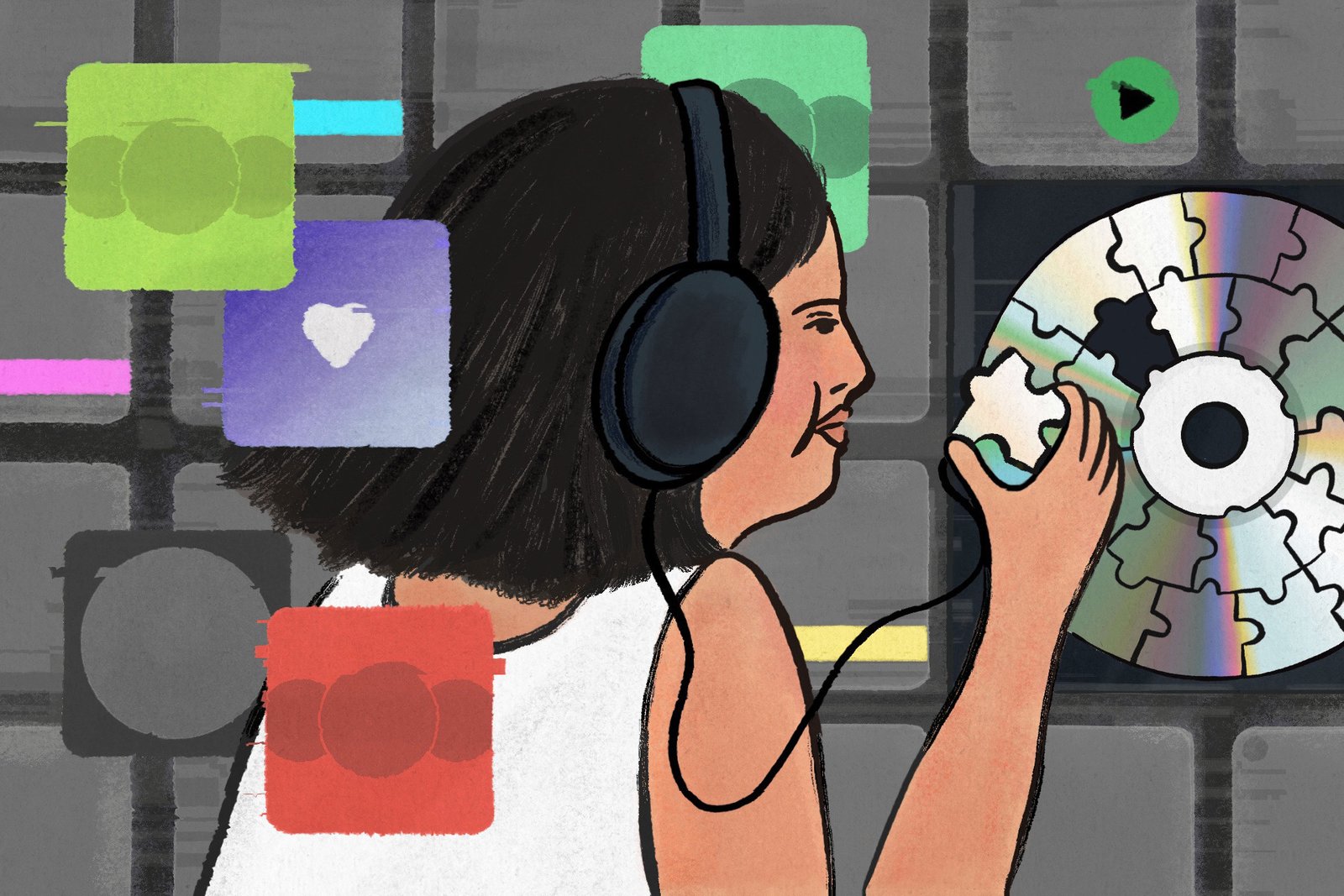
Myx is no longer easily accessed on my TV, and it seems that Filipinos are slowly forgetting about it. With the rise of music streaming platforms like Spotify and Apple Music, choosing what you listen to has moved far beyond sending a text, with millions of songs instantly at your fingertips. However, this convenience comes at a cost.
Unwrapping Spotify’s pitfalls
It has long been reported that Spotify does not fairly compensate their artists, with their payouts typically falling between $0.003 and $0.005 per stream.
Recent reports might trick you into thinking that this is changing. In 2025, Spotify reportedly paid out more than $11 billion to the music industry—marking its largest annual payout. However, an article by Variety pointed out the loopholes, noting that the vast majority of this sum goes to rights-holders rather than the artists themselves.
And it goes beyond low pay. It’s been widely reported that Spotify repeatedly commissions “ghost artists” to replicate popular sounds to avoid paying royalties, as well as promoting AI-generated artists and tracks. With the wider ethical debates surrounding music and AI developing, such as the AI cloning of the late Mexican-American singer Selena Quintanilla or the emergence of fake far-right rappers on the platform, it seems there’s never been a better time to switch.
And obviously, these concerns go far beyond the musical community. Spotify invests in Helsing, a company which operates AI military drones and surveillance tech. The platform has also generated revenue from ICE recruitment ads, encouraging U.S. listeners to “fulfil your mission to protect America.”
Like so many others, my Spotify playlists have been my partner while catching up on deadlines and surviving commutes. Despite this familiarity, these revelations are hard to ignore and make me question what we can do and where alternatives might be.
Community-owned platforms
After finding out that Apple Music wasn’t ethically superior and Qobuz, a music streaming platform with much higher payout rates, was not yet available in the Philippines, I widened my search and stumbled upon community-owned streaming alternatives.
An initiative by the New Orleans Public Library, Crescent City Sounds is a free listening platform that features local artists from New Orleans. I was eager to speak with the Adult Programming Associate of Crescent City Sounds, Joshua Smith, about how they’re helping the musical community in New Orleans.
“Not-for-profit streaming platforms can be of benefit for listeners and musicians alike,” Joshua says. “The main benefit is the level of curation on a smaller platform; it provides listeners with a cohort of music that is of a known quality, taking out some of the guesswork of finding new music in our modern landscape, and it benefits the artist because the listener knows they can trust the quality of the artists in the collection.”
It seems that platforms like these still offer the curation services of larger streaming giants, potentially in a more nuanced and locally informed way, while still fostering a genuine connection between artists and listeners. The more attention these platforms receive, the more they can grow in scale.
Crescent City Sounds pays featured artists a $250 honourarium, which would take around 62,500 streams on Spotify. Like any other streaming platform, it can be accessed anywhere in the world for free. They also make it easy for listeners to find and engage with local indie musicians based in New Orleans, which is something that bigger platforms are not well suited to.
“One of the most rewarding aspects of this project is seeing artists from the platform show up at venues around the city, on the same stage with other artists from the collection,” Joshua added, highlighting how representative Crescent is of the local scene. He also explains that this has gone one step further, with one of their hosted artists, Paul Faith and the Barstool Prophets, who run a regular songwriter night, using Crescent City Sounds to find other artists to showcase. “It is just nice to see artists making connections with each other and performing together.”
What this looks like in the Philippines
Filipinos are often stereotyped as good singers. In every corner of the country, you can find a person humming the late 90s classic, ‘Ang Huling El Bimbo’ by Eraserheads; a man singing Freddie Aguilar’s ‘Anak’ after a few too many drinks; or an aspiring musician composing their first Filipino song. Yet, Original Pilipino Music (OPM) in the Philippines is still often ignored by the community, with an internalised colonial mentality leading to a preference for Western music.
This is something I’ve been guilty of in the past, and while global recognition for Filipino music is growing (did anyone else see BINI at Coachella?), I was so inspired by the work of Crescent and how it supports homegrown scenes, I started to search for a similar model in the Philippines. Fortunately, I found Manila Community Radio, an independent and not-for-profit online radio station.
Manila Community Radio encourages curation and music discovery through their platform. They welcome all kinds of genres, from hip-hop to house, and an article by VICE described the music on their platform to be ‘anti-algorithmic’ – the lack of ‘suggested tracks’ offering audiences a chance to discover music on their own. Listeners can explore singers and DJ sets on the YouTube channel or discover older shows through the artist catalogue on their website, helping to foster a self-sustaining music scene which encourages Filipino listeners to look to homegrown talent to satisfy their music cravings.

“Platforming under-represented artists through an independent radio will hopefully encourage more artists to get themselves out there and archive their art,” Jacob Mendoza, a Manila Community Radio volunteer, tells me over email. “We hope to maintain this support by not forcing artists to play a certain style or genre for their shows.”
This artist appreciation couldn’t be further away from the model engineered by Spotify and shows distinct care not just for the artists on the platform at present but also for the future of the scene as a whole. Which, in the Philippines, is woefully under-supported.
Is ethical consumption possible in capitalism?
Growing up, I’ve watched some of my aspiring musician friends almost give up on their dreams because the arts are still widely deemed to be an impractical career path. In a survey conducted with over 700 respondents, more than half of Filipinos involved in the music industry earn less than the minimum wage required to live in the National Capital Region. The arts receive little to no fund support from the government, and because of this, Philippine music venues are struggling to survive in the music scene.
Join our mailing list
Sign up for shado's picks of the week! Dropping in your inbox every Friday, we share news from inside shado + out, plus job listings, event recommendations and actions ✊
Sign up for shado's picks of the week! Dropping in your inbox every Friday, we share news from inside shado + out, plus job listings, event recommendations and actions ✊
Long gone are the assumptions that streaming services like Spotify offer a supportive environment to independent artists like my musician friends. Alternative community-driven platforms like Manila Community Radio and Crescent City Sounds, however, focus on active participation rather than passive consumption in music. This allows a supportive community that gives artists full autonomy over their music. Grassroots music platforms also often lack connections to exploitative capital systems that frequently treat consumers as assets for covert agendas.
While divesting from music listening services may seem like a hassle, the perfect alternative to Spotify won’t appear without active user engagement. We have already seen great change in the music industry through boycotts like Artists United Against Apartheid in 1985 or the recent No Music For Genocide initiative, where labels and artists have blocked their music from being streamed in Israel. Boycotts like these prove that consumers are more than just fans but have power in holding companies like Spotify to account.
During my time writing this story and talking to community-owned streaming platforms, I have come to understand the power of placing community at the centre of our music streaming and what’s at risk if we prize convenience over our moral values. If we cared more about protecting the rights of artists, supporting homegrown scenes and aligning our virtues with our actions, how we listen to music becomes about much more than what streaming platform we use. Listening to music has always been political, after all.
What can you do?
- Support artists & labels who joined No Music For Genocide
- Listen, watch livestreams, and vote songs on Myx Global
- Listen and discover independent Filipino artists and DJs on Manila Community Radio
- Discover New Orleans-based artists on Crescent City Sounds
- Read this excerpt of Mood Machine: The Rise of Spotify and the Costs of the Perfect Playlist by Liz Pelly
- Read this feature AI: Friend or foe
- Read more articles from shado’s HEAR section
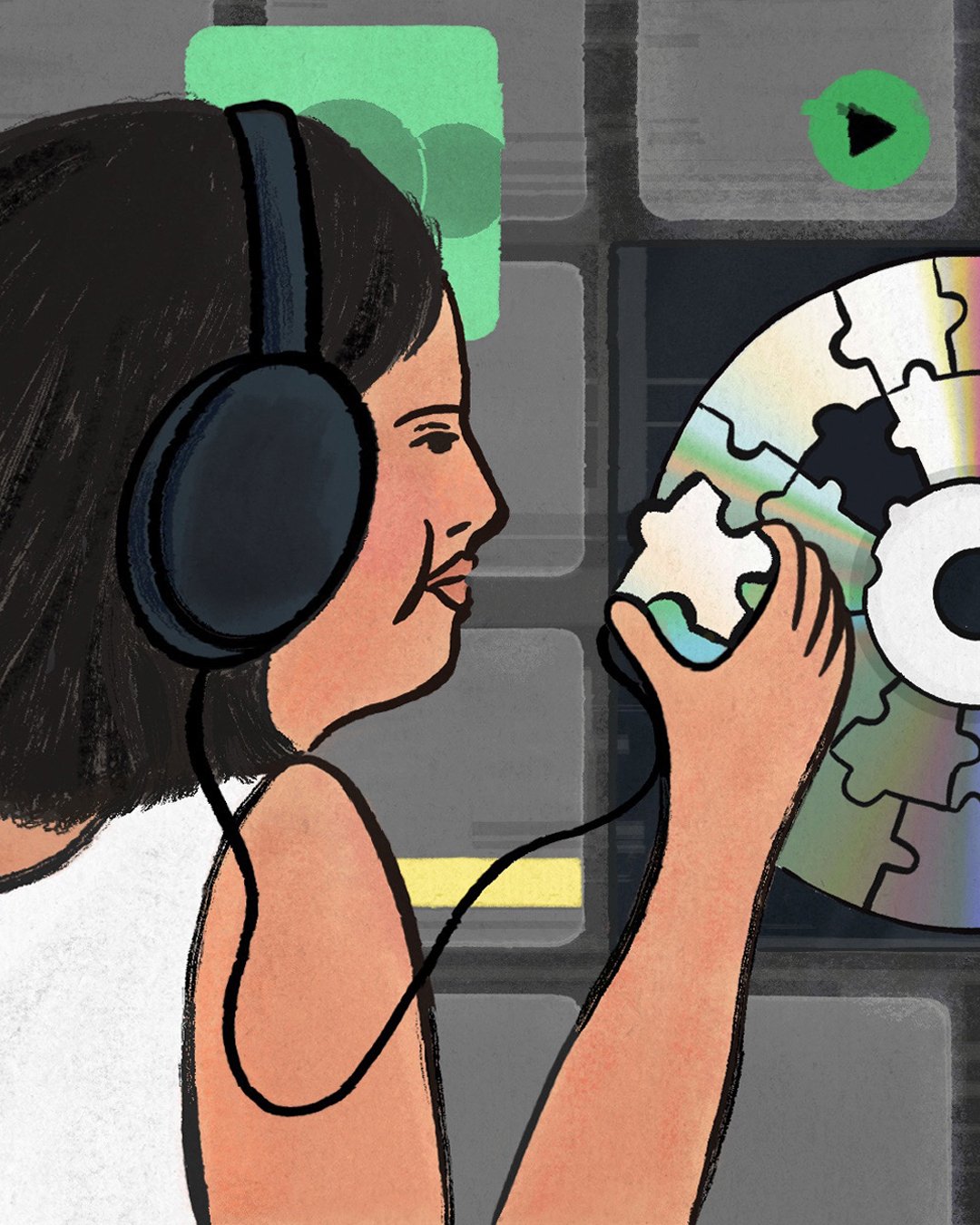 Illustration by Janice Susanto