
This week, I picked up a copy of The Mirror which someone had left on the bus. I immediately noticed their small ‘In Brief’ update at the bottom of one of the pages, which read: “asylum seeker tore up war memorial wreaths.’ The framing of this story reveals the everyday decision making that goes into the editorial room of British newspapers. More specifically, it speaks to an obsession with painting everything in racial terms, even when, or especially when, race is irrelevant.
This is what that story is really about. The way The Mirror covers it would lead anyone to think that this man’s asylum seeking status was relevant to his decision to tear up war memorial wreaths, and yet the very first paragraph starts with ‘A DRUNK asylum seeker sparked outrage.’ A drunken man did property damage. That’s the story. Nothing about his origins is relevant in the story itself, but The Mirror decided to centre them nonetheless as they concluded that this would capture people’s attention.
It certainly worked on me. I probably wouldn’t have read a story about a drunken man doing property damage. Anyone who has spent any time in the UK knows that drunkenness is a real, nationwide problem. If anything, this man seems to have well-integrated into British culture, and anyone who doubts that should pay attention to a good chunk of our pubs and restaurants before, during and after any England or Scotland match in the FIFA World Cup.
Media framing
The Mirror’s decision is a common one in the UK, and it is profoundly dangerous. What it is leading up to is nothing short of the expansion and worsening of racist riots and pogroms as we’ve recently seen in both Southampton and Belfast.
Violence committed by racialised people against white people is immediately framed in civilisation terms because those are the terms that have been in circulation the longest and most visibly. Violence committed by white people against racialised people is not framed that way because the presumption remains that ‘our civilisation’ is the default, the norm – and it is certainly superior.
That drunkenness is a real problem for many people in this country, especially men, is inconceivable in this story. Framing it that way would not only humanise this one individual when the intent is to dehumanise him, but it risks also creating a link between him and his new country, and therefore risks making his race irrelevant.
Doing so would also invite questions about racism in the British press, questions such as “why is a person’s race or origins relevant when the story has nothing to do with either race or origins?” Such questions require a culture of accountability, however, which barely exists in the UK.
Add to that the desire by centrists to ‘understand’ racists without centering the experience of their victims and we find ourselves in a rapid mainstreaming of white supremacy promoted throughout British political culture.
Even among a self-identified anti-racist culture – even Reform voters do not say they are racists – there is still a noticeable lack of urgency to view the Far Right as an existential threat, particularly among its white population.
It’s not that most white people suddenly started liking Reform or Farage, or started paying attention to Stephen Christopher Yaxley-Lennon (who goes by Tommy Robinson to sound less upper-class). It’s that most white people still do not understand how dangerous the far right is because they aren’t its first targets. Unless you’re trans, of course, in which case you’re well aware of how dangerous they are.
When Ulster University professor Luqman Saeed heard the news, his wife expressed “a hope that would sound deeply disturbing in normal circumstances (but we do not live in normal circumstances): that the victim was not white.” I recognise this instinct as it’s one I’ve had my whole life as well. Whenever something horrible like this happens, a number of my Signal groups lights up with people expressing hope that the attacker is white. It is a profoundly messed up kind of hope, but it’s a reality nonetheless. Saeed’s partner knew that if the victim was non-white, it would not become a national controversy because this nation does not stop in its tracks for non-white lives. Case in point: On 11th June 2026, a masked man firebombed the home of a Bolton imam while his four children, wife and nephew were inside, and this barely made the news. As of the time of writing, the prime minister has not said anything.
This reminds me of the attacks on the Peacehaven mosque on 6th October 2025 when two masked men firebombed it while two worshippers were inside. I went there the next day to get a sense of things, and I left feeling uneasy. Media coverage was minimal, and the political response as indifferent. Keir Starmer only visited the mosque 17 days later. Speaking to local activists, I got the sense that they were worried that Far Right hatemongering has already been mainstreamed in the UK. This was, I should note, shortly after the fascist-led “Operation Raise the Colours” which continues to haunt British politics today, with Belfast and Bolton only the most recent manifestations.
Similarly, when the attacker is white we are not bombarded with civilisational discourses about the inability of white people to integrate in British culture, a culture which is presumed to be exclusively white. This is why, as Deputy Leader of the Alliance Party Eóin Tennyson recently reminded us, the brutal stabbing of Natalie McNally in December 2022 by her boyfriend Stephen McCullagh (who was convicted in March 2026) did not lead any self-described “patriot” to take to the streets in the name of “protecting women and children.”
Saeed’s partner knew what anyone who looks a certain way in the UK in the year 2026 knows: a percentage of the white population wants us gone or dead, and an even larger percentage is willing to vote for parties like Reform that have promised to set up what are essentially concentration camps for undesirables.
The case of Belfast
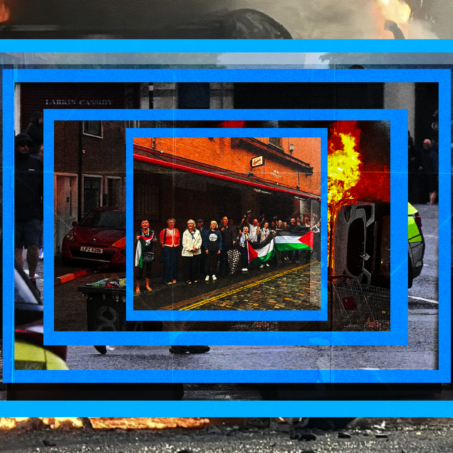
Just look at Belfast. Fascists torching buildings and cars are dangerous to everyone regardless of race, but Belfast’s Sudanese population still had “to leave work early – and many aren’t venturing out of their homes” because any racialised person anywhere near fascist riots is aware that their physical safety and that of their loved ones is at immediate risk.
The pogroms were apparently triggered, we are told, by a Sudanese man’s attempted murder of a white man, and yet the Northern Ireland Indian Nurses Forum reported its members were too “frightened and distressed” to go to work (much of this country’s core infrastructure such as healthcare is being supported by immigrants.) A Black father of three who has lived in east Belfast for 13 years had to first see if the streets were safe enough to take his kids to school, as the racist riots made their way to his street and set a bus on fire near his flat. The Indian driver of one of the torched buses said he was “traumatised” by what happened.
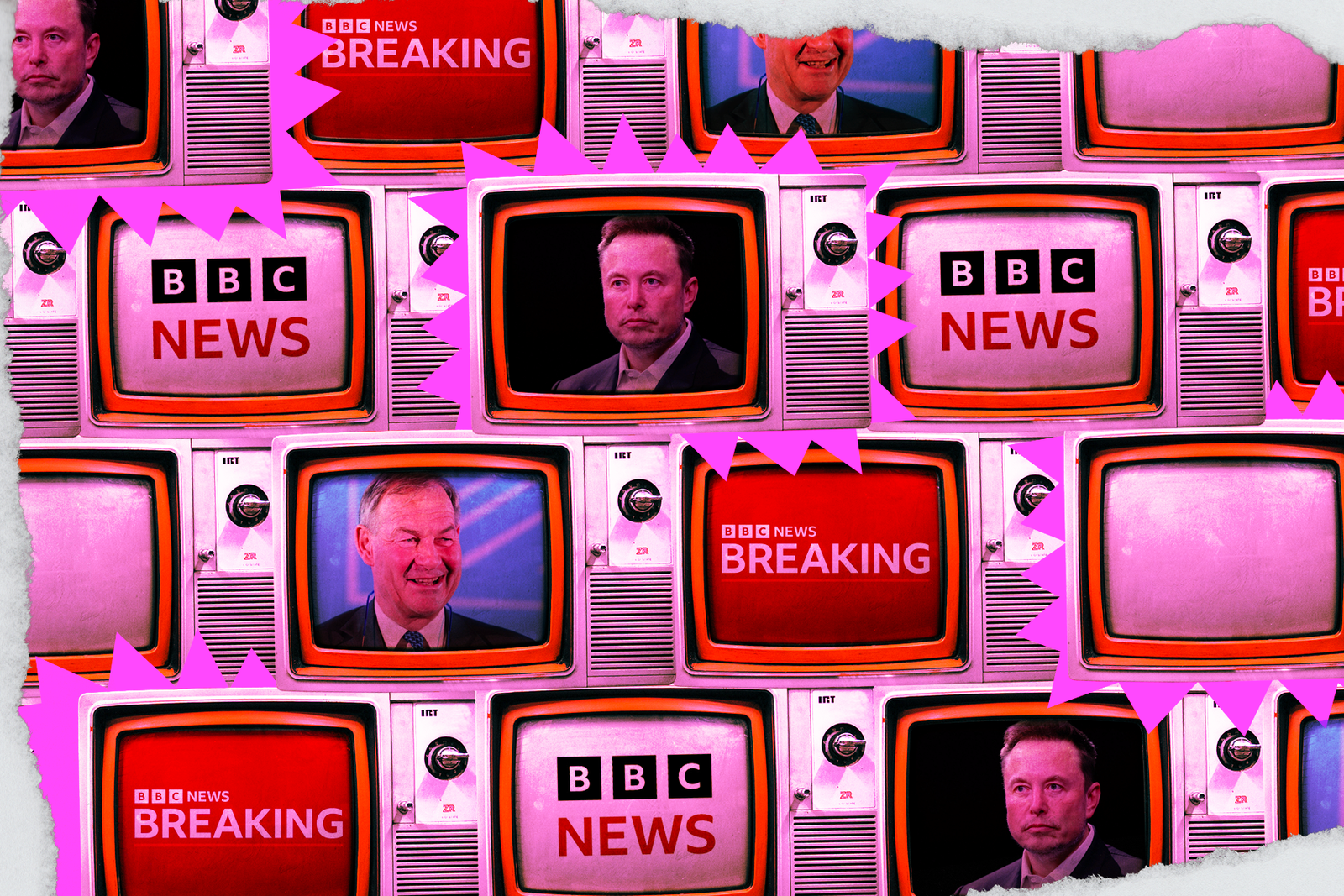
Hours before the worst violence occurred, The World At One – BBC Radio 4’s long-running lunchtime news and current affairs radio programme – decided to read out Rupert Lowe’s posts at the start of their bulletin. This despite the fact that Lowe’s fascist party, Restore Britain, polls at about 3% today. Someone at the BBC made the decision to centre one of the most extreme figures in British politics at a time when racists were openly calling for blood. This, like with the case of The Mirror, was an editorial decision.
Later, Lowe called for prosecuting politicians who “knowingly placed dangerous third world savages in our community” on X, a post that was shared by Elon Musk who added “this is the way.” Just like that, a minor political figure was boosted by both the BBC and the world’s richest man who has been using his ownership of X to spread White nationalist politics. And yet, the UK government under Labour continues to use Musk’s platform for crucial communication, giving a White nationalist platform respectable status.
Legacies of the British state in Northern Ireland
There’s a generalised attitude towards unrest and violence in Northern Ireland as something predictable. And this isn’t unfounded – sectarian violence, annual marching season tensions, and the legacy of paramilitary structures have made sporadic disorder a feature of life there for decades.
I spoke with Belfast writer Lee Hurley, who puts it bluntly: “What we saw on the streets of Belfast, and beyond, was more racism and thuggery from groups who have terrorised this country my entire life. 27 people, including children, were left homeless for no reason other than the colour of their skin. It is terrorism.”
Join our mailing list
Sign up for shado's picks of the week! Dropping in your inbox every Friday, we share news from inside shado + out, plus job listings, event recommendations and actions ✊
Sign up for shado's picks of the week! Dropping in your inbox every Friday, we share news from inside shado + out, plus job listings, event recommendations and actions ✊
Lee is clear-eyed about where responsibility lies. “People are quick to point out that this sort of thing happens every year in Northern Ireland,” he tells me. “To me, that only shows that those in power have had years to sort it out, and have chosen, at best, to do nothing. Others choose regularly to make it worse.”
He points to a damning disparity in enforcement: “On average, one in three rioters in England were arrested. In Northern Ireland, that figure stands at one in 12. Why?”
Harsha Walia gives us an answer to this. “This is the third year that anti-migrant violence has spread from Belfast to Ballymena, coordinated by far-right Loyalist organisations and Loyalist paramilitaries (who literally exist to back British rule, and are recognised paramilitary structures) who hunt migrants including by detecting and tracking migrant housing and residences.” Loyalists and their political inheritors have operated with effective impunity in Northern Ireland for decades, as the state has historically treated loyalist violence as less threatening than republican violence.
The mobs burning out Sudanese families in east Belfast are the inheritors of a tradition that the British state has never fully confronted, because doing so would require confronting its own role in creating and sustaining it.
This is why “peace” in Northern Ireland has always been an incomplete project. As Lee puts it: “Peace is a process. It stalled in Northern Ireland a long time ago and few seem to have the will to restart it properly. Until the politics of Green and Orange are ended, nothing will change.”
Ultimately, this goes back to the lack of accountability in this country. Those who took part in the August 2024 racist pogrom in Belfast had been allowed to drive the discourse that this crisis is, at least in part, by their desire to “protect our women and children.” Harsha Walia notes that “the most dangerous threats that Loyalist paramilitaries pose is anti-migrant vigilante violence and femicide in the occupied six counties – and these are of course linked violences.” Indeed, in the time that has passed since then, 12 of the 49 people arrested for taking part in the 2024 pogrom were reported for domestic abuse.
Nationwide, it’s even starker: “41% of 899 people arrested for taking part in the violent disorder [in summer 2024] had been reported for crimes associated with intimate partner violence.” This hasn’t changed the dominant media discourse about them. Their actions are still framed as perhaps extreme, but understandable, as rooted in real concerns over immigrants, which implies that there is something particularly dangerous about immigrants.
Meanwhile, the victim’s own family expressed “feeling disgusted” by the racist attacks and told rioters to “not do this in the name of our loved one as we do not share the same values.” This hasn’t discouraged pogromists from making at least 27 people homeless, people who had nothing to do with the attack. We saw the same take place after the Southampton attack last week, with the victim’s family explicitly saying they do not “want his death to be used to create further division, hatred or tension.”
And while the families of victims reject violence and the statistics expose the falsehood of the “protector” narrative, the infrastructure for pogroms against racialised communities continues to grow. The cycle continues not because it’s inevitable, but because anyone with the power to break it has made the active choice not to. Appeasing this will only make it worse.
What can you do?
-
- Support Anaka Collective’s fundraiser for victims of the racist pogroms in Belfast
- Read Luqman Saeed’s testimony from Belfast
- Read Bobby Sands’ poem for Anwar Ditta
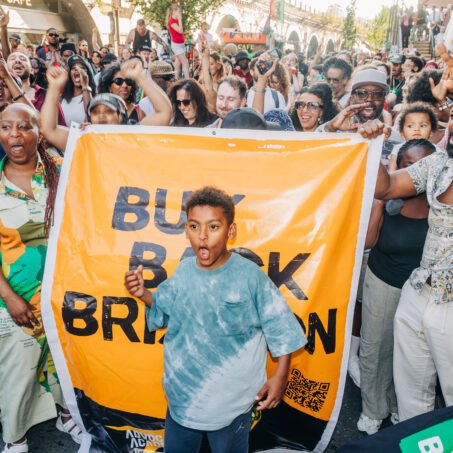
- If you’re around Brighton, join the upcoming carnival against fascism.
- Read more of Elia’s pieces
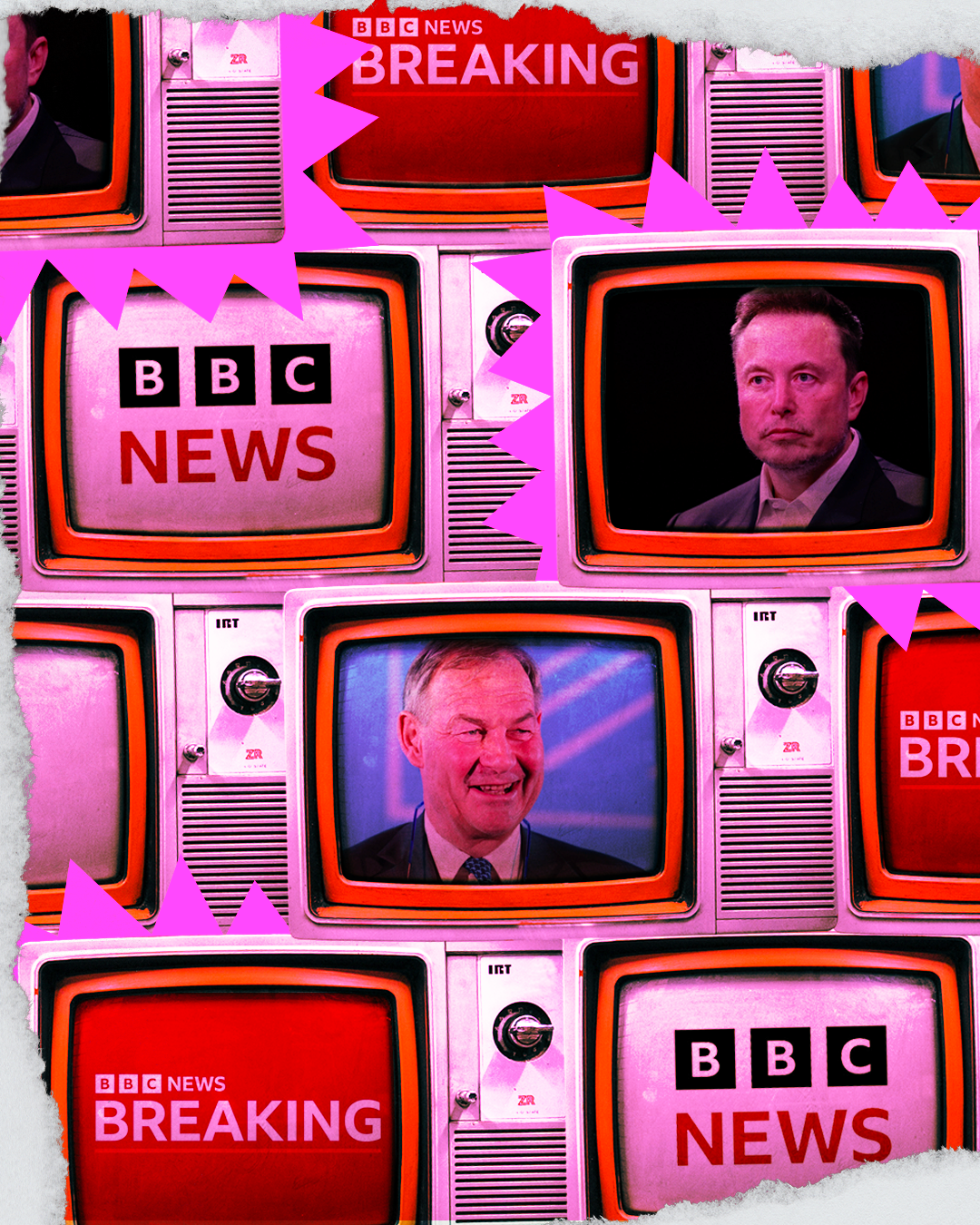 Illustration by Alex Francis @alexefrancis