
In an era of mass confusion and relentless attacks on human rights, imagining the future can feel incredibly daunting. There’s a collective angst vibrating through us all – a desperate questioning of who to trust and how to build a world worth staying alive for. We are all being called to sit in this discomfort, examine it with resilient eyes, and not allow it to consume us.
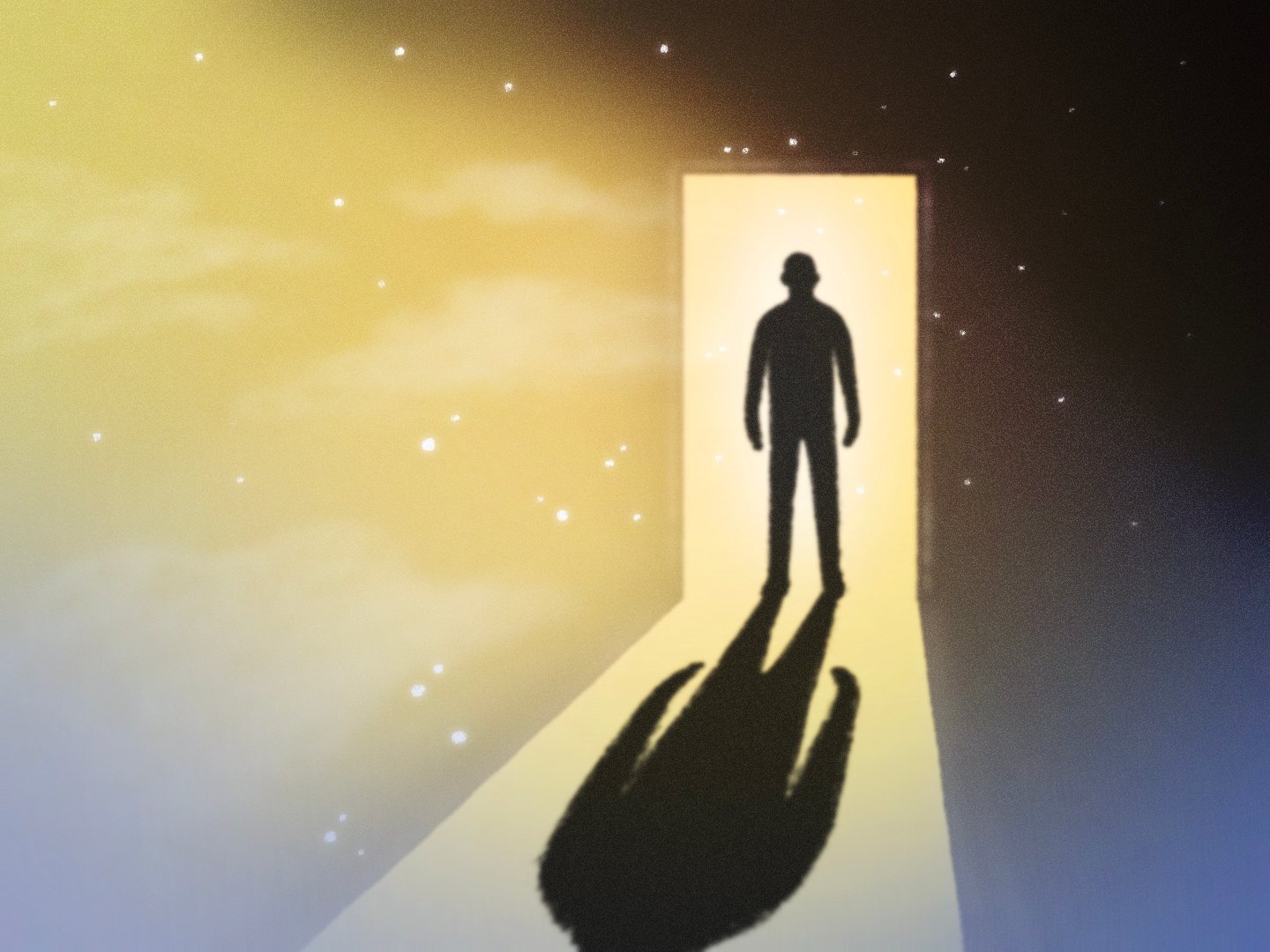
I see this moment as a critical pivot in the cycle of history (because if history does one thing, it repeats). Before anything is reborn, something else has to die. Rebirth is painful, scary, and lonely, if you let it be. But it’s also an open door, a place where new possibilities breathe life into the spaces where the old no longer fits.
For many of us raised within the walls of a church or place of worship, our earliest lessons about the future were filtered through the prism of the divine. Often, the most effective way to deliver this message was through varying degrees of fearmongering.
For my younger self, faith was a source of both comfort and turmoil. The future was a matter of being judged for good deeds, or punished for disobedience. Today, I see that same fear driving how people navigate the unknown. We are watching a retreat into the unseen that feels less like a spiritual awakening and more like a warning sign.
The anatomy of the rot
Earlier this year, I went to watch 28 Years Later: The Bone Temple. It’s the most recent offering of a multi-film franchise which began with 28 Days Later (2002), a film chronicling humanity’s speedy decline after a scientific experiment turns to a global catastrophe. A zombie virus spreads through the UK, terrorising the unknowing and whipping people into an army of enraged animalistic beasts. The film’s follow-ups map just how insistent the rot of the zombie apocalypse is.
When in the belly of a crisis, there are interesting dynamics that emerge from the cesspool. Some are instant sceptics, tied diligently to the cross of refusal to commit to a single opinion. Others revel in the chaos of the crisis, seeking the opportunity to exploit others’ fear and make gods of themselves.
The Bone Temple serves as more than a morbid set piece. It is the physical manifestation of a new, perverted liturgy. While the original film focused on the frantic survival of the secular state, The Bone Temple illustrates a shift toward the integration of the virus itself.
The antagonist is named Sir Lord Jimmy Crystal, a power-hungry cult leader who proclaims to be the son of Satan himself. He doesn’t just seek power in the traditional sense but positions himself as a high priest (or indeed, a deity) ruling over the ‘cleansed’ remains of the old world.
By framing the infection as divine intervention rather than a biological fluke, the franchise mirrors the fascist tendency to find “God” in the wreckage of a crisis, transforming the mindless rage of the radicalised into a holy crusade. An example that comes to mind is Italian dictator Benito Mussolini’s heavy dependence on religious terminology as he constructed the fascist political movement. Supporters of his regime were “believers and worshippers”, while its leaders were “prophets and saints”.
Within fascism, a minority will typically begin naming the crisis for the threat that it is and forming a movement of resistance. The vast majority find ways to adapt, normalise the problem, and turn a blind eye to the thickness of its debris. In The Bone Temple, we see just how these dynamics play out when the stakes have never been higher. The film successfully posits the zombies as “a metaphor for post-rabbit-hole radicalised right-wing extremism,” and the post-zombie world as a stage for the circus of fascism to do its most audacious dance.
The stages of a fascist takeover
We often imagine fascism as a sudden, door-kicking takeover where our rights exist one day and are completely gone the next, but the reality is far more strategic. It doesn’t just arrive and demand consensus. Rather, it colonises the gaps left by our own disillusionment. Right now, multiple governments across the world are showing early signs of fascist decline, where the freedoms promised by democracy are slowly dissipating.
How does this all pan out? According to the Council of Foreign Relations, there are five stages of a fascist takeover:
- Emerging out of disillusionment
- Establishing legitimacy as a political party
- Gaining power via right-wing partnerships
- Using power to dominate institutions
- Implementing radical reforms
It is a five-act play of incremental surrender: our collective exhaustion creates fertile ground for exploitation in a process that relies entirely on the manufacture of a specific kind of mob mentality. For the virus to spread, it needs a host of blind spots, failures, and deliberate oversights. It feeds on the confusion and mistrust that keep us siloed.
In her 1995 Howard University address “Racism and Fascism,” Toni Morrison holds a microscope to the insidious nature of moral decline in the face of political brainwashing. “In 1995 racism may wear a new dress, buy a new pair of boots, but neither it nor its succubus twin fascism is new or can make anything new,” she says. “It can only reproduce the environment that supports its own health: fear, denial and an atmosphere in which its victims have lost the will to fight.” Her words ring painfully true today.
Fascism, and the fists that weld it, are stunted by an inability to evolve, adapt or create the means necessary to grow. The ideologies that sustain such social and political decline are rotting in their own repetitive cynicism. Still, fascism remains one of the biggest threats to social cohesion today. We’re afraid of what we can’t see, can’t prove and can’t know without a shadow of a doubt.
The irony of fascist decline is that we can see, touch, hear and perceive its effects while it simultaneously gets sanitised by the promise of something we most certainly cannot see: God’s redemption.
In search of solid ground
In today’s age, attention is the hottest commodity and the most lucrative currency. 15-30 year olds participate in the economy of attention the most. When our internal worlds are dictated by a constant drip of doom, we may begin to believe that is all there is. What’s more, when a specific ‘solution’ is force-fed to us, we grow too docile to notice its poison. This sinister process is supported by the very same fertile ground that Toni Morrison named over 20 years ago: one where fear, denial and apathy are mined like gold and sold back to us as necessities.
I’d like to think of myself as a strong-willed, stubborn, unfuckwithable gen-Zer. I also like to think of myself as messy, slightly contradictory and teachable. I contain multitudes that are as inconvenient as they are human. I am just as susceptible to the conditions described by Toni Morrison, where fear is manufactured with meticulous consistency, and everyone (including self-proclaimed unfuckwithable gen-Zer’s) are rendered vulnerable.
Nowadays, young people are born into a “liquid” landscape where the traditional anchors of life have largely evaporated. Stable career paths, lifelong communal ties and clear-cut social expectations appear to be emblems of the past. Unlike previous generations who might have followed a predictable script, today’s youth face a hyper-competitive global economy and a digital world that offers an overwhelming, often contradictory, buffet of moral choices.
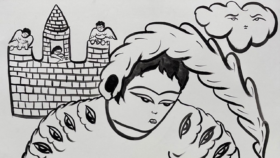
From a decolonial perspective, this instability is not an accidental byproduct of progress, but a deliberate feature of racial capitalism. For myself as a Black South African and many young people in the Global South (and within marginalised communities in the Global North), this precariousness is an extension of colonial logic that views certain bodies as inherently disposable.
Join our mailing list
Sign up for shado's picks of the week! Dropping in your inbox every Friday, we share news from inside shado + out, plus job listings, event recommendations and actions ✊
Sign up for shado's picks of the week! Dropping in your inbox every Friday, we share news from inside shado + out, plus job listings, event recommendations and actions ✊
In this sense, the increase in a specific, nationalistic religiosity is an attempt to re-colonise the social imagination. It recruits young people into a project of safeguarding that is predicated on the surveillance and policing of those who exist outside the narrow boundaries of ‘the faithful’ or ‘the citizen’. Fascism promises a rock to stand on, even if that rock is a gravestone.
Young people are particularly sensitive to the sudden nature of narrative control because we have direct access to the machine that drives it. In this landscape, social media performs as a church. We return to hear its message each day, like a sermon stuck on repeat. Our thoughts, opinions and values are no longer forged in the fires of community, but are shaped by algorithms and complex learning systems fuelled by trends, metadata and constant surveillance.
A different kind of “come to Jesus” moment
While the fascist project relies on us turning a blind eye to the stripping of our autonomy, Black feminist movements have historically provided the blueprint for staring the monster in the face. These movements prove that the antidote to a ‘liquid’ landscape isn’t rigid fundamentalism, but the courageous, resource-backed solidarity of those who have always had the most to lose. If we are to survive this era, we do need faith to imagine our way out of fascism. We need a faith rooted in radical imagination: the unwavering belief that the current world is not inevitable.
What does it mean to take back our lives from these vicious, exploitative cycles? It begins with refusing the idea that we are inherently broken or sinful, refusing the transactional nature of “prosperity” gospels that mirror capitalist exploitation and refusing the isolation, anger and dehumanisation that fascism requires to thrive.
Fascism wins when we are too paralysed by the idea of the end of the world to build the world that comes next. To be proactive is to move from a state of reaction to a state of creation.
In our communities, we have to start by differentiating between genuine religious belief and the cynical manipulation of religious talking points by authoritarian leaders. When we replace the desperate need for a singular saviour with the solidarity of the collective through mutual aid, we begin to build real communal power. This allows us to act without fear, taking a stand against the mind-numbing cycles of fear-mongering by rejecting the very propaganda that breeds it. It requires a sense of proactive intentionality (a refusal to be passive observers in our own lives) by becoming active participants in the politics we want to embody and aligning ourselves with the anti-fascist organisers already doing the work in our communities.
This is our “Come to Jesus” moment. Not a return to the pews of a fear-mongering institution, but a return to the altar of our collective survival. We must choose to be the architects of our own liberation, or we will continue to be the fuel for someone else’s empire.
What can you do?
- Support theBlack Feminist Fund to align with the work of Black feminists pushing back against authoritarian control
- Read Female Fear Factory by Pumla Dineo Gqola to learn about cultures of patriarchal violence that are perpetuated across the globe to manufacture a constant state of fear in women and genderqueer people.
- Prioritise independent, reliable news sources such as:Prism Reports,It’s Going Down (IGD) and Truthout
- Tap into the organisational efforts happening in your communities
- Practice joy as resistance in your daily life. Lean into faith that doesn’t require fear to thrive (whether religious or not)
- Read Sisanda’s other pieces here
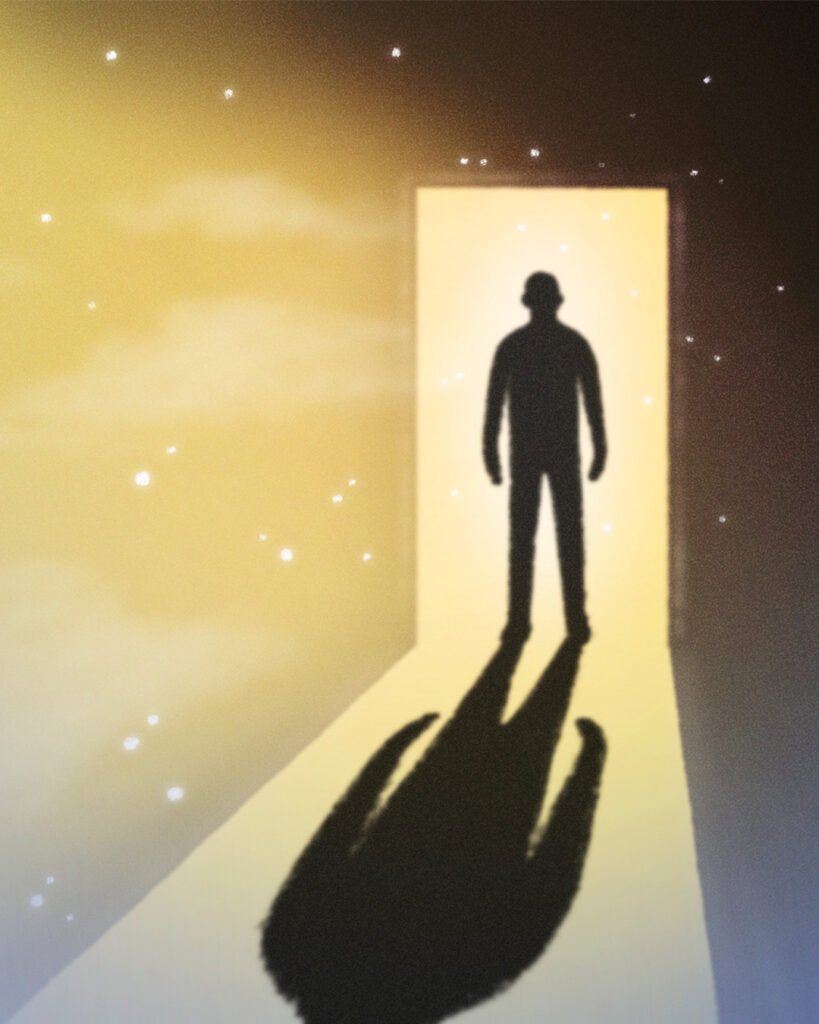 Illustration by @nadiaakingbule