
During Berlin’s hottest weekend of the year, I was sexually harassed twice in less than 24 hours.
The first incident happened at a public swimming lake, surrounded by families and children. I remember thinking, surely nothing can happen to me here. There I was, in the middle of a dangerously hot Friday, simply trying to cool down and enjoy a day to myself, something of a rarity these days. Instead, an older man followed me around the lake and into the water before moving his belongings right next to me.
He repeatedly asked to kiss me and stared at my body as I lay in the sun. The worst part wasn’t just his behaviour, but the whispers around me as people watched him increasingly violate my space and my boundaries. Nobody came over to offer me a place to sit. Nobody checked if I was okay. Nobody told him to leave me alone.
In a frenzy, I gathered my things and fled, checking over my shoulder the whole way to make sure he wasn’t following me out of the lake. As I cycled home, the weight of what had just happened began to sink in, and an all-too-familiar feeling settled in my stomach. I was scared.
Two incidents, two days
The following morning, in an attempt to shake off the previous day, I decided to go for a walk in my local park. I grabbed a coffee, a familiar grounding ritual, before settling down to prepare for an important artist interview I had later that afternoon – the biggest interview of my career to date. Before taking off any of my clothes in the heat, I instinctively scanned the park for anyone who made me feel uncomfortable.
I made the calculation that I was safe. Once again, I was wrong.
At one point, I remember feeling a shift and noticed people leaving the park. You’re being paranoid after yesterday, I thought to myself. Then, halfway through my interview notes, a woman ran over to me. “Don’t look behind you,” she said. “But you need to move, now.”
Within minutes, the police arrived; the woman’s boyfriend had already called them. As I hurriedly got dressed with her help, I realised what had been happening just centimetres behind me, for quite some time. The man became aggressive.
It all happened incredibly quickly. One officer stayed with me while the other went after him, and I was left trying to piece together what had just happened. Then another man, who had been sitting nearby, decided to offer his opinion. “It’s her fault,” he said. “She shouldn’t be dressed like that. She should be at the pool.”
The sentence followed me home.
Once it was over, I made my way back to my apartment as quickly as I could, before bursting into tears on a friend’s shoulder. I spent the afternoon trying to regulate my nervous system and calling artist management to let them know I couldn’t make the interview. Everything I’d spent weeks preparing for was snatched away.
The calculations we make
Over the following days, I found myself flinching whenever men looked my way. Walking past the park left me close to tears. A place that had once felt peaceful, where my friends and I would hunt for one-offs at the Sunday flea market, or where I’d go to read my book in the sun, had been tarnished.
On Monday morning, while getting dressed for work in 35-degree heat, I stood in front of my wardrobe with an entirely new calculation to make. Not, What will keep me cool? But, What won’t attract the wrong attention? I ended up wearing a full tracksuit. One meltdown, a teary phone call with my parents, and a taxi later, I arrived at work depleted and angry. I was put in a position where I felt I had to compromise my own wellbeing for the sake of keeping myself safe. I shouldn’t have to choose, I thought.
The city was full of men with their tops off, cycling, sitting in parks, moving through public space without question. I was simply trying to survive the heat in the same way, yet my body became public property. I’m under no illusion that this is a new conversation; women have always negotiated what we wear and where we walk. But as Europe’s summers become increasingly hotter, I’ve found myself wondering whether we are entering a new version of that negotiation.
We’re all being told to adapt to extreme heat. But who actually gets to stay cool?
The cost of staying cool
After Europe reached record-breaking temperatures this year, headlines declared that this may well be the coolest summer we’ll experience for the rest of our lives. Heat adaptation has become one of the defining conversations of European summers, with cities expanding public cooling networks, greening urban infrastructure, and updating health emergency protocols. The World Health Organisation has even published guidance on how to “beat the heat”. But all of these recommendations assume that everyone has equal freedom to occupy public space.
As Leslie Kern writes, creating a ‘feminist city’ means thinking about “all the ways that the spaces of the city and their social norms uphold gender inequalities.” Kern argues that urban planning has historically been shaped around an imagined “typical citizen” whose needs don’t reflect the diversity of people actually using the city.
After both incidents, I was hyper-aware that I was no longer just trying to survive the heat, but trying to survive full stop. Whilst men adapted to the heat, I had to adapt to men.
Who gets to use the city?
Sadly, what happened to me that weekend was far from an isolated experience. After sharing my experience on social media, I was inundated with messages from women telling me they, or one of their friends, had undergone something similar across the same weekend. And research only confirms the frequency of these cases.
A European survey found that 44% of women in Germany reported experiencing sexual harassment or aggression in the street within the previous year. Whilst over 70% of women in the UK have experienced sexual harassment in public spaces, according to a UN Women UK survey. Harassment in public spaces has become so normalised that even the smaller moments (the comments, the staring, the lingering looks, the unsolicited remarks) are too often brushed aside as just another part of being a woman.
But what unsettled me almost as much as the harassment itself, however, was the silence of those around me. Why had no one intervened? Were they frightened to do so, unsure of how to help, or convinced someone else would step in?
Join our mailing list
Sign up for shado's picks of the week! Dropping in your inbox every Friday, we share news from inside shado + out, plus job listings, event recommendations and actions ✊
Sign up for shado's picks of the week! Dropping in your inbox every Friday, we share news from inside shado + out, plus job listings, event recommendations and actions ✊
Psychologists call this the “bystander effect”, a sociological phenomenon whereby the presence of other people reduces the likelihood that anyone will act. Studies have found that bystander intervention rates are low during harassment, with witnesses stepping in roughly 20% to 28% of the time. Factors influencing this behaviour include the relationship to the victim, the perceived danger, and the diffusion of responsibility (how many other people are around). So much for safety in numbers.
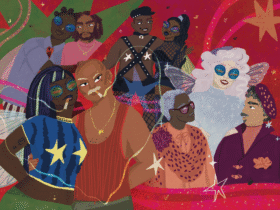
Which is why I still think about the woman who ran over to me. She didn’t know me; she didn’t owe me anything, but she intervened nonetheless. And in doing so, she restored something in me that both incidents had taken away… the feeling that I was not alone.
Exasperated girl summer
I’m sick and tired of the sanitised “hot girl summer” narrative that feels so far from reality. As summers get dangerously hotter, it’s time to take an honest look at the physical and emotional tax of simply trying to stay cool as a woman.
The exhausting mental gymnastics of deciding whether choosing comfort over coverage is worth the risk is a daily reality for us. But, to be clear, this is not an essay about what women should or shouldn’t do. It’s a call to action; an appeal to improve the structures put in place to protect us. Cities should be safer, men should challenge each other, and bystanders should be encouraged and taught to intervene safely. Ultimately, protecting one another is a collective responsibility.
This is a story about how climate change and rape culture intersect on our skin. If this essay makes you stop next time you see something, then I’ve succeeded. But that is only the start of the work. Let’s change the narrative before the narrative changes us.
What can you do?
Read:
- The Heat Will Kill You First: Life and Death on a Scorched Planet by Jeff Goodell
- Urban Development Together with Girls and Young Women
- Feminist City by Leslie Kern
- An Interview with Caroline Criado Perez on ‘Invisible Women’
- Invisible Women by Caroline Criado Perez
- Down Girl by Kate Manne
- The Body Is Not an Apology by Sonya Renee Taylor
- Unveiling the Bystander’s Role: A Qualitative Study on Interventions in Street Harassment Against Women
Support:
- LARA Fachstelle gegen sexualisierte Gewalt an Frauen*: Berlin-based counselling and support centre for women and girls affected by sexual violence.
- Wildwasser Berlin : Support and counselling for survivors of sexual violence.
- Weisser Ring: Support services for people affected by crime.
- Right To Be — Bystander intervention resources: Practical tools for safely intervening when witnessing harassment.
- Sexual Offences Awareness Map Sexual Offences Map, where you can track cases of sexual assault in your UK city and plan your journey accordingly.
Follow:
- Right To Be (@righttobeorg)
- Catcalls of Berlin: A Berlin-based initiative documenting street harassment and raising awareness about gendered experiences of public space.
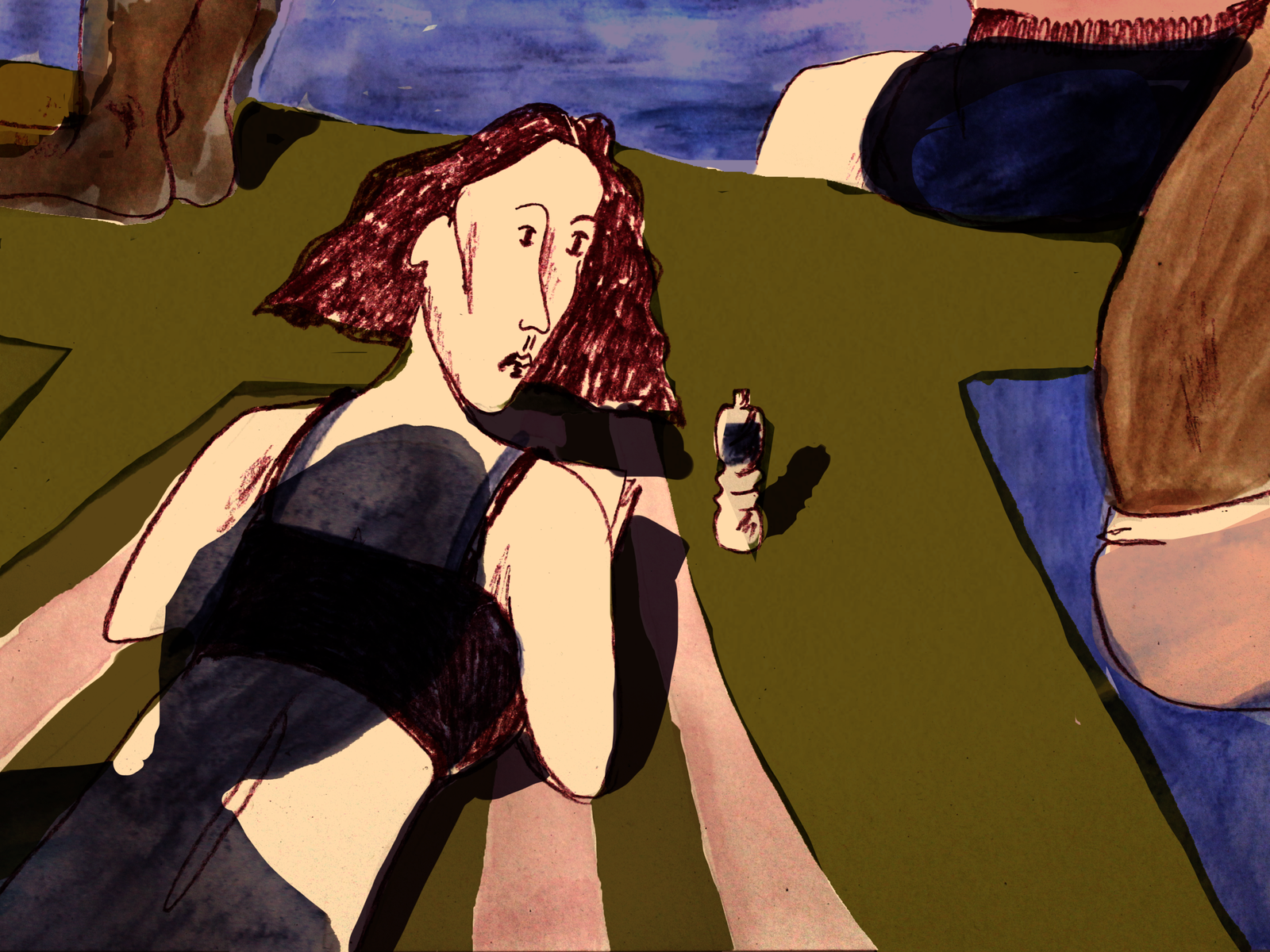
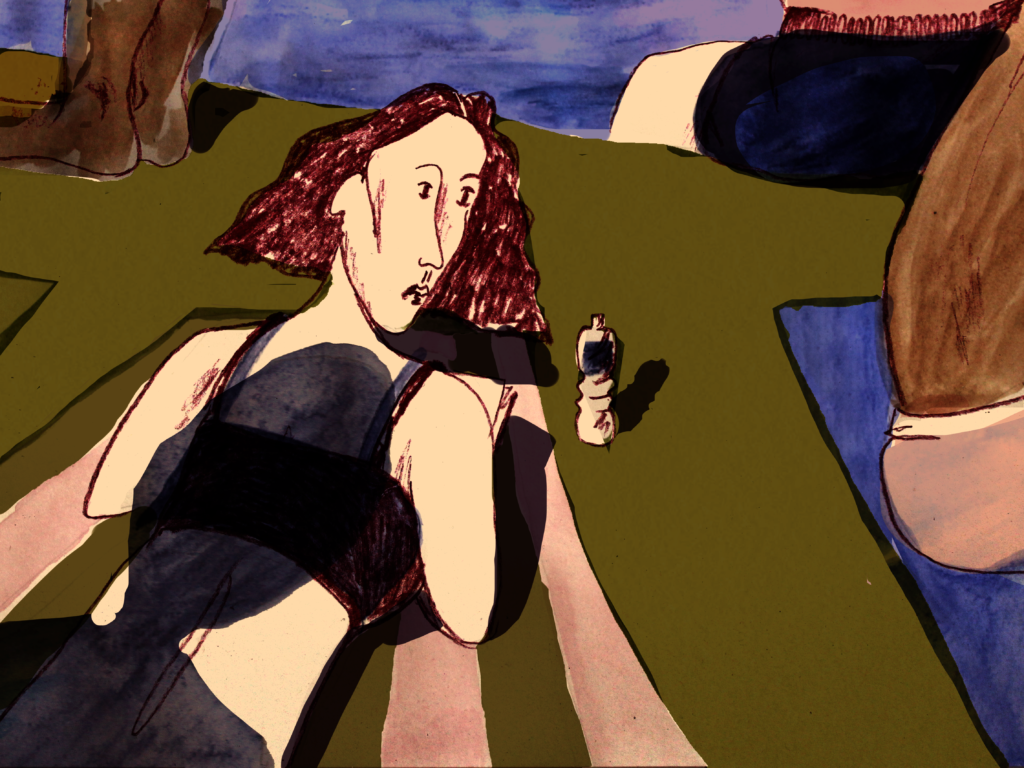 Illustration by @oliviajuett who says: “The character’s experience in the sun is marred by an unknown figure behind her, who casts a shadow over her attempts to relax and cool down. The other figures nearby are oblivious (or consciously distant) and equally exposed, yet the unknown figure’s attention is only fixed on her. Even when surrounded by other people, the central character has to remain vigilant.”