
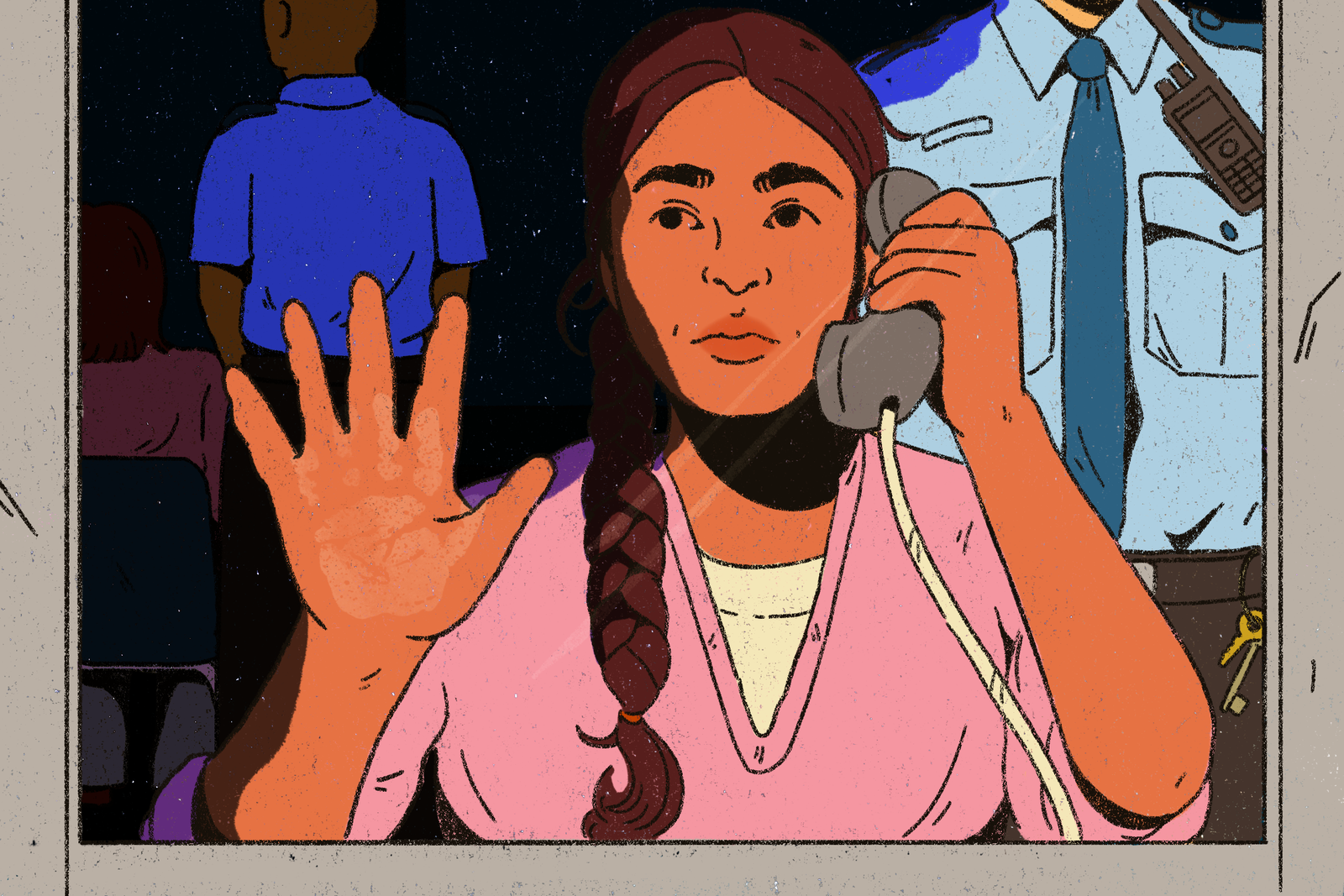

Irish prisons are in crisis. The average occupancy rate for prisons is at 120% nationally, rising to 150% for the two women’s prisons. Across the country, many cells designed for one person are holding three inmates, who sleep on mattresses and eat food beside a lidless toilet.
In December last year, the Irish Department of Justice pledged to spend half a billion euro on expanding several prisons around the country to help solve these issues, with the goal of creating 1,500 more prison places over six years.
However, we cannot simply build our way out of this crisis. Abolitionist scholars and activists have been warning us for decades that prisons don’t function as advertised. They don’t rehabilitate the ‘criminals’ within or keep the public safe. Instead, they actively bring harm to both those within and beyond the prison walls.
As a member of the Irish Penal Abolition Network (IPAN), an advocacy group formed in 2024 by activists, academics, community members, and people with lived experience of the prison system, I believe in prison abolition as an alternative to carceral systems. Within the Irish context, this looks like reducing our prison population and preventing further prison expansion, while also investing in communities.
Stop Cork Prison Expansion
One place in particular feeling the weight of this potential expansion is the working-class Glen community in Cork. As part of its ‘growth’ plan, the Irish government announced intentions to expand the Old Cork Prison.
Benita Wolf, an activist I met while making a podcast for the Irish Penal Abolition Network (IPAN), is part of Stop Cork Prison Expansion, a community-led campaign that engages with community members who have concerns.
“When the Old Cork Prison was shut down 10 years ago, the community and the people living right next to it were promised that it would never reopen again as a prison,” she explains. “Those promises are not being kept.” Benita tells me that some of these concerns were due to the prison being outdated, with ‘slopping out’ – where incarcerated people use a bucket during the night as a toilet and dump the contents the next morning – still being practised. The prison also caused many issues for the community, including anti-social behaviour around the prison site. In its place they were promised community development and regeneration, but this promise has since been reneged on.
These developments have also taken place without any community consultation. As Benita relays, merely a small notice detailing the plans has been put up on the prison site, a place that few people go to. Through door-knocking initiatives, the Stop Cork Prison Expansion campaign has found that 90% of over 80 local residents surveyed do not want a second prison.
Many instead suggest turning the Old Cork Prison into a heritage and culture site due to its important role in our revolutionary history, similar to Kilmainham Gaol. The campaign also highlights that the money should be put into housing first, addressing Ireland’s homelessness crisis. But the government is ignoring these needs and wishes and refusing to hear the community out. This disparity demonstrates the priorities of Fine Gael and Fianna Fail’s: putting corporate profits before the needs of Irish citizens.
Ireland’s history of state-mandated detention
The current crisis is not happening in a vacuum. Ireland’s deep intergenerational trauma and chronic community neglect are rooted in our colonial past and the ongoing colonisation of Northern Ireland. Punishment, including the use of prisons like Old Cork, was a major part of Britain’s oppression of Irish people. From the Penal Laws to the execution of the leaders of the 1916 Easter Rising, our conception of punishment is inextricably linked to Britain’s colonisation of Ireland.
The prison crisis must also be understood in the context of abuses by the Catholic Church. It was only 30 years ago that the last Magdalene Laundry closed its doors. These were penitentiary workhouses for ‘fallen women’ run by the Catholic Church and the state, where the profits of the women’s work went straight into the pockets of the authorities. In the same era, Mother and Baby homes temporarily housed unmarried pregnant women so that society would not have to see or deal with them during pregnancy. The government only issued a formal apology in 2021 for the abuse faced by the women and the deaths of over 9,000 children while in these institutions.
Today, ‘fallen’ women are still punished by the state. Research into incarcerated women in County Cork found that over 60% are in prison for theft. Over half of them are in active addiction and are likely to have no fixed address or an address registered with Cork Simon, a homelessness charity. Instead of offering social services and support, the government uses prisons as a catch-all net for anyone it deems to be valueless. We need to instead be supporting these women – offering wrap-around support and trauma-informed care to those that need it most.
The targeting of marginalised communities
This experience is unfortunately shared by other marginalised groups. Incarcerated people are 23 times more likely to come from a seriously deprived area, with over half leaving school before the age of 15. Poverty, unemployment and the lack of accessible community services, such as addiction services, youth clubs and mental health provision, lead people to do things that are criminalised by the state. The average length of a sentence in Ireland is seven months, with most being for non-violent crimes, while it is estimated that 70% of people in prisons have addiction issues. Shoplifting baby formula or taking drugs due to an addiction should not result in someone being locked up.
Marginalised communities are also overpoliced and over-represented in prisons. Traveller men account for around 8% of the male prison population, while Traveller women account for around 16%. Yet, the Traveller community makes up less than 1% of the population. There is also over-representation among other marginalised groups. 1 in 7 incarcerated people are from a foreign national background, while people of colour receive significantly longer sentences for the same offences. This pattern is of particular concern for IPAN. As the global descent into fascism continues, Ireland must resist the rise of racism found both within prisons and beyond.
The myth of rehabilitation
Last year, the European Committee for the Prevention of Torture and Inhuman or Degrading Treatment or Punishment (CPT) expressed grave concern over the conditions and human rights standards in Irish prisons. This is set against the government’s continuing refusal to ratify the Optional Protocol to the UN Convention against Torture (OPCAT), an international human rights treaty which aims to prevent torture and ill-treatment in places of detention.
The CPT found that vulnerable groups, particularly in the women’s prisons, had inadequate support. Pregnant women and women with mental illness, addiction and trauma were sleeping on mattresses and fold-out camping beds and were unable to access necessary specialist care.
The committee also voiced concerns about the use of Closed Supervision Cells (CSCs) and Safety Observation Cells (SOCs). In these empty cells, incarcerated people are stripped naked, made to wear a thin poncho and checked every 15 minutes through the cell door spyglass. Although incarcerated people are only meant to be put in these cells when they are a threat to themselves or others, overcrowding and under-resourcing have worsened conditions, while preventable deaths have occurred in cases involving staff faking monitoring records.
Robert Cullen is a PhD student in criminology and sociology at University College Cork and studies the role of patriarchy in upholding the prison system. He also uses his personal experience as a formerly incarcerated person to run the Success Stories Programme across Irish prisons, where he leads workshops about toxic masculinity. During an interview, he explains to me that the idea of rehabilitation “individualises the issue” and fails to recognise the systemic factors at play. He tells me that prisons cannot be a place of healing and accountability due to the “coercive dynamics” present, going on to explain that at committal, if you mention that you are dealing with thoughts of harming yourself or others, you will be put in the CSCs or SOCs mentioned above. Simply put, Robert says prisons induce “isolation, and that’s [the Irish government’s] response to a mental health crisis.” Incarcerated people are already separated from society, and the state goes one step further with those who are mentally ill – once again highlighting how little they care for those that most need our support and help.
Mental health in prisons
The RTÉ Investigate programme ‘The Psychiatric Care Scandal’ from February this year found that mental health played a role in 40% of prison deaths since records began in 2012. It also reported a surge in incarcerated people experiencing psychosis, with 10% of the men in Cloverhill, Ireland’s fourth-largest prison, being in the midst of a psychotic episode on any given day.
Prison is an environment of isolation and monotony, and already vulnerable people often develop maladaptive coping mechanisms. People in Irish prisons often turn to substances to help with rumination and mental health issues, or ‘ taking down the walls’, as it is termed within the prison. Moreover, most people are not able to access mental health support during their sentence, as the waiting lists are years long. If you do talk openly about your mental health, you could be risking your chance of temporary release. For those with families and communities depending on them, getting out is more important than getting better.
Join our mailing list
Sign up for shado's picks of the week! Dropping in your inbox every Friday, we share news from inside shado + out, plus job listings, event recommendations and actions ✊
Sign up for shado's picks of the week! Dropping in your inbox every Friday, we share news from inside shado + out, plus job listings, event recommendations and actions ✊
This harm isn’t limited to those within the prison walls either. While structural issues create the harm-doing in the first place, Robert explains that “prison worsens an individual’s issues and then sends them back out to the same community, which is still deprived and lacking resources and services. It is just a continuation and an escalation of the harm.” Prisons are not only a futile solution to mental health problems but are in part the cause of these problems in the first place. They destroy the possibility of preventative mechanisms within communities, such as family bonds and economic opportunity, leading to chronic mental illness in certain pockets of society.
The time for change is now
Prison expansion will only ever exacerbate these issues. New prisons are created to be filled, leading to a never-ending cycle of overcrowding. A case study for this is Limerick Women’s Prison. It opened in October 2023 but was already operating at over capacity just three months later. With reoffending rates sitting at nearly 60%, we must begin to question what is truly driving this recent crisis and move away from the idea that prisons will solve it.
Indeed, the Irish government itself has known about the failure of prisons for a long time. In 1985, they released the Whitaker report, which found that prisons do not rehabilitate people or reduce crime. It recommended that imprisonment be used as a last resort while also advocating for a reduction in prison populations, human rights protections and the use of community-based alternatives. But 40 years on, the government is still refusing to listen to its own advice.
When we interrogate how the criminal ‘justice’ system operates, we begin to see the cracks in the government’s proposal. We are a country full of potential, but we need to change the deep-seated ideas of punishment that we adopted from our colonisers and abusive authorities. How many prisons do we have to build until we finally accept that they are not the solution?
At the point at which someone goes to prison, harm has already taken place. The state must focus on acting before this harm occurs, instead of investing in ineffective band-aid solutions. The government should be spending that half a billion euro, and indeed the €103,000 the state spends per incarcerated person per year, on our chronically underfunded services, allowing people to access free mental health and addiction support, secure affordable housing, buy their groceries and pay their bills. We can put pressure on the government while also providing abolitionist alternatives. Mar a deir an seanfhocal: ní neart go cur le chéile.
What can you do?
Do:
- Join the Irish Penal Abolition Network by emailing irishpenalabolitionnetwork@gmail.com.
- Join the Stop Cork Prison Expansion campaign by following their Instagram or emailing them at stopcorkprisonexpansion@protonmail.com.
- If you live in Cork, go to the Stop Cork Prison Expansion community meeting and help with door-knocking initiatives.
- Put pressure on your local politicians and councillors across Ireland to raise this issue and fight against prison expansion.
- Build international solidarity and links as the abolitionist struggle is a global struggle.
Listen:
Read:
-
- The Irish Penal Abolition blog page has lots of amazing articles to help you further understand the Irish prison system and abolitionist alternatives.
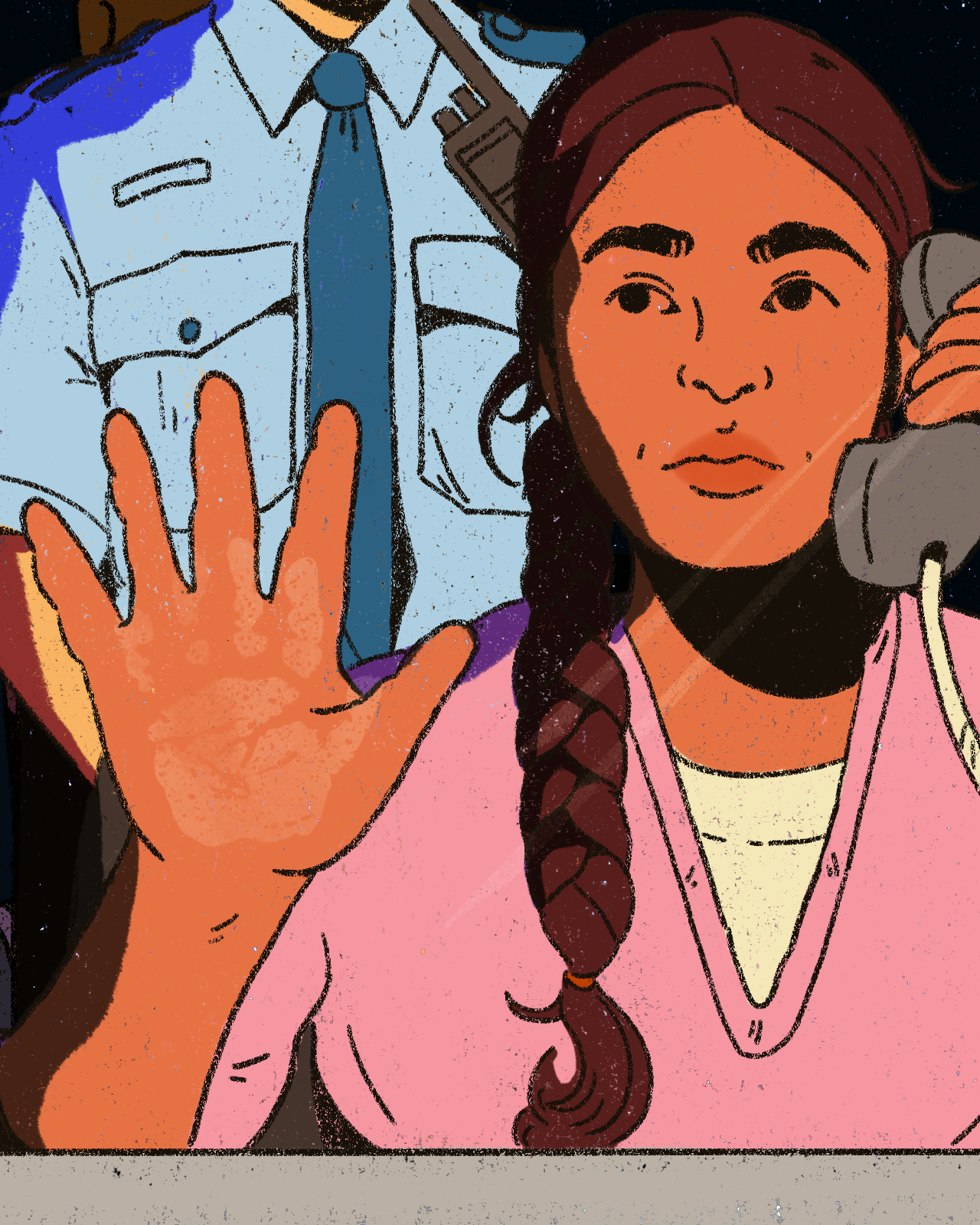 Illustration by Heedayah Lockman @heedayahlockman who says “This image depicts a Traveller woman at a visitation behind glass, palm pressed to the pane as she tries to reach her kid. Her kid’s handprint is on the glass, the only contact they’re allowed. Other inmates are in the background too, each with a guard behind them. The system like prisons, doesn’t just lock up individuals; it tears families apart, and it comes down hardest on marginalised communities.”