
I have always been deeply moved personally, politically and culturally by the ways Black people have resourced and sustained themselves. Even in the most dire conditions of chattel slavery, Black people still divested from the slave economy and built autonomous communities.
From Harriet Tubman navigating by the North Star to Nat Turner reading eclipses as signals from the spirit for the 1831 Southampton uprising, our ancestors have always drawn on resources, both material and immaterial, to survive.
And this is still true today.
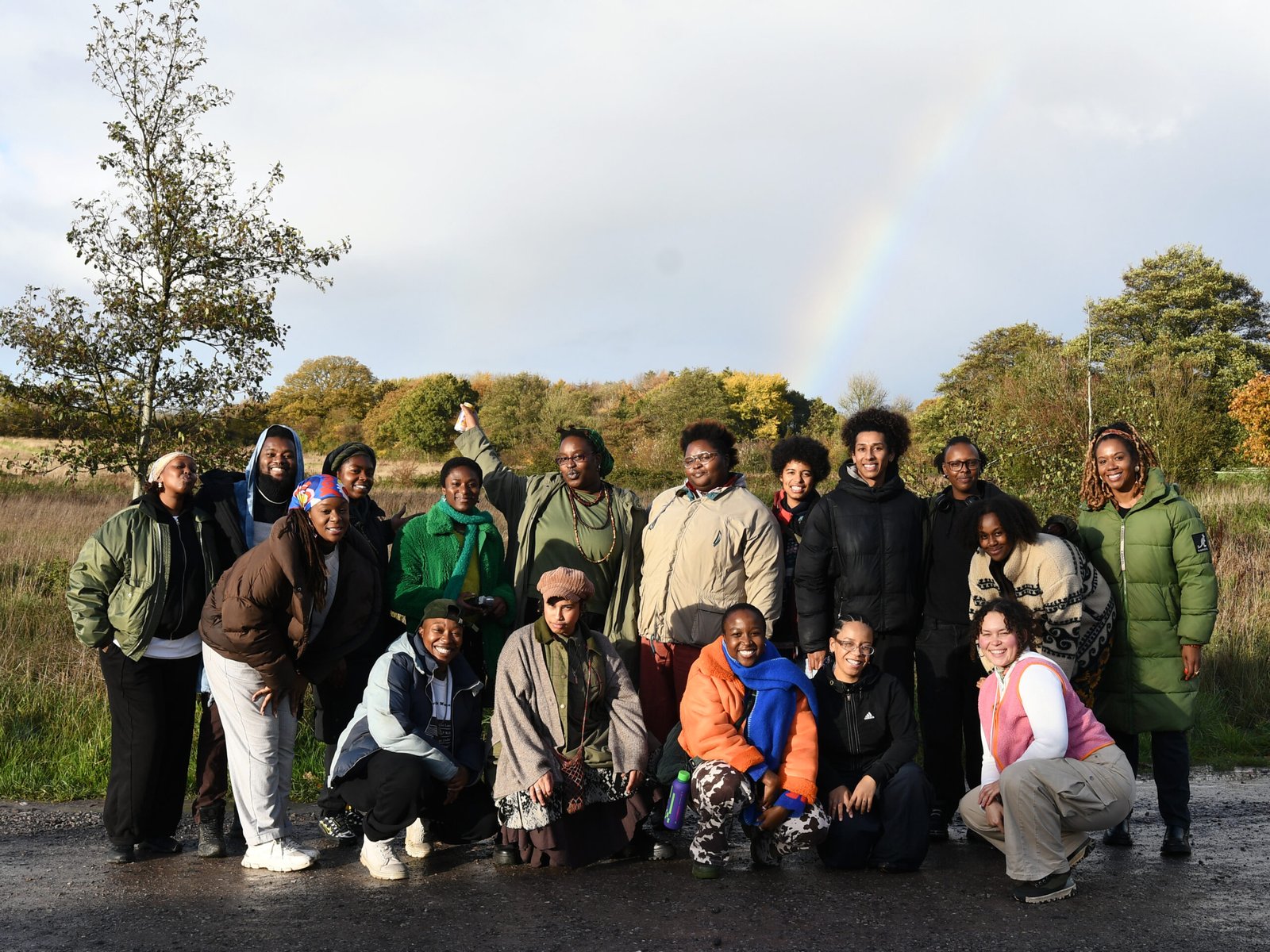
Last month, on a rare sunny London day, I headed down to Phoenix Garden in the West End for Medicine: Lessons in Black Economic Interdependence, a gathering that brought together organisers, artists and community builders to share the experiments they’d been running over the past year as part of the latter half of The Medicine Project. The showcase today was to present their work/findings.
A brainchild between Decolonising Economics and Kinfolk Network, this two-year project consisted of working with community groups and individuals in the Black liberation space, exploring the past, present and future of African and Afro-diasporic economies within the UK.
Celebrating two years of Black economic imagination
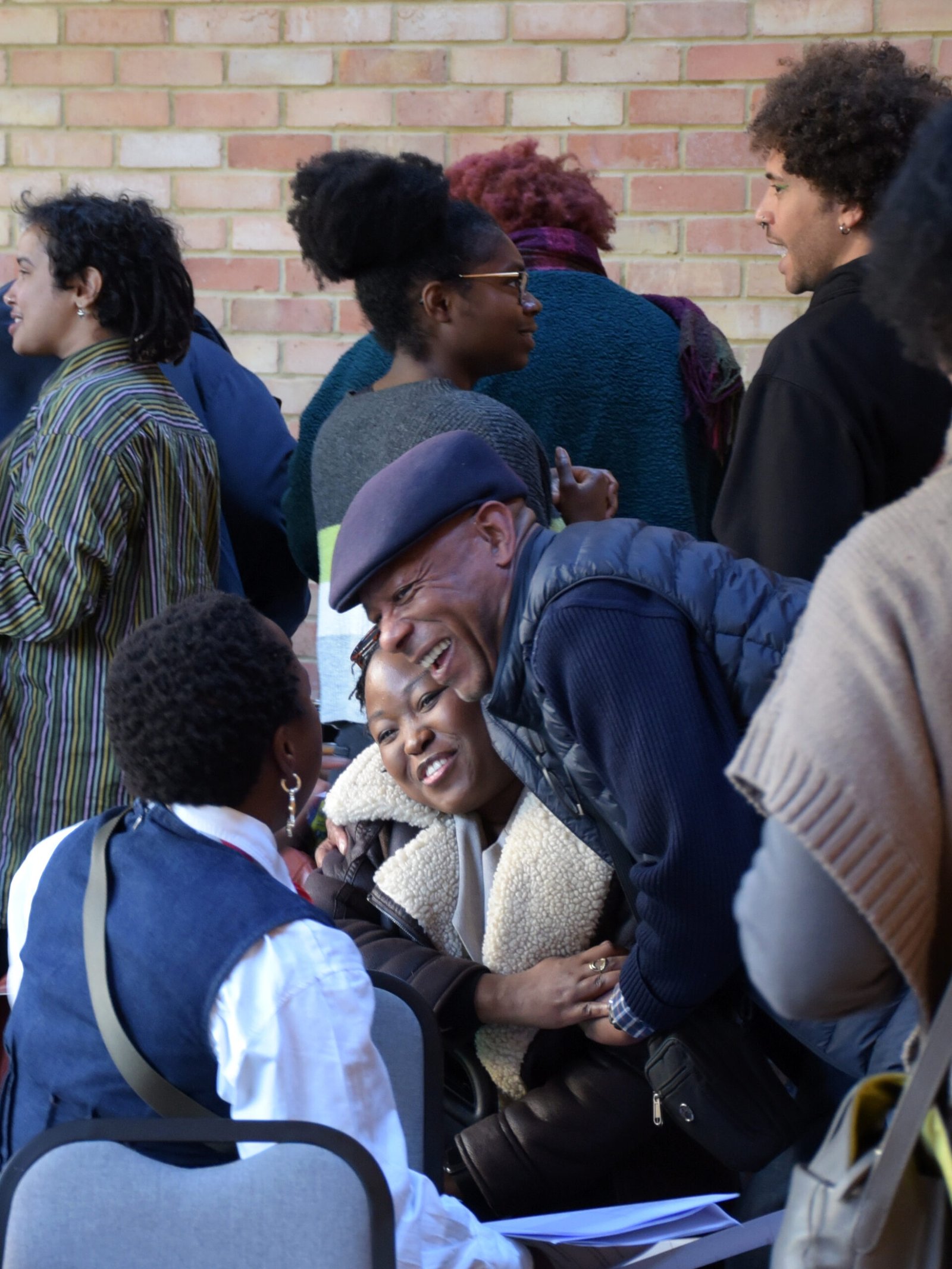
On the day of the showcase, I was welcomed with tight embraces from new and old friends alike; a room filled with people dedicated to community building and social and economic justice. I spotted the co-founder of Decolonising Economics, Nonhlanhla Makuyana who is also my good friend and collaborator, and gave them the tightest hug before they ushered me to get some food and settle in. There was a warm, intergenerational atmosphere in the room, featuring many elders and the sweetest talkative baby.
Shortly after grabbing my Bunhead Bakery cardamom and rose cinnabun, Nonhlanhla kicked off the day by introducing the team who brought the project together: themselves, Natasha Ruwona (producer), Kayode Gomez (sound designer) and Zahra Dalilah (curator).
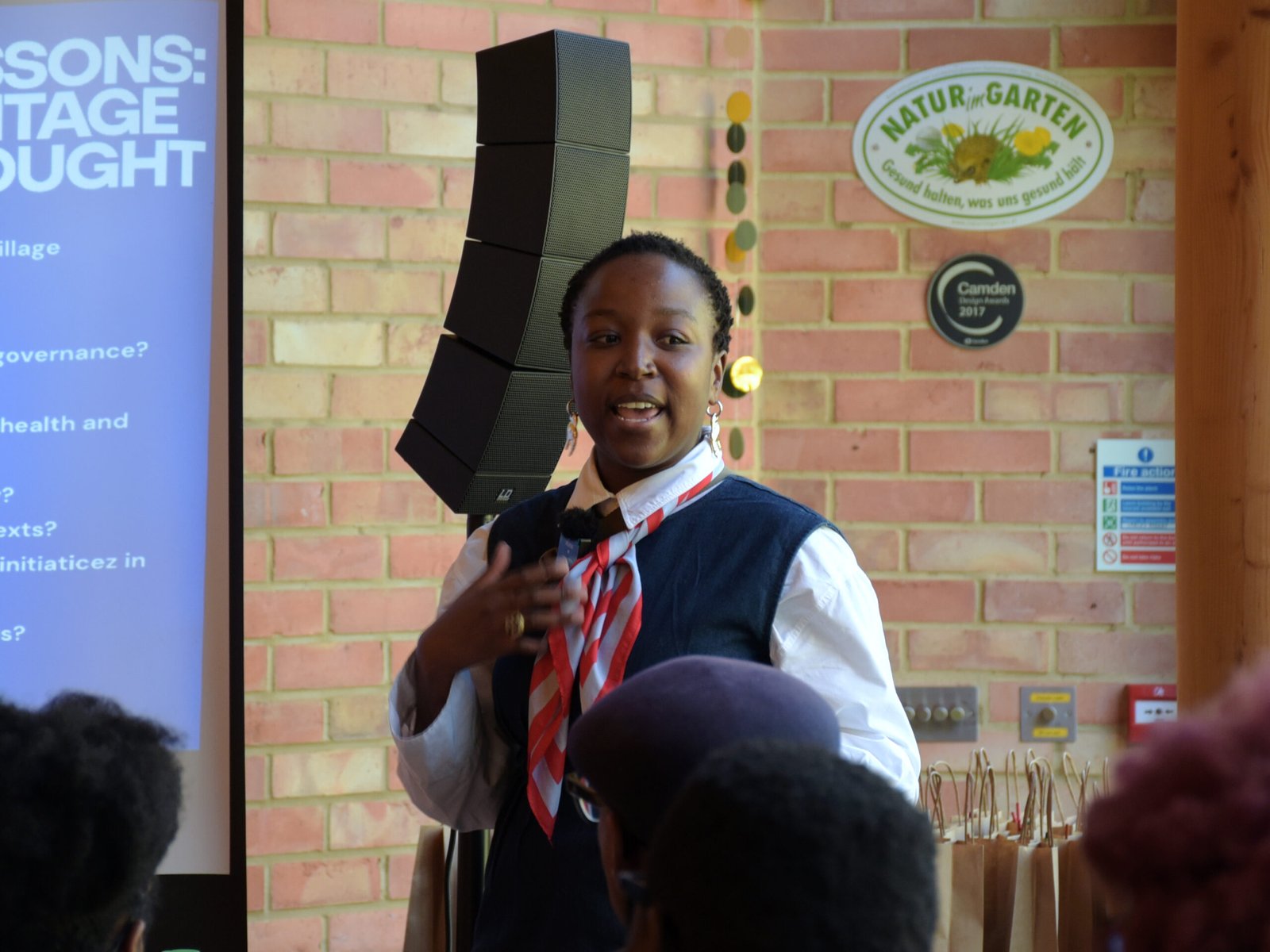 Photography by @natalya.rens.studio
We were economists all along
Nonhlanhla and Zahra first started their journey with The Medicine Project two years ago with this simple but radical question: what happens when we choose differently?
When Nonhlanhla and Zahra first came together, they were mapping the economic practices already alive in Black communities and asking how we might shift our relationship to money, survival, and each other.
In a capitalist society that coerces us into constant doing and buying just to stay afloat, The Medicine Project invited participants to imagine what it means to opt into more nourishing systems, where agency is not a luxury but is practised fervently in our lives.
Âurea Mouzinho’s report, Practicing Liberation: A Survey of Contemporary African, Afrodescendant and Black Liberatory Economic Practices Towards Liberation, became the backbone for what inspired the three principles of The Medicine Project. These were nurturing movements and capacity; sourcing and sharing knowledge; and moving collectively toward political action.
Prior to the experiments, Decolonising Economics and Kinfolk Network travelled across the country with the cohort, delivering a political education series that traced a long lineage of Black economic prowess.
The cohort learnt about Somali saving cycles with Coffee Afrik, the history of Black‑led housing co‑ops and self‑builds in Britain, and the ways governance and mutual aid networks in Sudan and Zimbabwe organise outside charity models.
They also explored maroon herbalism, a healing tradition developed by the descendants of enslaved Africans who formed independent Maroon communities in Jamaica, blending African ancestral medicine with Caribbean plants and Indigenous Taino knowledge. While not an economic system in itself, it was practised alongside collective sustenance, land stewardship and other autonomous practices as a way of sustaining life, circulating knowledge and building the autonomy needed to live outside the plantation economy. Rooted in deep ecological understanding and shaped by resistance to colonial medical systems, it includes everyday practices like drinking Cerasee tea for fevers and colds.
Over the two years, the collective uncovered this truth: Black people have always been economists – even if the academy refuses to name us as such.
The Medicine Project is rooted firmly in that lineage: a remembering and a reimagining of the economic worlds Black people have always known how to create. It served as a reminder: what our ancestors knew, we know too.
I was impressed by how practically and theoretically ambitious this project was. Being shown how much possibility sits within our own traditions of making and sustaining life felt really reassuring – a real answer to the question Nonhlanhla posed: “How do you see abundance in places where there’s only scarcity?” The Medicine Project reminded people that experimentation is happening, both on our doorstep and across the world, and even in the harshest conditions, Black communities have always divested, resisted, and built alternatives.
 Photography by @natalya.rens.studio
What happens when we stop asking capitalism for permission?
After tracing the lineage that shaped the project, Nonhlanhla turned our attention to the cohort of ten Black activists who applied to be a part of the programme. They were the people who had spent months building small, deliberate alternatives with whatever resources they already had. Their experiments were a masterclass in what agency, interdependence and refusal could look like.
Something I deeply appreciated was how intentional the Medicine Project organisers had been: collaborating only with Black venues, photographers, facilitators and collectives like Bristol-based Afrikan Connexions Consortium and Glasgow-based Exhale.Group CIC, which ensured that every pound spent stayed circulating within the communities that shaped the work. It set the tone for what followed – a series of experiments that asked, in different ways, what becomes possible when we build with what’s already in our hands.
You eat where you break bread
We heard how several experiments began with the most contested resource: the home. Fa‑Zah’s Close Knit Collective transformed their one‑bed flat into a site of communion, where weekly gatherings over tea, knitting, embroidery and conversation created a space of intimacy, creativity and chosen family.
Join our mailing list
Sign up for shado's picks of the week! Dropping in your inbox every Friday, we share news from inside shado + out, plus job listings, event recommendations and actions ✊
Sign up for shado's picks of the week! Dropping in your inbox every Friday, we share news from inside shado + out, plus job listings, event recommendations and actions ✊
Aliyah’s remake sessions echoed this ethos: friends upcycling clothes together using nothing more than scissors, an iron and a sewing kit. Both experiments insisted on the revelation that people’s homes can be community centres. Liberation doesn’t always require a building, a budget or an institution; more often than not, it begins at the kitchen table.
It made me think about how the British Black Panther Party and many of the most critical revolutionary efforts to create Black autonomy, safety, and empowerment were organised in domestic or community spaces. When I think about the home, I don’t just think of its four walls and roof; I think about the home’s ability to turn everyday togetherness into political consciousness and how its intimacy can sharpen our sense of what we deserve and what we’re willing to fight for.
Economies we inherited
Other experiments drew directly from ancestral economic practices: saving circles (pardners, susus), technologies of survival that long predate capitalism. Ade’s work with the Black Obsidian Sound System explored what it means to build a community sound system through a collective savings pot, asking the question: if individuals can pool money transparently and with trust, why can’t organisations?
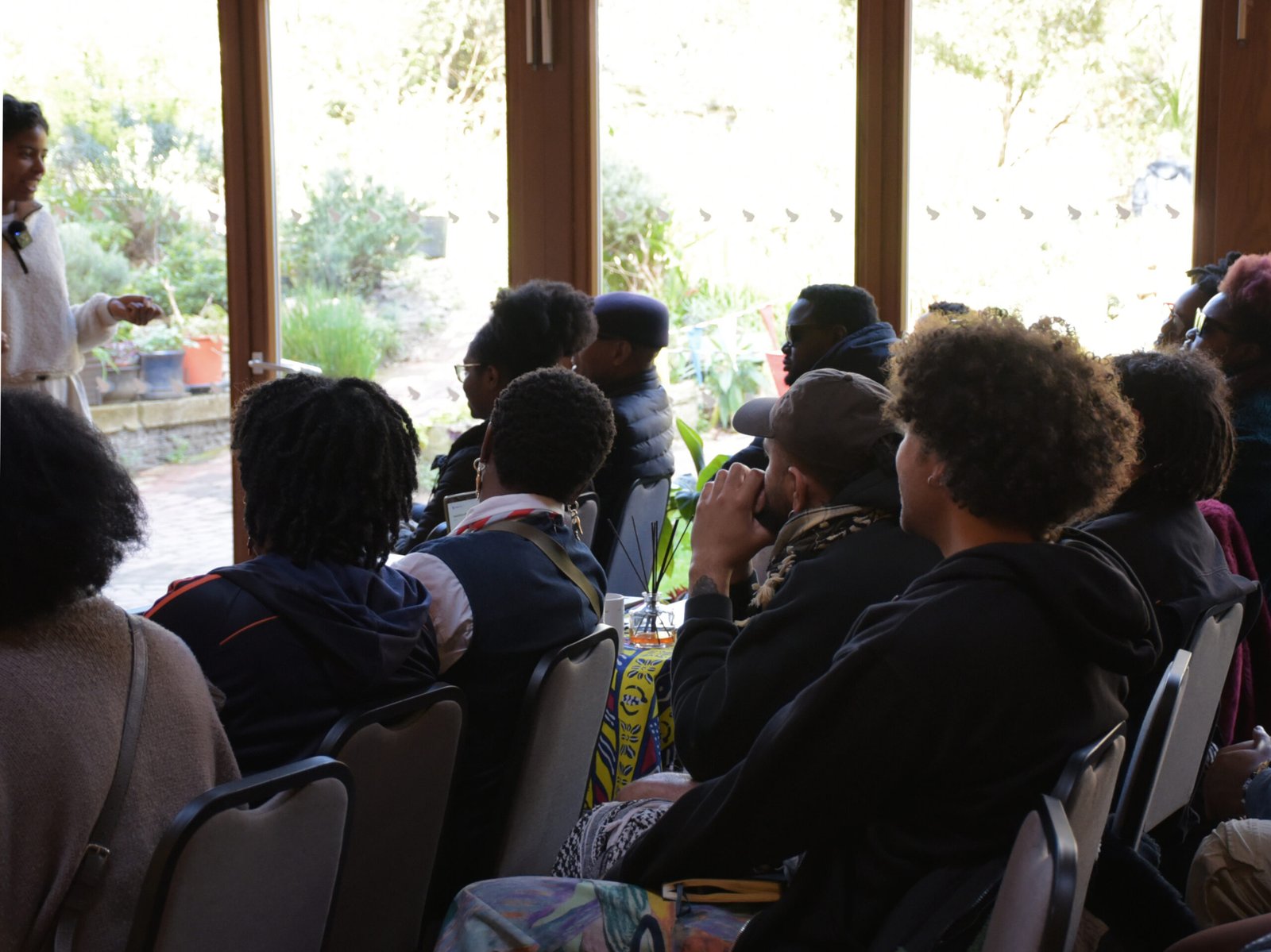
Idman and Ali from Earth Tenders’s saving circle, shared via video, showed how group savings enabled people to visit family in Ghana or China – trips they’d never been able to afford alone. Prince – a participant in the cohort – led a skills‑saving circle rotated labour instead of money, showing what can be achieved creatively when everyone dedicates their skills to a project. Together, these experiments revealed that collective economics is a tried and tested method Black communities are using to bring ideas to fruition.
 Photography by @natalya.rens.studio
Freedom as a collective practice
Collaboration emerged as both a challenge and a solution. Muva and Destiny’s Blaq Roots Cooperative confronted the fear of opening up to others and the vulnerability of letting different working styles, perspectives and energies into a cooperative.
Their key learning was something I and so many of us needed to hear: giving up control is a form of freedom too. This theme was similar in Titi’s In Maroonage experiment, where they reflected on how collaboration is both a necessity and a revelation. Their work grappled with the emotional weight of reckoning with slavery’s afterlives, the heaviness of survival, the tenderness required to admit it, and the clarity that liberation cannot be pursued alone. Again and again, all the experiments showed that trust is the infrastructure for building something worthwhile and sustainable.
And then there was joy, not as an escape from the work, but as part of the work itself. Bambi’s experiment, rooted in the Ballroom scene which they’re a part of, and a transformative trip to Thailand, imagined what a retreat for their vogueing house (House of Laveaux) could look like, guided by the mantra: “No one’s coming to save me, but no one’s coming to stop me either.” That line pretty much encapsulates the whole project.
I haven’t been in a room that felt so regenerative and invigorating for a long time. Hearing those experiments made me more aware of the ways I can be experimenting in my own life and communities. It was great to witness how much the cohort learned simply by sharing their experiments aloud. It was a reminder that ideas only sharpen, deepen and expand in community.
Resourcing ourselves without fear
Many participants admitted that being trusted with money made the work harder, not easier; that the pressure to “do something worthwhile” sits heavily, especially for Black people navigating the scarcity and gatekeeping of grants, charities and classed access to resources. Yet across the board, the realisation was the same – we need people. Trust, collaboration and collective thinking weren’t just themes of the project, they were the conditions that made any of this possible.
Prince said something that stayed with me long after the day ended. He said: “it was so affirming to take this approach” and commented on the way leftist spaces often avoid talking about money, power and resources and how the Medicine project refused that avoidance. “Money existed before capitalism,” he tells us. “We just haven’t built structures to resource ourselves.”
What moved him most was hearing from mentors like Makeda, elders who had tried, failed, succeeded, and carried the wisdom forward. His reflection felt like a turning point in the room, a reminder for me that none of this work is new, and none of it is done alone.
Sɛ wonni opanyin wɔ fie a, due
There is a Twi proverb that goes Sɛ wonni opanyin wɔ fie a, due, meaning If you do not have an elder in your house, [I say] sorry/condolences. That’s exactly how I felt when Prince spoke about the project and even more so as we brought the room back for the final activity – the elders panel.
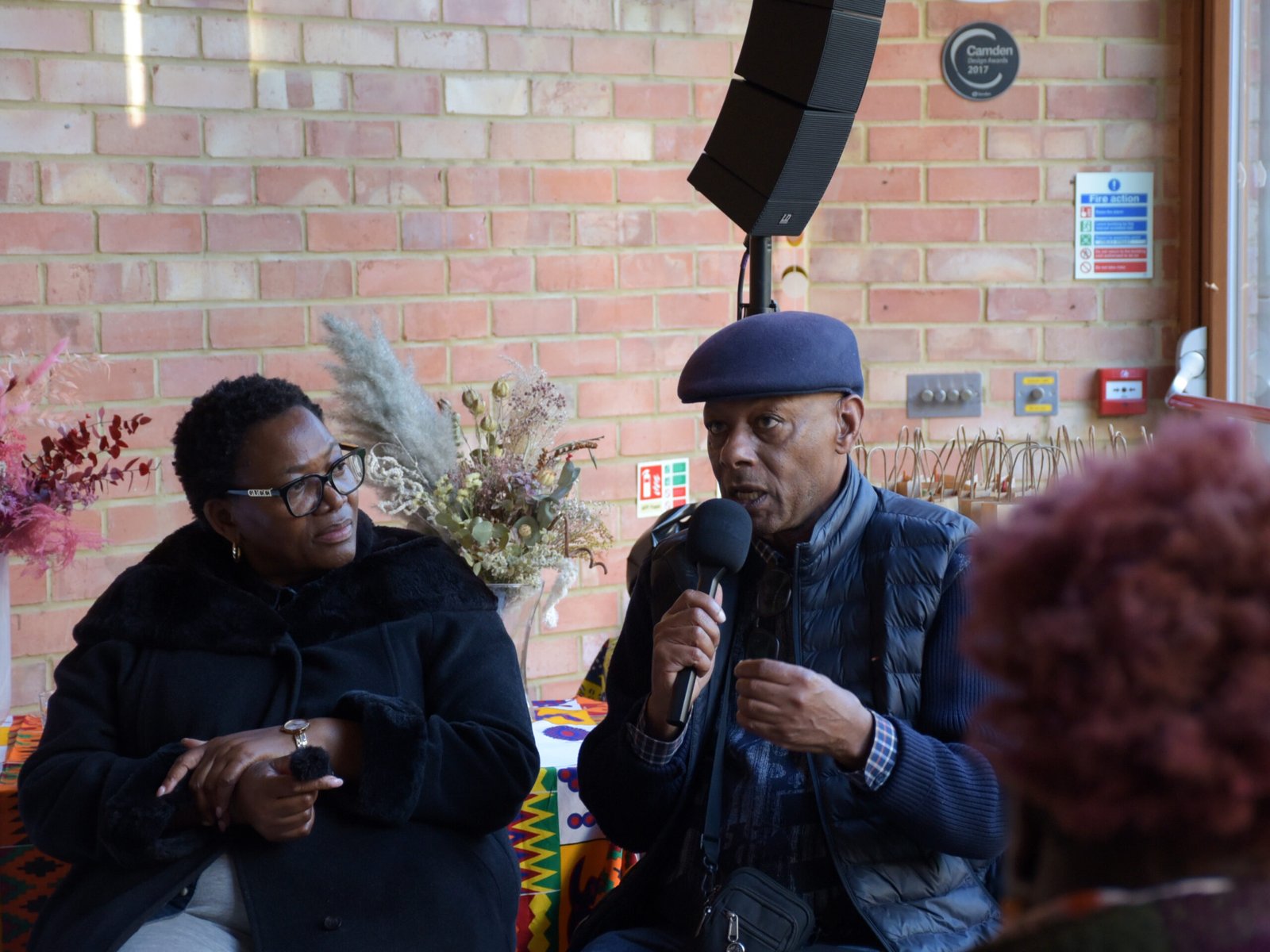
The elders were: Makeda, Campbell X, Last and Claude Hendrickson, who have all organised around social justice for decades and provided wisdom, care and mentorship to the mentees. The room quietened, and we all leaned in, ready to hear what they had to say.
When asked who shaped them, each elder traced their own line of mentorship. Claude spoke of The Autobiography of Malcolm X, the Black Panther Party, and his mentor Darcus Howe – figures who taught him that political clarity must be paired with courage. Last rooted her answer in ancestral guidance, drawing on the wisdom of Zimbabweans who resisted and outmanoeuvred colonial rule and the teachings of her Karanga people. Campbell X spoke of his parents, of maroon ancestry, of his Haitian great-grandmother, and of the “reasonings” he shared with older queer filmmakers in bars, conversations that taught him how to debate critically while remaining respectful. And Makeda, raised in a deeply Pan‑African household, spoke of her grandmother, whom she still calls on, even in death, whenever she needs to do something brave.
When asked what they had learned as mentors on the Medicine project, their reflections revealed the emotional and political labour of guiding a new generation. Claude reminded us that passion must be balanced with evidence, that trust in our communities grows when we pair vision with transparency, and when we learn to receive constructive critique without collapsing into defensiveness.
Last spoke of ubuntu, the interdependence that makes isolation impossible and community inevitable. Campbell X reflected on how much the experiments moved him, especially the way they allowed failure, a relief in a world that demands perfection from Black people. And Makeda, watching the cohort share their work, said it gave her profound confidence in the future.
If there was one thread running through the panel, it was this: we’re always standing on the shoulders of the giants that came before us.
And, if there was one thing to take from the panel, it was that Black people have always done economics brilliantly, creatively, and collectively. We have always found ways when the road felt like a dead end, and we have always flourished in soil considered desert.
 Photography by @natalya.rens.studio
It’s a lovely day to do something different
By the time we reached the final part of the day, everyone was ecstatic from what we’d heard. The room felt softer and celebratory. Amina stepped forward to lead us in collective singing. Then it was party time. Certificates were handed out, people hugged their mentors, and the DJ started playing. The cocktail bar opened, and suddenly the space felt like a family gathering, everyone laughing, dancing, and enjoying. I’m a huge advocate for pleasure being a huge part of the revolution, because it always has been in our histories.
As I looked around the room, I felt a quiet certainty settle in my chest. The experiments, the lineage, the elders, and the singing made me realise we already have everything we need. We always have. And on this particular day, under a rare patch of London sun, it felt like we were practising a future that had been waiting for us all along.
What can you do?
Follow:
To see everything The Medicine Project is building next, from an oral history archive to community tools for building self-determination, sign up to their mailing list and follow their Instagram to join them on this journey.
Read:
- Medicine: Lessons in Black Economic Interdependence political education series
- How can intergenerational conversations aid us in dismantling capitalism? By Nonhlanhla Makuyana
- Reparations Report by the Runndymeade trust
- Autobiography of Malcom X
- A Kick in the Belly: Women, Slavery and Resistance by Stella Dadzie
- The Black Jacobins by C L R James
- Revolutionary Suicide by Huey P. Newton
- Obi; or, The History of Three-Fingered Jack by William Earle (Author), Srinivas Aravamudan (Editor)
Listen: