“Older buildings are meant to breathe, take in moisture and exhale,” Jabir Mohamed tells me as we sit in Somerset House.
Jabir is a 26 year old Somali researcher, designer, heritage preservationist, and the founder of RAAD RAAC – an architecture studio committed to protecting at-risk built heritage across the Somali Peninsula. I first encountered his work a few months ago, through an Instagram reel which showed him working with sustainable and local materials in Berbera, Somaliland to restore historic sites.
View this post on Instagram
In the video, Jabir explains the immense loss of buildings and heritage due to war, neglect and climate change. I messaged him, asking him for an interview. He kindly agreed and we met up in London. RAAD RAAC, he says as we now sit together, “was born out of a deep concern over ongoing loss from intersecting crises.”
It’s not just buildings which have been destroyed in this crossfire: it’s also knowledge systems. Jabir is particularly interested in restoration practices which were common before the civil war, but there’s limited documentation of this – a legacy of war.
As a sustainable builder working with earth materials, I was inspired. Last summer, I was part of a traineeship which helped build a community garden out of cob and green wood. We worked with local communities to build a site with a lease of 999 years in Kings Cross. Being involved in this project transformed how I viewed my skills, my area and our buildings.
While building in such a way felt transformative, it isn’t new. Coming from an Amazigh background, we have a rich earth architectural heritage – the global majority has been building this way since the dawn of time. However, our knowledge systems surrounding African architecture are eroding. Through speaking with Jabir, I saw a vital resurgence. A way of building rooted in culture, community and preserving the things we love.
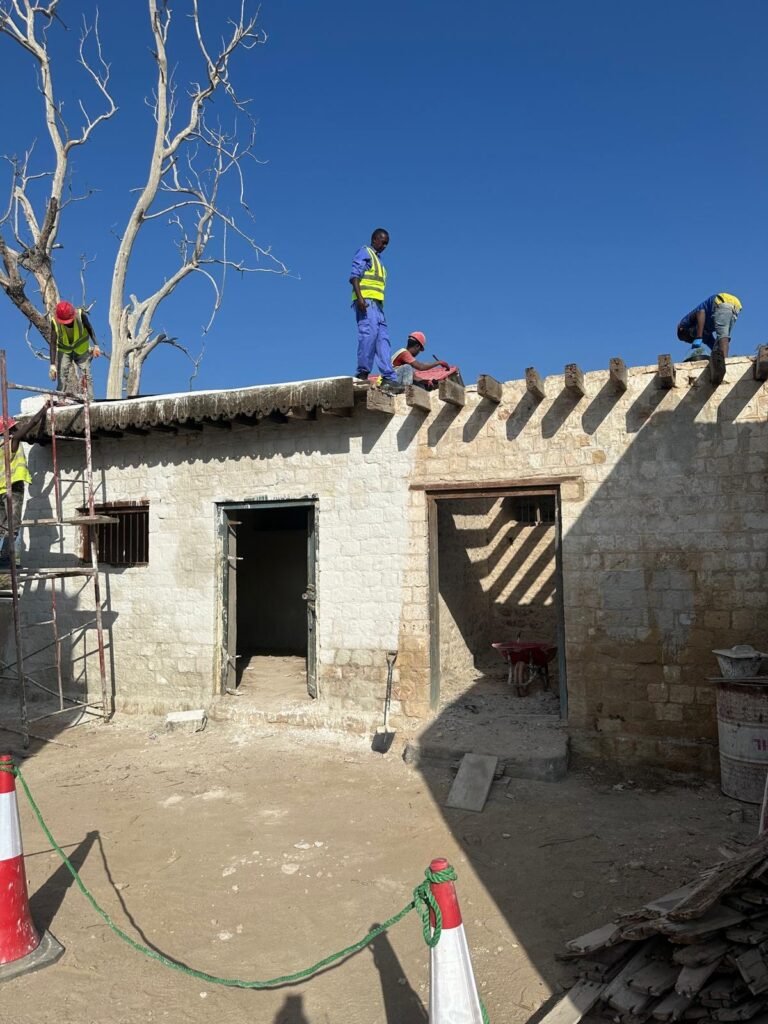
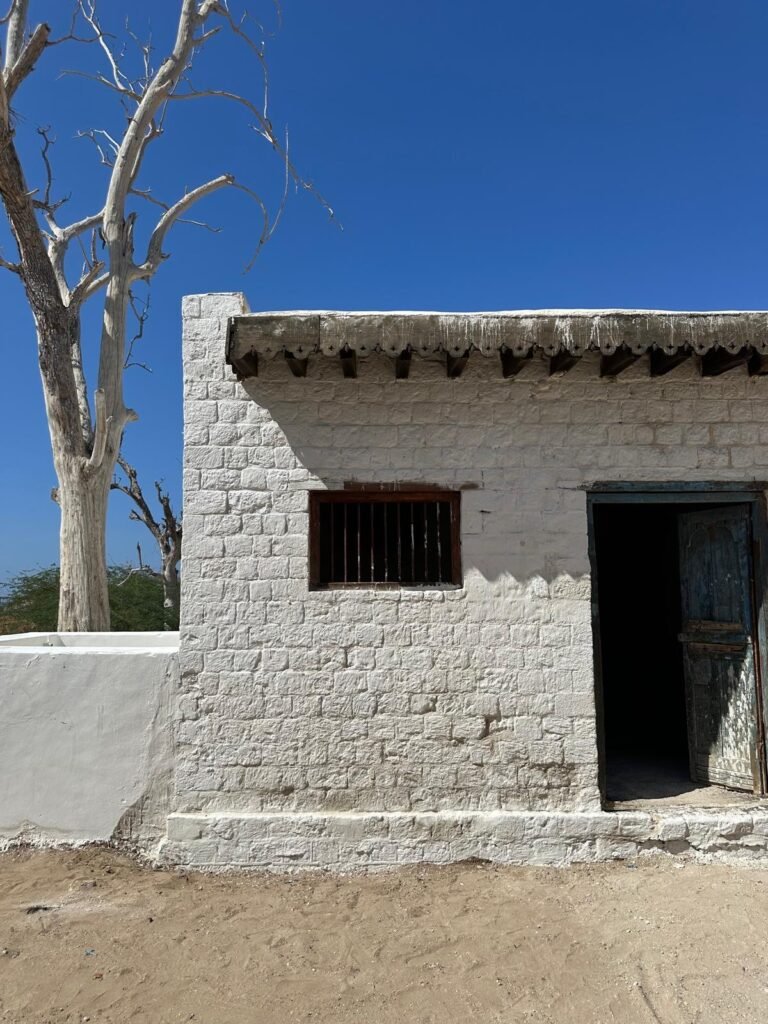
RAAD RAAC – which translates as ‘to follow a trace’ in Somali – is grounded in documenting, restoring and training local people to preserve historic buildings. This is orchestrated through training programmes, working together and remaking old buildings. Jabir’s current projects are based in Berbera, where nearly a third of buildings are partially collapsed or in ruin.
Breaking through concrete
By the age of seven, Jabir knew he wanted to help his country by studying architecture. At first, he was motivated to build skyscrapers until he went to architecture school and realised they weren’t authentic to the Somalian landscape, heritage or culture. Concrete structures have been imported from Western architectural practices, the most in demand construction material in Africa’s building boom. These types of buildings, made from plastic and concrete, have become the norm in Somalia now, Jabir tells me.
But plastic and concrete don’t let the buildings breathe, and houses often become uncomfortably hot. Now, he’s committed to re-Indigenising architecture and teaching others about Somalia’s traditional practices.
Jabir tells me an anecdote describing the colonisation of architectural practices in Somalia. He was visiting a local university to give a talk on using local and traditional building materials. That evening, just after Maghrib, Jabir noticed the heat still radiating from the walls.
“The fans were on, but they were just circulating the already hot air. The engineering students had only ever been taught to build with concrete, and were very apprehensive of building with limestone. They didn’t see it as a building material.”
He continues: “The next day, they came with us to our workshop, which we have built out of limestone. It was high noon at the hottest time of day. We asked them: ‘Doesn’t it feel cooler? Does it feel more comfortable?’ I think that is when they began to understand.”
Museums of the future
RAAD RAAC is working with the Commonwealth Heritage Forum to restore the Berbera Museum, as a collaborative effort between locals and preservation professionals including a lime expert from Yorkshire.
This would be the first museum in Somaliland since the fall of the government in the 90s, and will feature objects and artefacts by local people.
Jabir dreams of expanding this restoration into redesigning this museum in a culturally engaging way. “I want to build an amphitheatre so people can sing poetry and dance,” he tells me. Through honouring the cultural traditions of the community, it will hopefully be more engaging and accessible to local people than colonial museum settings.

Join our mailing list
Sign up for shado's picks of the week! Dropping in your inbox every Friday, we share news from inside shado + out, plus job listings, event recommendations and actions ✊
Sign up for shado's picks of the week! Dropping in your inbox every Friday, we share news from inside shado + out, plus job listings, event recommendations and actions ✊
While he acknowledges the discomfort of this funding stream being one which emphasises the preservation of British colonial heritage, Jabir is also hoping to breathe new life into the museum, through rebuilding, restoring and relearning together.
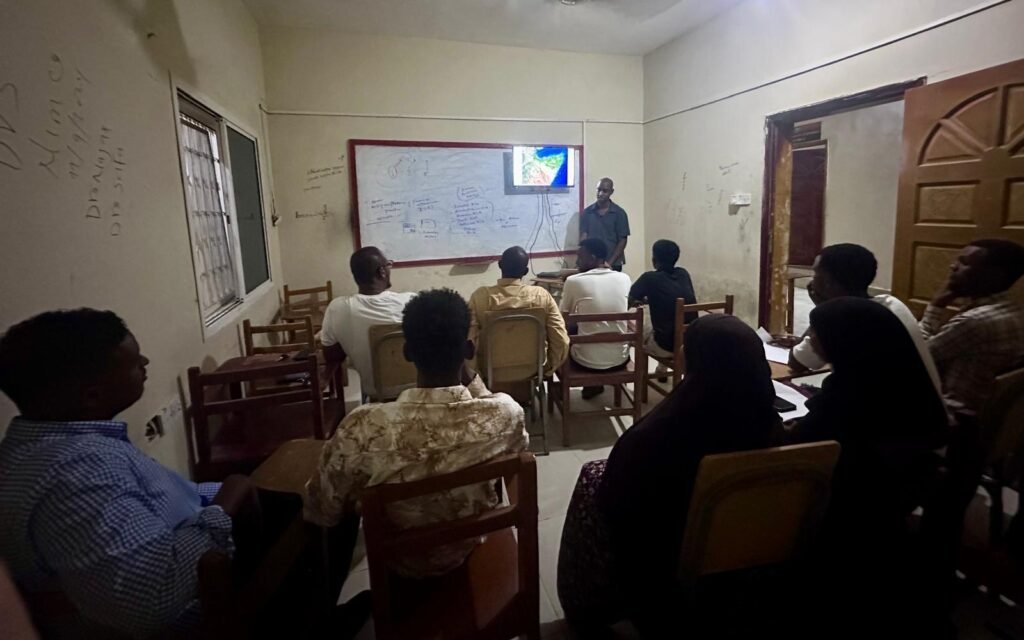
And at times, it’s difficult to turn down funding when the opportunity presents itself. Jabir tells me how hard it has been to find funding for RAAD RAAC’s projects, such as their 5-week long Berbera Heritage Skills Training Programme, which combines local oral knowledge, international expertise and practical skill-building for local people, equipping them with skills to conserve heritage.
He tells me he has struggled to find archives, resources or support for a number of reasons – but a main one was, simply, the laziness of its colonisers. “Out of the countries Britain colonised, they didn’t get a lot of Somalia, so it is not one of their colonial darlings. There would be stacks and stacks of archives from other countries, and with Somalia very little. I have one good photo of Berbera from the 1950s.”
That makes the documentation and transparency of his work so powerful.
Building at time of unravelling
Speaking with Jabir makes it clear that African architectures, in all their plurality, hold vital pathways to sustainability.
At the moment, I’m really interested in ancient Amazigh stone buildings, such as those in Chenini in Tunisia. These houses are carved into hillsides and mountains, built to cool in summer and retain heat in winter. They are ‘ksour,’ communal architecture to protect from invaders and store food for up to seven years in times of drought. Once thriving, climate change, the loss of Amazigh language and traditional skills have made these structures vulnerable. They are preserved as popular tourist sites, yet a traditional way of living, craft and restoration is dying without urgent intervention. Tapping into communal, ancient architecture is vital for climate resilience as the world is warming.
In the West, our building practices are responsible for 37% of carbon emissions. The way we build homes is also leading to extreme heat, which killed 358 people in London homes during the 2024 heatwave. These are leading to a boom in sustainable building and a desire to innovate in the West. When I undertook my traineeship, it was inspiring to use earth building in the urban context of London, but it was jarring to have it packaged as ‘innovative’. The solutions and technology have long existed.
Despite building with local materials, African architecture is neglected, uncredited and under-resourced. In Tunisia, our traditional building methods serve not only the climate, but also our communities and our cultures. However, these skills are waning.
“We’re at a point where we could lose everything,” Jabir says. He shows me a photo of a beautiful traditional building on his lockscreen. It was taken on his first trip to Somalia in 2021. A few years later, the building collapsed, with four kids inside who were tragically killed. Neglect costs, and local communities and their buildings pay the price.
 Jabir’s lockscreen
Jabir tells me this is one of many, many buildings that collapse in cycles of erosion and disrepair. It is a state of emergency, but he is one of the few sounding the alarm and intervening. The threats are successive and ongoing, a buildup of slow violence.
When we lose buildings, we lose so much. We lose memories, places and histories kept in the walls. Buildings keep the score of the place and time they were made. The places we live in reflect what happened and who was there. For countries like Somaliland, damage through war has crippled the infrastructure and the local communities. The rubble from crumbled buildings is a scar on the collective memory as well as the place itself. It is a physical reminder of the slower violence of erosion and neglect.
“We have such strong oral storytelling traditions, people can tell you who lived there, what they did, but the building will be demolished,” Jabir laments. “And what happens after that?”

There is deep understanding about the lives of crumbled structures, but the knowledge of how to preserve and restore is fading. As well as threats of war and climate change, a loss of traditional knowledge means buildings are crumbling through the violence of neglect.
Leaving a trace
Although we’re from different parts of Africa, mine and Jabir’s homelands tell similar stories. Our cultures have been colonised multiple times over, and our landscapes speak where there are gaps. We are both trying to listen to the whispers of the elders who remember.
We have our ear to the ground, our hands in the Earth, and we’re looking into the future. We share the feeling of attempting to travel through time to revive, restore and re-Indigenise.
Participating in architecture, culture and regenerative pathways can feel violent when our communities back home are on the frontlines. Despite being the original architects, cultural innovators and builders, we are under-resourced and neglected by those who stole from us. We in the diaspora hope it will trickle down, eventually. But we feel the slow drip of time, eroding what we hold dear. We are pushed to act today.
The loss of African vernacular architectural methods and craftsmanship is a socio-cultural emergency, although it is not treated as one. Building using local materials, informed by our culture, for and by the community is a key climate solution. There is a cultural neglect of this knowledge, even on the Continent. Yet there is revival, there are others, there is us. The desire to remember, restore and repair is there: and it is powerful.
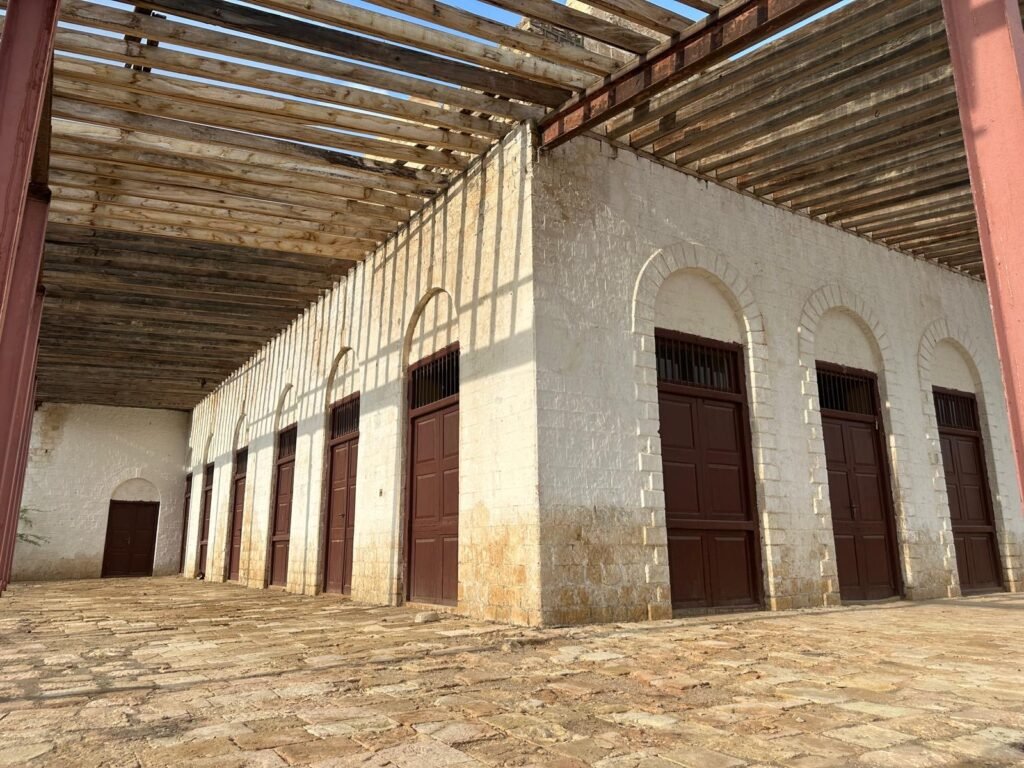
My conversation with Jabir set something into motion, a flame of possibility. As a sustainable builder from the diaspora, I am in awe of his vision and achievements. He is pioneering restoration of the built environment while empowering others. Yet, it dawns on me how much falls on the diaspora’s shoulders. How we are working through so much loss, yet still creating opportunities. I ask him what his dream restoration would be.
“It’s called Fakhr el-Din, it’s gorgeous. I’ve spoken with the imam and I have to build up trust as they’re a bit apprehensive of outsiders. It is a deeply historic mosque, built by the first Sultan of Mogadishu. It’s actually named after one of my great great grandfathers.”
Like its name suggests, RAAD RAAC’s goal is to leave a trace. Moving against historic neglect, Jabir is just getting started. Preserving our buildings, our spaces, our homelands requires active and thoughtful interventions. Jabir has initiated something beautiful, the diaspora reaching back through time for our traditions, and pushing us into ancestral futures.
What can you do?
Follow and explore:
Read:
- Why African Vernacular Architecture is overdue for a Renaissance
- What the West can learn from Africa
- Behind Somalia’s Architectural Renaissance
- Mogadishu through the eyes of an architect
- Beautiful Somali buildings are rising up in a former war zone. It gives me hope
- Somali Architecture Students digitally preserve their country’s heritage before its too late
Watch: