
I think most of us know we are being watched.
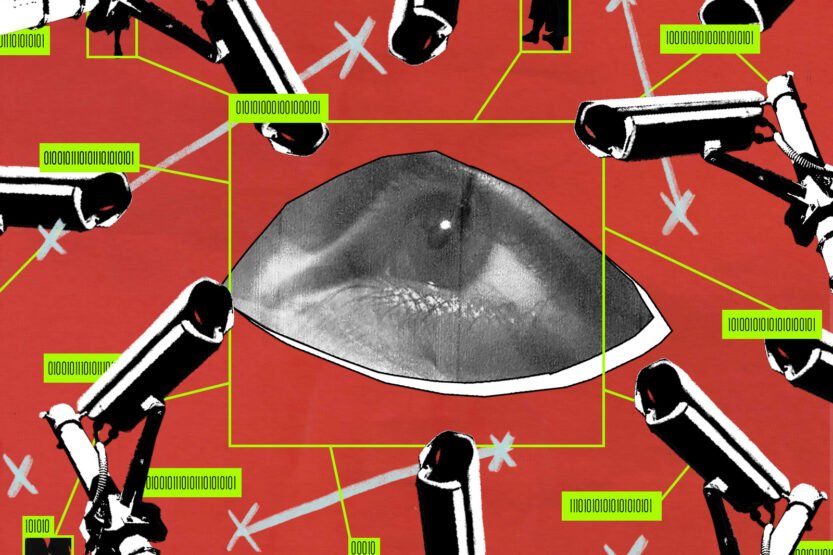
It’s not even the scourge of smart traffic cameras that can break down street scenes into searchable data points, the cookies on your browser, or the NSA agent listening in on the line. Constant surveillance is one thing – and it’s been an issue for years. Flock, a surveillance hardware-software company, for example, was founded in 2017. What I find to be a bigger problem is not that we’re becoming inured to it, but that our behaviours are starting to be primed to participate in it. We are no longer just the subjects of surveillance, we are encouraged to embody it.
The persistent panopticon of modern day life has transformed our behaviours, giving us new inhibitions and paranoias. Gen Z doesn’t freely shake ass in the club anymore. CEOs can’t casually cheat at Coldplay concerts. Even the smallest of things can blow up and become viral should a camera manage to catch it. We increasingly walk, talk, and interact in public straitjacketed by the notion that someone might be watching and listening, and it could live on the internet – and so public consciousness – forever.
At the same time, we are being sold a deep and persistent worry about our health and safety – a worry that can be fixed by buying a doorbell camera, tracking your friends’ locations, or buying a wearable health monitor to let you track your calories or hack your sleep. Is it worth it to know your own heartbeat rising and falling, knowing that companies like Oura are seeing it too?
There are two camps in this Brave New World. Camp One: the people who are skeptical about surveillance – encompassing those who are aware of it and concerned about it, to fully unwilling participants. They take the extra step to opt out of cookies, use burner emails or secure platforms like Proton or Signal, wear masks in public, or maybe even go full Luddite and ditch smartphones entirely. Camp Two: the people who really just don’t care either way. They’re accepting cookies to read the webpage faster. No shade to Camp Two – everything is pretty much stacked against Camp One, with how frictionless and expected surveillance is becoming in our lives.
But there’s more than just the path of least resistance. Over the past year, I feel like culture is warming up to introduce Camp Three: people who are participating enthusiastically in – even trendifying – surveillance, and are minting a surveillance capital-C culture.
An exhibitionist society
Ring, owned by Amazon, has sold tens of millions of smart security cameras and video doorbells that dot homes across the country. A few months ago, Ring cameras became part of a trend where users were using the cameras to record their outfits of the day (#OOTDs) to post online. Even the queen of Tumblr herself, Alexa Chung, took to the trend to show off her style, with WhoWhatWear declaring it possibly “the coolest new way to do a fit check.”
Some of the posts are deliberately posed. Others attempt to be more candid, almost found-footage style, walking from their cars, unlocking their doors, adjusting their bags of groceries. The latter is what makes me think this is why people are drawn to the trend – we know we’re all being watched, so when we get the chance to watch ourselves back or explicitly invite other people to watch us, don’t we want to look effortlessly dressed up? To look at ourselves from the perspective of a voyeur thinking, damn, they look GOOD? And on an internet that’s increasingly craving authenticity and relatability, this is just the progressive evolution of the faux-candid photo on the feed. This is the new benchmark for most candid you can be – unposed, lo-fi, in your own natural habitat.
People in New York City can one-up this – a project by software engineer and artist Morry Kolman lets you use New York City’s traffic cameras as photobooths. His art piece intends to draw attention to the taxpayer-funded surveillance structure wound into their daily lives. But for me, it also brings up questions of power, consent, and control.
The illusion of ctrl
Does it give users a sense of control, to use Ring cameras and other cameras as a tool rather than fully realising the gravity of surrounding themselves with surveillance devices? At the start of the year, Ring faced backlash for a Superbowl ad that showed Ring cameras up and down a suburban street looking for a missing dog as part of their “Search Party” feature. Rightly, people put two-and-two together and realised that this meant their own doorbell cameras could be mobilised for another purpose. Not just keeping an eye out for when your kids got back from school, or when packages got dropped off – but for keeping an eye on everything passing by.
By choosing to screenshot and post, maybe users are attempting to use their data the way they want to. The technology is already embedded in your life, and it’s already probably being shared and accessed – so why not gain some personal benefit from it? Does it also act as a retrospective way to grant some kind of consent, to feel not only okay with the constant surveillance, but insist on your participation with a sense of autonomy?
Obviously, none of that is how consent works. None of that mitigates the violation of constant filming. But as a psychological trick, I can see how it can be an exhibitionist reaction to the world we are forced into. Want to see me so bad? Here, goddamn! Like having someone blackmail you over your nudes and firing back by making an OnlyFans.
Manufacturing a life worth living
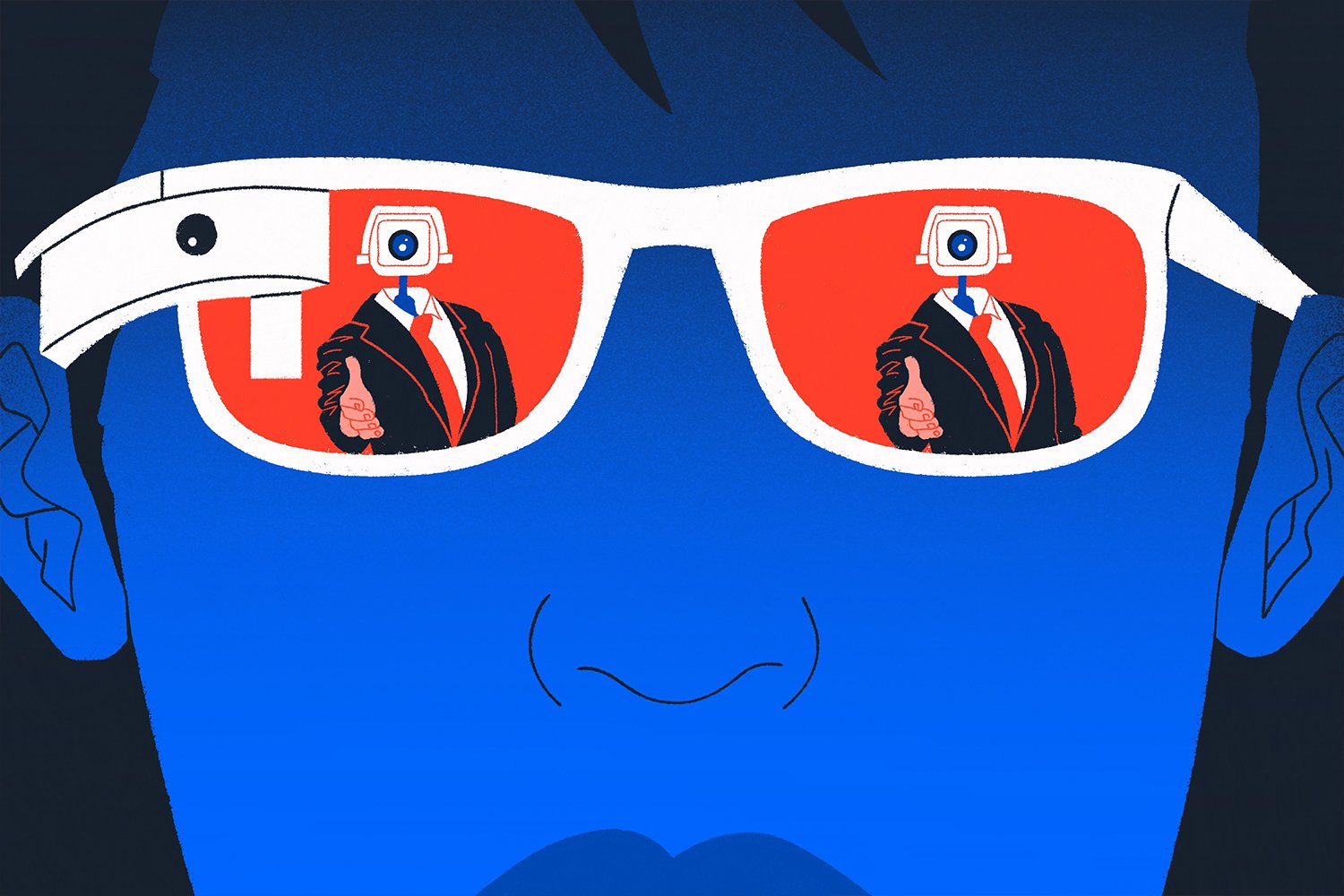
It’s also not shocking to me that the avenue into the Culturing of surveillance is fashion. The entire industry thrives on the churn of manufacturing desire. Meta is making the gamble on this principle with their partnership with sunglasses giant EssilorLuxottica, the parent company of Ray-Bans, as they launch a third generation of Meta Glasses.
Believe it or not, Meta Glasses were first introduced in 2021. Yet, the newest iteration of Meta Glasses, with AI integration alongside the camera and microphone, is the one that has drawn the most attention.
Their new wave of publicity is based partly in style rather than in pure function – a departure from the wonky, Silicon Valley advertisement they have done in the past. Across platforms like Instagram and Tik Tok, influencers both micro and macro are joining in to hawk the Meta Glasses. Kylie Jenner designed and voiced a special collaboration. Meta sold more than 7 million pairs last year.
Injecting Meta glasses into this aspect of culture – fashion, social media, and influencing – invites a new way to change our behaviour to engage in surveillance Culture. The content that their social partners create promises that you can play back or share moments of your life from your own perspective. Your concerts, get ready with me videos, day-in-my-life videos – the kind of envious content that keeps the pot of commodity fetishism simmering.
But also, making and consuming this type of content burdens you with the need to live a life worth watching. Life becomes a posture, where what you’re eating, doing, watching, wearing, etcetera, becomes less for yourself than what you think would perform well for the invisible audience. You structure your life around creating the polished product of Your Life, rather than just… living.
Life is but a stream
Throwback time: I think about Casey Neistat, who committed to a project of making high-quality daily vlogs for years. His deep commitment to filming each day of his life was an Internet first encounter with the kind of impact that constant surveillance Culture, even willingly engaged in, can have on you. In one of his videos, commemorating 800 days straight of daily vlogs, he shared a reflection: “As long as you’re focused on what is my video today? then are you ever really, like, present in what’s happening in your actual life?”
Then he cut in several B-roll shots of him vacuuming his studio – angles that you can tell he set the camera up for thoughtfully.
Back then, his work was borderline performance-art. Now, with the rise of live streamers and 24 hour streams, his work is almost quaint, like, we’re not watching you sleep? You’re actually collecting B-roll and editing your day?

Join our mailing list
Sign up for shado's picks of the week! Dropping in your inbox every Friday, we share news from inside shado + out, plus job listings, event recommendations and actions ✊
Sign up for shado's picks of the week! Dropping in your inbox every Friday, we share news from inside shado + out, plus job listings, event recommendations and actions ✊
This kind of always-watching pressure creates a shared habitus of the streamer class – behaviours, dispositions, even language acquired unknowingly – that is seeping out into the day-to-day. It’s everything from the revelation that left-wing political streamer Hasan Piker reportedly pauses and commentates on media off-camera as if he was still streaming to an audience, to overhearing middle schoolers addressing the hypothetical audience in their conversations: “chat, is this real?”
The push to incorporate invasive wearable technology like Meta glasses turns on the streamer brain in us all to the n+1th degree. Even if they’re not recording, their sheer presence – the thought of Chekov’s gun going off, the guard in the watchtower suddenly facing you – makes the wearer and everyone around them perform.
Maybe this is part of why people are drawn to them, a certain category of creeps especially so. The ability to record from your perspective can even feel empowering to the user – now, you are participating in surveillance from the point of view of the surveiller. You can exercise power and influence over other people’s behaviour when you point a camera at them knowingly or unknowingly. In perhaps an obvious and predictable consequence of putting a surreptitious recording device in the hands of the masses, Meta glasses are used by pick-up artists or influencers in the manosphere to film their interactions with women in order to dissect and humiliate them online.
It is perhaps all about control: feeding us bite-sized parts of the surveillance structure as Culture to make us feel better about it. We don’t just have to be prisoners, we can be their overseers, and pretend that modicum of power makes up for being trapped all the same.
Against normalisation
Camp Three surveillance Culture feels to me quite fringe still – but it will sneak up on us if we aren’t careful. We simply cannot normalise or accept Big Tech and the government’s efforts to herd us quietly into 1984, whether forcefully or through soft power.

People are speaking up. There has been a backlash to Meta’s “pervert glasses.” Their ability to creepily film people without their knowledge and without their consent has drawn harsh and serious criticism. Bars in major cities have explored banning Meta glasses entirely, and social shaming campaigns in London have disparaged Meta glasses users. Meta is now launching Meta glasses with no camera function at all, after being forced to mass-disable cameras when they found that their safety measures could be tampered with. (Which, also, mass disabling tech from afar is… a questionable amount of remote control.)
After activists pointed out the potential partnership between Ring and Flock – a company manufacturing smart licence plate readers known for collaborating with law enforcement, including ICE – public pressure sank the deal. A decentralised campaign to De-Flock America encourages citizens to take down Flock’s invasive smart licence plate readers, whether by encouraging municipalities to stop their contracts with Flock, or even vandalising and disabling infrastructure independently. Internationally, countries are considering banning Meta glasses in government buildings like offices or courts.
Trust and surrender
But the question of resisting surveillance culture is as much legal and political as it is internal. For me, the question is: where does one begin to dismantle this pervasive Culture? How do we start being critical about the role surveillance tech plays in our lives, and grapple with the feelings of what is and isn’t in our control? It’s difficult to ask myself and to ask you to adopt a constantly vigilant, paranoid posture about surveillance – and perhaps even counterproductive to. Realistically, I feel like the solution might be (paradoxically, counterintuitively) to embrace a greater sense of trust.
Last month, I had the joy of going to see Phoebe Bridgers on her famously phone-free tour, where audience members had their devices sealed away in pouches for the duration of the show. It was the best concert I have been to this year. Without the pressure of surveilling or being surveilled, the respite of hiding behind phones or the preoccupation of posting, the entire experience felt intense, like touching a live wire. For an audience of thousands, the entire show – in all of its emotion, movement, light, and sound – was absorbed completely unadulterated. The result was shocking and overwhelming and something I have completely forgotten could exist. The word that comes to mind is surrender.
If the selling power of surveillance culture is to feed anxiety and insecurity – fighting the propaganda looks like leaving things unsurveilled and trusting it will be fine. Trusting it would be better, even, if you leave your smartphone at home, eschew wearable tech or home safety cameras, or leave things untracked, unmeasured, essentially at rest.
The system of surveillance needs to be dismantled, but that is a much bigger project. Surrendering teaches you to live without the crutch of surveillance and the promise of “safety” or “comfort” or “convenience” it offers. It could help build up an immune system against what insecurity Big Tech tries to sell you next. By surrendering – touching grass, as the online lingo has it – then maybe something in the human spirit can breathe.
What can you do?
Read:
- The dark data supply chain
- The dangers of Biometric Mass Surveillance #ReclaimYourFace
- Islamophobic governments have a new weapon – AI and algorithms are the new surveillance state
Support:
Watch:
 Image by @kalakal_klk