
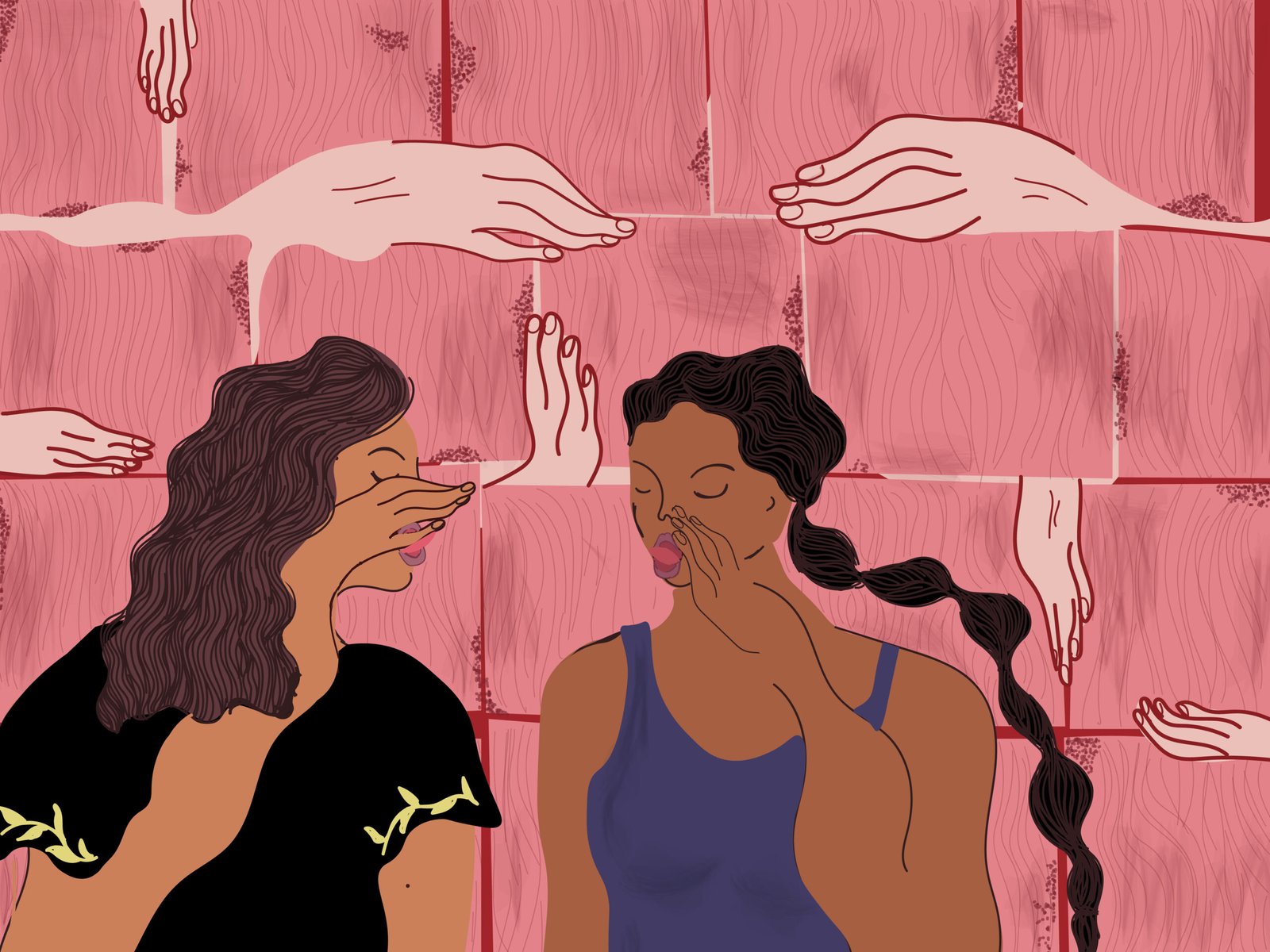

A “LooLooLooLee” is enough to command the senses before the rest of the body catches up. Unmistakable and unapologetic, the zaghrouta has long been a fixture in backdrops of joy, resistance, and intergenerational commune for Arab communities across the world.
It is a cultural marker of belonging and identity, where those who belt can feel tethered to home from oceans away. At its core, it is also a release – an ancient ululation produced by rapidly moving the tongue, typically performed by women in moments of heightened emotion. As an Algerian woman myself, it is an expression I have always honoured and waited to hear at events – one I remember desperately wanting to learn so I could mirror generations of women through whom the cultural practice surges.
That is why when a fan’s trill at Sabrina Carpenter’s Coachella set last month was met with a denigrating “Is that what you’re doing? I don’t like it.” The moment left me, and many others, with a bad taste in the mouth. The swift backlash was unsurprising, and sparked broader conversations about how Arab voices are received, policed, and challenged.
The consequences of cultural incompetence
For many people, including myself, Carpenter’s dismissal of the zaghrouta struck a familiar nerve. The disgusted contortion of her face – before a single word was spoken – felt reminiscent of school dynamics.
“Is that what you’re doing? I don’t like it,” quipped Carpenter to her (mostly) laughing crowd. Her words felt just as venomous as “Is that what you brought for lunch?” when the aroma of spices slips out of a container in the cafeteria. Whether intentional or not, by singling out the fan and amplifying the moment on one of the world’s largest festival stages, Carpenter turned it into a public show of humiliation – effectively casting the fan as an “other.”
Yet Carpenter’s reaction is hardly an anomaly. It mirrors the treatment Arabs or Muslims routinely encounter, where our very existence is deemed strange or exotic, and we are therefore cast as pariahs. While this moment unfolded on a public stage, derision does not wait for a crowd of thousands; it persists in quieter moments and through our daily interactions.
A few months ago, I was invited to a former friend’s home for an event during Ramadan. As I was preparing to break my fast, she told me she had a question about fasting. Out of everything I expected to hear, “Is it true Muslims don’t shower for a whole month?” wasn’t one of them.
When I told her how ridiculous she sounded, she laughed – and because I didn’t want to inflate the moment further, I nervously laughed along– to seem easygoing and that I could take a joke. But I couldn’t shake how insulted I felt. Amongst the other attendees sitting in her home, I was reduced to a caricature because of a narrow worldview that could’ve easily been expanded through even a simple Google search.
Often, we quell our own discomfort in these situations because we don’t want to seem difficult or be told that it’s “not that serious” – even when it is. But this reserve is always at our own expense. The Coachella incident was followed by declarations that we should just take a joke, which merely reminded me of the frustration I felt during my previous interaction. I separated myself from that friend shortly after.
Unfamiliarity met with irreverence
Through centuries of colonisation, brutalisation, and a self-professed standard of whiteness, the West, to the detriment of the rest of the world, has set forth the current state of affairs as we know it. In Orientalism, Edward Said touches on this extensively. He defines Orientalism as a style of thought based on the “ontological and epistemological distinction between the “Orient” and the “Occident”, or the East and the West. He postulates that the “Orient” is a social construction of the West that establishes the East as the ultimate “Other”– obscure and irrational, as opposed to a purportedly ‘civilised’ West.
In this context, then, this phenomenon accounts for and stretches far past Carpenter’s reaction. Said’s analysis illuminates the ever-present “us-vs-them” dynamic that continues to shape stereotypes and reduce those outside of the West into a monolith.
For many white audiences, unfamiliarity is not followed by curiosity, but often discomfort through irreverence. Cultural expression that lives its own life outside of Western frameworks and what it deems appropriate is often dismissed and flattened through the language of barbarism and conduct.
Arab culture is welcomed when it is repackaged and sold to audiences as an “exotic perfume” or “the perfect dark liner” on TikTok, but in a crowd full of concert goers, it is disruptive and uncouth. This was especially evident when the Arab community’s grievances over Carpenter’s comments and lacklustre apology mutated into a discussion over proper “concert etiquette” and a we don’t do that over here rhetoric that has long been exhausted. It feels almost ridiculous to me that in the year 2026, we are still being told to lower our voices.
The apathy that follows
The Developmental Model of Intercultural Sensitivity (DMIS), developed by Dr. Milton Bennett, is also a useful framework for understanding this reaction at an interpersonal level. The six-stage model illustrates the ways people experience and interact with cultural variance at hand, ranging from the Ethnocentric part of the spectrum – denial, defence, and minimisation, while the other end–acceptance, adaption, and integration, falls under Ethnorelativism.
Carpenter’s instinctive “this is weird” response reflects those earlier stages, where variance isn’t met with delicacy, but discomfort. The model itself proposes a progression towards the ethnorelativism orientation, which makes way for a multicultural awareness and respect towards cross-cultural differences. Carpenter’s choice to meet confusion with dismissal, even after provided context, was an unwillingness to move past that limited baseline of ethnocentricity.
None of this is to suggest Carpenter should’ve known exactly what a zaghrouta was. It is unrealistic to expect that level of cultural literacy, and her response was ultimately shaped by the limits of her sociocultural environment.
However, the grace we are expected to extend to others often creates room for apathy – and in this case, during the conversation with the fan, Carpenter did not make the effort to recalibrate. Instead, she drew a comparison to Burning Man – a primarily white radical festival known for eccentric behaviours, such as yodelling – and exemplified how frequently microaggressions are glossed over and turned into moments of levity. Instead of tact, she opted for spectacle. It wasn’t even a week before the screengrab of Carpenter’s expression was memeified and turned into a reaction picture that has garnered over thousands of likes.
Who gets to receive grace?
Celebrities and public figures, particularly those who are white, are far from paragons of progressivism. This is not groundbreaking news! But when there are countless slip-ups, we are often told to give them the benefit of the doubt, to understand where they’re coming from, and stand by while corners of the internet scream that none of it was ever that serious.
But why must we offer compassion to those who never offered it to us to begin with? To those who continue to ridicule us even after being corrected? When jokes or ‘sarcastic’ quips are made at the expense of marginalised communities, we dilute the severity of their realities.
To someone removed from that experience, it may not be that serious, but as the Global South continues to suffer in part because of Western language that dehumanises and misrepresents them – painting them as savages deserving of the destruction of their lives, these moments are far from fleeting faux-pas. They are a part of larger patterns that are, absolutely and unequivocally, that serious.
Join our mailing list
Sign up for shado's picks of the week! Dropping in your inbox every Friday, we share news from inside shado + out, plus job listings, event recommendations and actions ✊
Sign up for shado's picks of the week! Dropping in your inbox every Friday, we share news from inside shado + out, plus job listings, event recommendations and actions ✊
Yes, there are far more urgent matters we must be concerned with, especially as multiple crises across the world are presently unfolding. That much is unquestionable. But it is also worth considering how the refusal to engage in cultural humility contributes to the aforementioned apathy that enables further violence. Without pushback and accountability, language that minimises us will continue to be regurgitated, normalised, and thereby weaponised, sustaining that never ending cycle of harm – and at the very least, we must not let it.
A cultural language that endures despite it all
In the end, the zaghrouta, much like any other cultural practice, is not asking for permission to exist, nor is it apologising for doing so. The sonic expression is a constant, echoing and bouncing off the walls of salons that hold our most intimate moments – from henna ceremonies, to scholastic achievements, to aqeeqas. It announces itself in liberation movements and moments of grief: raw, yet sacrosanct in its own regard.
When zaghrouta envelops a space, it becomes a uniting force that defies rigid boundaries, preserving the spirit that inhabits the body. It is not seeking anyone’s understanding or approval, but it is deserving, and demanding of respect.
I hope the events of Sabrina Carpenter’s Coachella performance – while buried now within the never-ending news cycle – have illuminated the weight of what happens when we refuse to meet cultural dissonance with the sensitivity it requires, and the harm that it inevitably sows.
Let this be a lesson, and a stark reminder that encourages not only Carpenter, but the rest of us to rethink how we approach what feels unfamiliar – to value diversity instead of challenging it. That at least, is the bare minimum.
What can you do?
- Rather than challenging what feels ‘odd’ to you, reflect and work to understand why various cultural practices exist. Ask questions and seek experiences that advance your cultural worldview.
- Read Edward Said’s Orientalism
- Read Edward Said’s Culture and Imperialism
- Read Basic Concepts of Intercultural Communication by Dr. Milton Bennett
- Read the article: Can the Subaltern speak? By Gayatri Chakravorty Spivak
- Watch: Reel Bad Arabs
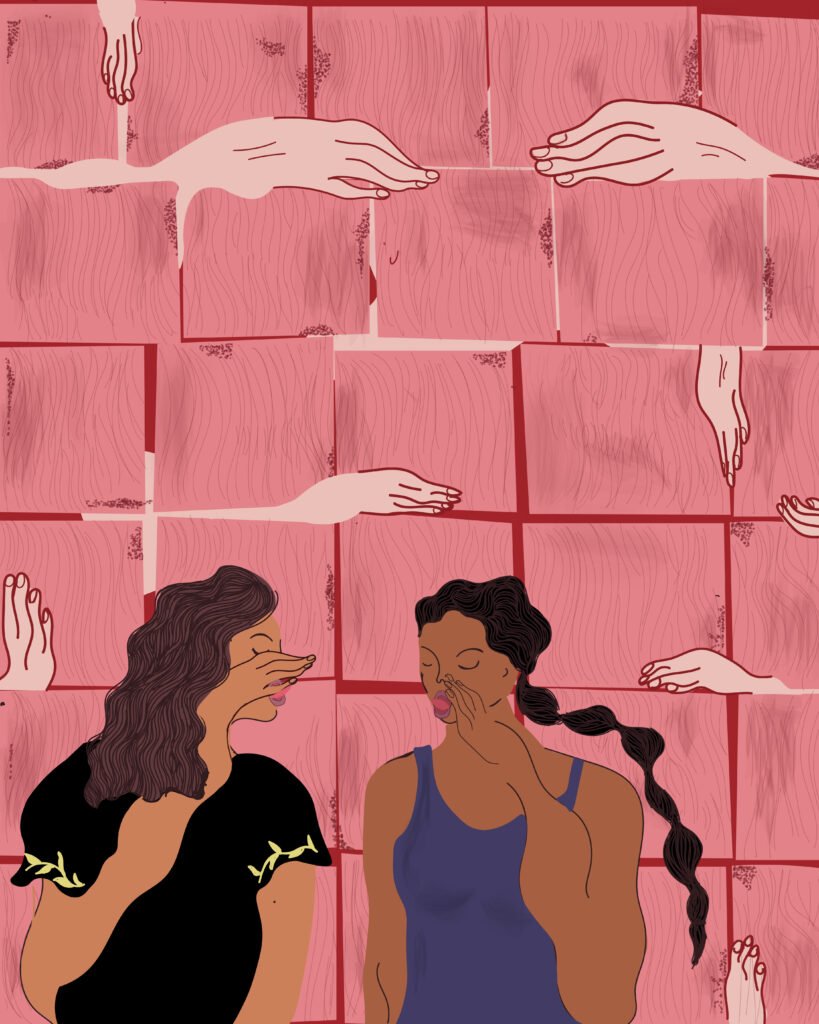 Illustration by Hayfaa Chalabi who says: “I tried to depict how Western/white culture acts as if blocks of culture need to be limited to its rules, rejecting practices that come from different civilizations beyond its access and understanding. In the article, the author highlights how the ”Zaghrouta” is a release and a celebration that exists beyond white/Western interests of limitation. This release is depicted through the characters that stand outside of the blocks that western culture has decided is acceptable.”