
In the Spring of 2025, after 10 years of living in London, I decided it was time to leave. I wanted to step away from a life shaped around earning taxable income and move instead toward ways of living rooted in exchange, community, and a slower pace. A way of life that might give me the mental space to reflect on what truly feels alive as I enter my 30s and a new phase of life.
At the time of leaving, I was working three different jobs and had managed to save enough to step away from a country that was about to see a rush of immigration riots and already undergoing staggering food prices, rent escalations and a general feeling of unease stirring in the air.
On a warm April day, whilst running some last-minute errands before leaving London, I was stopped dead in my tracks by a cordon of police tape and blood on the pavement. Two bystanders told me that a group of teenage girls had murdered a pensioner getting off the bus by kicking his head into the pavement. The reason is still unknown, and yet the link between youth violence and poverty has been well documented.
The image of the blood-stained grey concrete pavement that I walk across every day has been etched into my memory ever since. I left London with a bitter taste in my mouth, and the words of Nina Simone’s song, ‘Baltimore,’ swimming around in my head. “Hard times in the city… Ain’t nowhere to run to, There ain’t nothin’ here for free… And the people hide their faces, And they hide their eyes, ‘Cause the city’s dyin’, And they don’t know why.”
The three teenage girls, who were responsible for the death of the man named Fredi Rivero, have pleaded guilty at the Old Bailey for the manslaughter of the 75-year-old. Whilst media reports write that the death was ‘out of the blue’, I question what leads three teenagers to act so violently towards someone they have no connection with. Reports suggest that such incidents are more likely to occur in the most deprived areas of the capital.
Across the UK, poverty is a far deeper and more widespread crisis than London alone suggests. In England, deep poverty affected around 2.6 million households among the poorest fifth. Of these, 44% were in arrears on household bills or behind on loan repayments, 69% were going without essentials, and 55% had cut back on food or experienced hunger in October 2025, according to a recent Joseph Rowntree Foundation report.
Yet statistics alone cannot capture the texture of that deprivation; the daily negotiations, compromises and emotional toll. I found myself wanting to understand not only the scale of poverty, but what makes a place feel liveable or unliveable, and what it means to exist within, or beyond, systems that feel extractive.
In exploring these questions, I’ve included conversations with friends who are navigating the tension between creative and corporate worlds, and what that balancing act has meant for their sense of security, purpose, and self-worth.
I’ve also been fortunate enough to step outside of the UK for a time, to travel and experiment with more exchange-based ways of working. That shift has reshaped my understanding of what it means to live beyond purely materialistic, monetary exchanges that reduce relationships to taxable transactions.
What does “liveability” really mean?
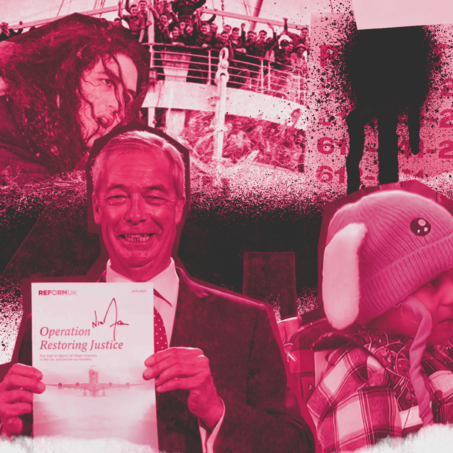
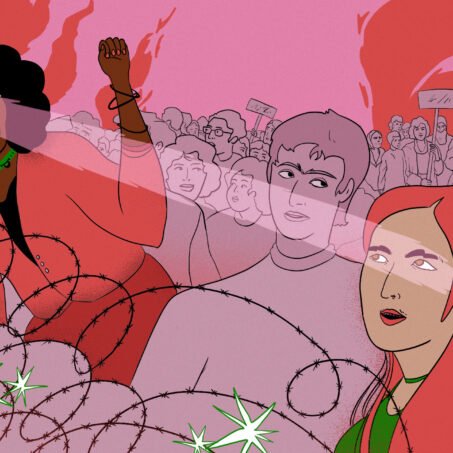
I left the UK first for Spain, and later for Peru. The UK sat on the cusp of one of the hottest summers on record, amid boiling political pressure that eventually ruptured into yet more fascist riots. Around the same time, in June 2025, the UK proscribed a Palestinian activist group, meaning hundreds of protesters, including the elderly and disabled, were being arrested for holding signs that demanded an end to the ongoing genocide in Gaza. These events reinforced my decision to leave.
This all got me thinking about the question of liveability. We hear a lot about “living wages” or the “cost-of-living crisis.” Whose perceptions of liveability are our social systems catering to, and who are we leaving out of this discourse?
In an attempt to better understand the question of liveability from a more widened lens – not just as a means to survive, but also to thrive – I speak with Naima Yousef. She’s a 31-year-old Londoner, who was born in Ethiopia and whose family immigrated to Peckham when she was two years old.
For Naima, growing up and living independently meant breaking family norms – something she found harder than the financial responsibilities of moving out and paying rent. Having lived at home until she was 25, Naima saved enough money to get herself on her feet.
For Naima, liveability means having a roof over your head, as well as having extra money to save, being able to socialise and have friends, and being able to move freely around.
“But even having a decent job, I’m struggling,” Naima tells me. “I can’t imagine how it is for people with a less stable income and with kids. There are points I can put money aside, but there are points where I’ve had to clear savings for a family reason, and then I’m always starting at zero.”
She continues: “As a working-class person, London is wiping us out. You have to choose to either live away – and then not be able to save for a future – or live at home. There will always be sacrifices, but you won’t be able to save for a future or buy a house, unless you get a very high-paying job or make massive sacrifices.”
As I listen to Naima’s story, I also reflect on my own journey as a graduate living in the city with little means. I went into bar and care work; night buses became a quiet place of refuge as I both dreamt and sometimes wept at the same time. I remember feeling exhausted. How was it possible to work all these jobs and only just about keep myself afloat? And at the same time, I wanted to make time for my writing, which I did on the side for free.
Surviving vs thriving
Carving out time for my writing was always sacred for me, and I etched it out of my time because, for me, it’s always been an act of healing. Reclaiming my time for creativity has always felt like an act of rebellion. To understand more deeply about how poverty can affect the lives of creatives, and our abilities to follow our passions and dreams, I speak with cultural organiser, James Kite, founder of Find Enlight.
James tells me: “I’ve already seen a lot of people move out of London or stop pursuing their creativity and see the shimmer and light go out as they pursue careers that pay their rent but do not necessarily feed their soul and creativity.”
Like many currently working in the cultural space, James feels the direct squeeze of a lack of funding and resources. “On a very simple level, hosting spaces have been so expensive,” he explains. “The rent and the charges to hire out spaces make it unaffordable to make free events – and I’m someone who loves to run affordable things. It becomes hard to purchase the food, materials, and all the things that go into putting on an event.”
Join our mailing list
Sign up for shado's picks of the week! Dropping in your inbox every Friday, we share news from inside shado + out, plus job listings, event recommendations and actions ✊
Sign up for shado's picks of the week! Dropping in your inbox every Friday, we share news from inside shado + out, plus job listings, event recommendations and actions ✊
And yet, moving beyond the physicality of liveability, James goes further to include the importance of having experiences that excite and interest you:
“Having a bare existence of paying rent and going to work – that’s surviving, not living. I would say that in my imaginary landscape, I’m living, but in reality, surviving,” he says. “The imaginary landscape is the last bastion of hope that we have. This should elevate and move into physical form.”
The pressures James describes reflect a much wider national context. According to the Local Government Association, councils were facing a £2.3 billion funding gap for 2025/26 ahead of the Autumn Budget. In the same survey, culture and leisure were identified as one of the most at-risk areas in district council budget setting, with over half of chief executives saying that museums, galleries and theatres were likely to be negatively impacted.
James continues: “For me, truly thriving would be to be able to invite friends over, have a place to host people, and have the ability to create without worrying about time. Because creation is also more to do with the mental landscape – the worrying, the constant exhaustion, and beating yourself up for not doing enough work. Not having these physical constraints is what thriving means to me.”
As well as living at home, part of James’ emotional coping strategy is being open about his struggles and affirming others about theirs.
I resonate with James here. Rather than returning home, I’ve found that exchange-based ways of living have offered a greater sense of spaciousness, a relief from the constant pressure of rent – and allowed me to spend more of my time engaged in land-based work more generally: preparing plant beds, tending soil, learning seasonal rhythms, or offering mural exchanges which has been something that I have loved. These slower rhythms have given me mental clarity and breathing room.
At the same time, I’ve developed practical skills and deeper connections to land and place, spending more time with my hands in the earth, something that has felt renewing and restorative.
Revolutionary acts
In so many ways, this space has allowed me to dream, to explore, and to discover new avenues of creativity. I keep returning to the feeling that reclaiming our time and our energy, and moving beyond purely monetary, transactional relationships with how we spend our days, is one of the most alive and quietly revolutionary acts we can make. Whilst moving abroad might not be an option for all, especially those who have caring responsibilities and need to make ends meet to put food on the table, I think moving towards each other in times of hardship is available to all of us, no matter where in the world we are.
Lately, I’ve been drawn to ideas like Mutual Aid, Doughnut Economics, and the wisdom emerging from land-based projects that are rooted in non-transactional exchange. These ways of being and relating feel like invitations to reimagine value, community, and what it truly means to support one another. For me, this has meant reframing how we show up to ourselves and to each other, and being honest with ourselves about when situations feel draining or extractive. I’ve also been learning not to feel guilty about taking time off, to release the fear of being “unproductive,” and to disconnect from my phone and social media when I need to.
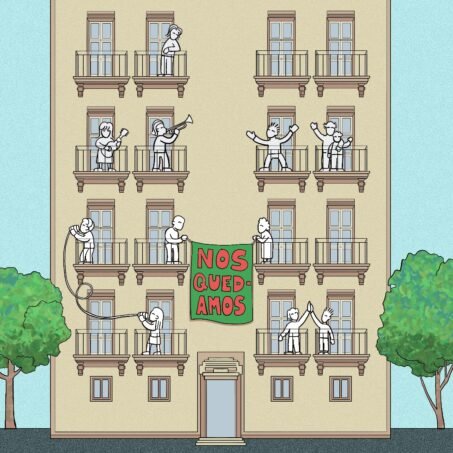
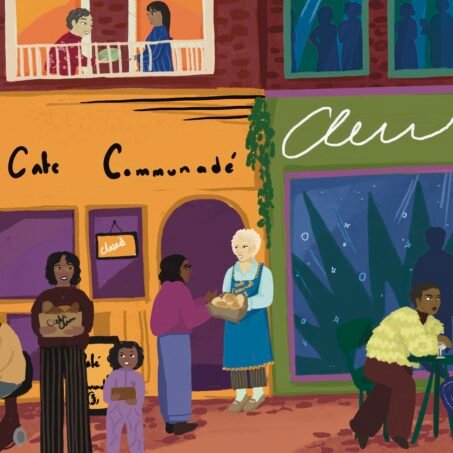
While the word community can feel overused and elusive, to me it means genuinely checking in with one another; asking for support when we need it, and offering it when we can. Sometimes it’s as simple as cooking a meal for a friend going through a hard season, or tending to a mother who is tired and needs to feel held; other times, it could mean creating a workshop or holding space for people to gather around something joyful and connective. And brick by brick, the sustenance of community can create the conditions for liveability.
What can you do?
- Listen to a recent related episode of Green Dreamer Podcast: Manulani Aluli Meyer: Nurturing untaxable relationships of mutual sharing
- Read this Substack article which includes some useful journaling prompts: micro-ways to resist internalised capitalism
- Explore a great resource for re-thinking economics in general: Doughnut Economics Action Lab
- Read Mutual Aid: Building Solidarity During this Crisis (and the next)
- Check out economist Grace Blakeley’s thoughts and insights on Substack.
- Watch a short video by Von Goval: The Suffocation of Culture in an Unaffordable World