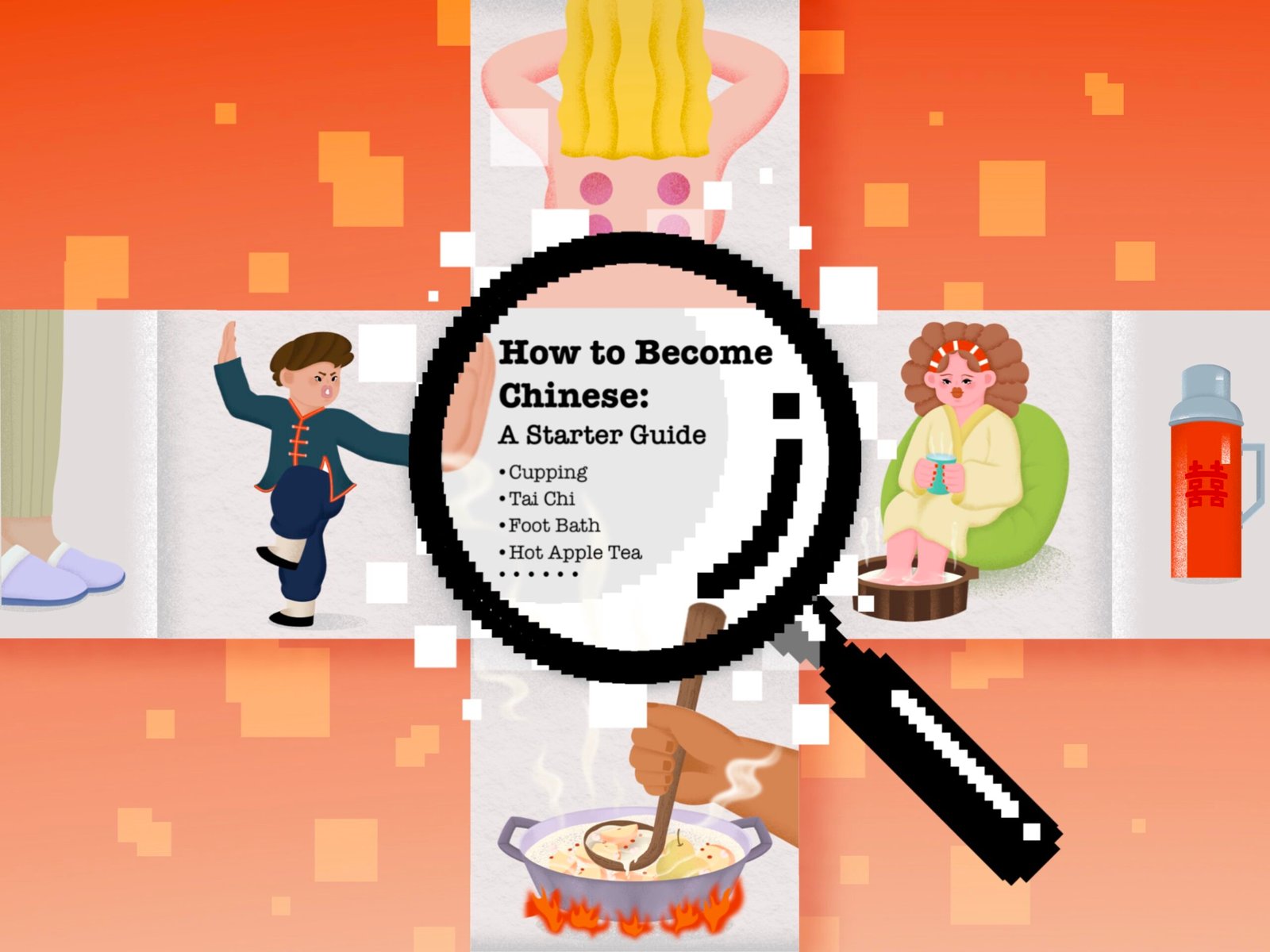
Scroll through TikTok or Twitter, and you start to see that the big thing right now is becoming Chinese. Not being Chinese – becoming.
Wikipedia – yes, Wikipedia – has a page on it already. A Gen-Z trend where China is very much “in.” People are “in a very Chinese time of their lives,” they’re “Chinamaxxing,” they’re becoming “Chinese baddies.”
At first, I didn’t know whether I ought to be curiously positive or plain insulted. I’ve been diaspora Chinese my whole life, and I’ve had an uncomfortable suspicion aimed at this enthusiastically “Chinese” population for a while, waiting to put my finger on what made me unhappy about it.
I didn’t like that they pinpointed specific activities that bestowed Chineseness on them – whether it was drinking hot water or doing tai chi. That was reductive. I didn’t like that people in the US were happily calling themselves Chinese. That felt like a snub to my lived experience, where racial and ethnic identity have tangible meaning – especially in America, where a good number of people would side-eye myself identifying as American.
My mild discomfort with the concept reached a genuine boiling point over Chinese New Year, when my feed was flooded at full saturation with influencers in Adidas Tang jackets offering insights into their celebrations of Chinese New Year and speaking on Chinese culture, hardly any of them Chinese themselves.
Often, self-described “newly Chinese” people react to criticism by taking shelter behind the trusty banner of cultural appreciation. It’s something more nuanced, they argue. It’s not just wearing inappropriately slutty qipao or pulling eyelids back, it’s engaging in legitimate activities of Chinese life, from smoking Chunghwa cigarettes to eating fish for the New Year.
But I do not truly believe that you can call yourself a cultural appreciator if you are using “newly Chinese” or “very Chinese time of my life” to describe your relationship with Chinese culture. Non-Chinese people describing themselves in that way are doing a few things: they are winking at a sense of “foreignness” that underpins the whole enterprise. They’re participating in a trend that commodifies Chinese culture. And they are reinforcing a colonial trick that ultimately centers them as gatekeepers of identity and culture.
The perpetual foreignness of Chinese identity
Bear with me here! This section is theory-heavy. When pulling apart my complicated feelings about the “Chinese” trend, I found it helpful to think about Jerome Cohen’s Monster Theory, a critical text of culture studies.
Cohen presents seven major theses looking at the figure of the monster in our cultural output, and analyses them as tellingly reflective of the cultures they come from, “understanding cultures through the monsters they bear.”
We can put the Western obsession with “newly Chinese”/”Chinese time of my life” in conversation with two of his major theses: The Monster’s Body is a Cultural Body, and The Monster Dwells at the Gates of Difference.
When Cohen argues that the Monster’s Body is a Cultural Body, he writes: “Like a letter on the page, the monster signifies something other than itself: it is always a displacement, always inhabits the gap between the time of upheaval that created it and the moment into which it is received, to be born again.” Ie: the Monster is reflective of the cultural context –fears, anxieties, dominant ideologies – in which it was created.
The first tweet referencing “you’ve found me in a very chinese time in my life” comes from April 2025, and quickly found an audience on TikTok – a Chinese-owned platform that, at the time, was reeling from a will-they, won’t-they conversation about a future ban in the United States. Geopolitically, anti-China sentiment has only increased with Trump’s election and inauguration a few months before – China is the economic, and now cultural, bogeyman for the West.
Affiliation with China on TikTok, in the midst of this unpopular ban hanging over the platform, was subversive and thumbed its nose at hammy American nationalism. But, it’s not necessarily an expression of solidarity – it still points out Chineseness as something monstrously “Other.”
Cohen’s thesis that the Monster Dwells at the Gates of Difference, argues that “the monster is difference made flesh, come to dwell among us” – this is the case for historic anti-Chinese sentiment, from the initial Yellow Peril to the current sentiment of being a “perpetual foreigner” in US society. It’s not just racial difference or racialised physical features, it was culture, lifestyle, and something internally, permanently “Other”.
The difference here is literally made flesh: it’s not just taking Chinese herbal medicine or drinking Tsingtaos – it’s the full Chinese conversion process through engaging in activities people feel are fundamentally foreign, and reducing a whole identity to acts of Otherness.
People post about how it’s their “Day 1 of being a Chinese baddie.” The joke doesn’t work with someone who’s Chinese, only when someone clearly non-Chinese winks at it. The dissonance between the identities is the point. It depends on a strong enforcement of a strict boundary between what is Chinese and what is Western, and never the twain shall meet.
Now, everybody can get more Chinese! The trend of #Chinamaxxing
I think in the early days of the TikTok conversation about Chinese and Western cultural dominance where users started migrating to other platforms like RedNote, shared memes, or posted pictures of themselves for glow-up advice, intentions were good. That was a great context for cultural exchange, and I got some excellent cat memes out of it. In that context, I can see how some users think being dubbed “Chinese” is a compliment, like a “I’m rocking with Mark because Mark is rocking with us” moment. It’s also something easier for Chinese people within China to engage with, without the weight of living a racialised existence as Chinese in the diaspora.
But slowly, it became less and less of an exchange and more of a declaration of identity that was removed from China itself. Being Chinese meant that you were being subversively anti-American or anti-Western, it also meant you were exotic or unknowable – all just repackaged orientalist tropes. Posts declare: “Chinese food is just food to me. Just a sign of how Chinese my mind is becoming.” The implication? You could never understand the levels of Chineseness I am participating in.
And participating in that orientalism leads you down the path of commodification and consumption, the ultimate end of the “Chinese” trend. The initial sentiment of “find me in a Chinese time of my life” has become “how can I become ‘newly Chinese?’” as if it was some sort of seven-step self-help process to “Chinamaxxing” that flippantly deals with a culture and a people.
That’s why I don’t think that Chinese American creators participating in the “Chinese time of my life trend” are off the hook: self-orientalising is a thing as well. Why are you highlighting parts of your life you feel are shallowly Chinese in a few musical beats of a TikTok, and packaging them for a public audience’s consumption? It ends up being like cut fruit poetry, looking at yourself and your culture through the looking glass of the West, inviting the Western viewer to vacation in something as intimate as your identity.
Join our mailing list
Sign up for shado's picks of the week! Dropping in your inbox every Friday, we share news from inside shado + out, plus job listings, event recommendations and actions ✊
Sign up for shado's picks of the week! Dropping in your inbox every Friday, we share news from inside shado + out, plus job listings, event recommendations and actions ✊
Gatekeepers of identity and culture
The other disturbing thing about “Chinese” being trendy is that it elevates spokespeople to guide people into the trend – whether or not they are actually Chinese. You will see non-Asian creators talk about what they are doing to participate in the “Chinese” trend, and realise that they are engaging with it not just as consumers, but as producers.
Theory time again: this reminded me of a couple of journal articles by Indigenous scholars discussing settler colonialism, which doesn’t just supplant the land, it also supplants and transforms the culture.
Settler colonial projects have always operated on a symbolic level, making a myth that justifies their presence there, and often rework traditionally indigenous symbols to their advantage. Kyle Powys Whyte describes it as a homeland process, “[settlers] have to make themselves believe that they are the “Indigenous” inhabitants of that region.” That also centres their voices as cultural authorities.
These non-Asian creators have effectively planted their flags in the Chinese trend. The Chinese trend is not being populated or disseminated by any real Chinese people, it’s dominated by people from the West indulging in a fantasy of authentic Chineseness that has the effect of empowering their voices and authority. Does it share traits of Chinese culture? Sure, in the way that Australian airlines or football teams borrow Aboriginal motifs for a nationalistic purposes – and aren’t actually Aboriginal.
And worse – they’re gatekeeping it. That’s why you have white creators trying to explain the fire horse year’s “woo woo” energy, or telling people the dos-and-don’ts of celebrating Chinese New Year. Their comments sections are invariably filled with non-Chinese folks bemoaning their rookie mistake of washing their hair or cleaning on the first day of the new year – like, duh! This was not your tradition or superstition to be familiar with.
This would have always been the end point of commodifying culture. bell hooks writes about it in “Eating the Other,” writing: “The commodification of Otherness has been so successful because it is offered as a new delight, more intense, more satisfying than normal ways of doing and feeling. Within commodity culture, ethnicity becomes spice, seasoning that can liven up the dull dish that is mainstream white culture.”
One of the most gobsmacking posts that came across my For You Page was by a leftist creator who told a story about how she was drawn to wear a qipao for prom in 2003, and suggested that she may have been Chinese in her past life – that could explain her current interest in demystifying US-China politics. Wow, I didn’t know supposed past lives could confer this kind of legitimacy over our present existence in this thorny, racialised society!
No matter the intention, the end result is always icky. Whether up on a pedestal or down on its knees, it’s always an orientalist fantasy, and one that feels like a grating claim on who gets to decide the “right” kind of appropriation.
Cashing in on the trend exploiting the otherness of China benefits those who are empowered to be loudest and proudest about it, and often that’s not people from the original culture. It then becomes completely subsumed – owned – by the dominant culture, in a way that preserves their dominance.
Everyone wants to be Chinese, but nobody wants to be Chinese
The fantastical experience of Chineseness that the trend indulges in is doubly a slap in the face to people who have to be Chinese every single day – even when it was “unpopular.” Viral TikTok videos from frustrated Chinese diaspora creators talk about this sudden frenzy of China-adoration coming only five years after a pandemic spiked hate crimes against Asian people, and as Asian people in the West are still facing racism and xenophobia. Others are more tongue-in-cheek, asking these “newly Chinese” folks to cough up – it’s their turn to give us hong bao, gifts of money in red envelopes.
Purported appreciation only goes so far when you can’t back it up with anything meaningful — not just meaningful to you, but meaningful to the communities you are appreciating. If you have ever reported that you were in a Chinese time of your life, it’s time to put down the hot apple tea — either back off, or take a crash course in actual solidarity.
What can you do?
Theory cited:
- Jerome Cohen’s Monster Theory (Seven Theses)
- bell hooks’ Eating the Other
- Patrick Wolfe’s Settler colonialism and the elimination of the native
- Kyle Powys Whyte’s Indigeneity and US Settler Colonialism
Other shado contributors that explored similar questions of trend, culture, and identity:
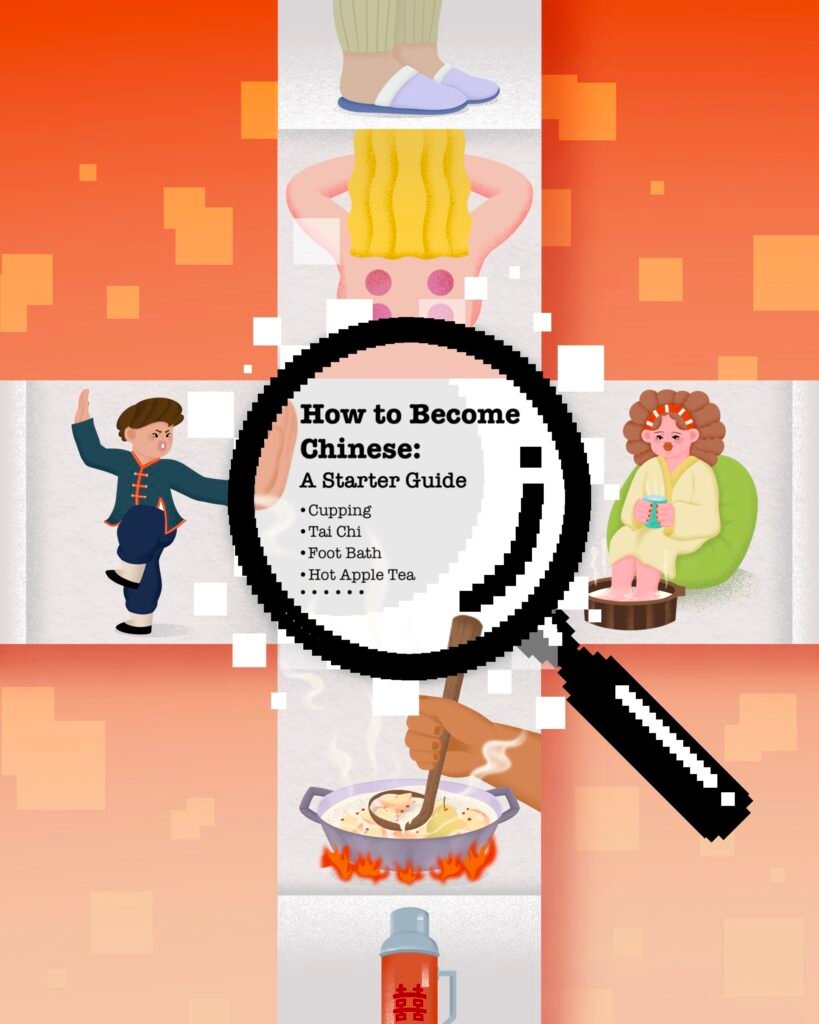 Illustration by @_wei.wu_