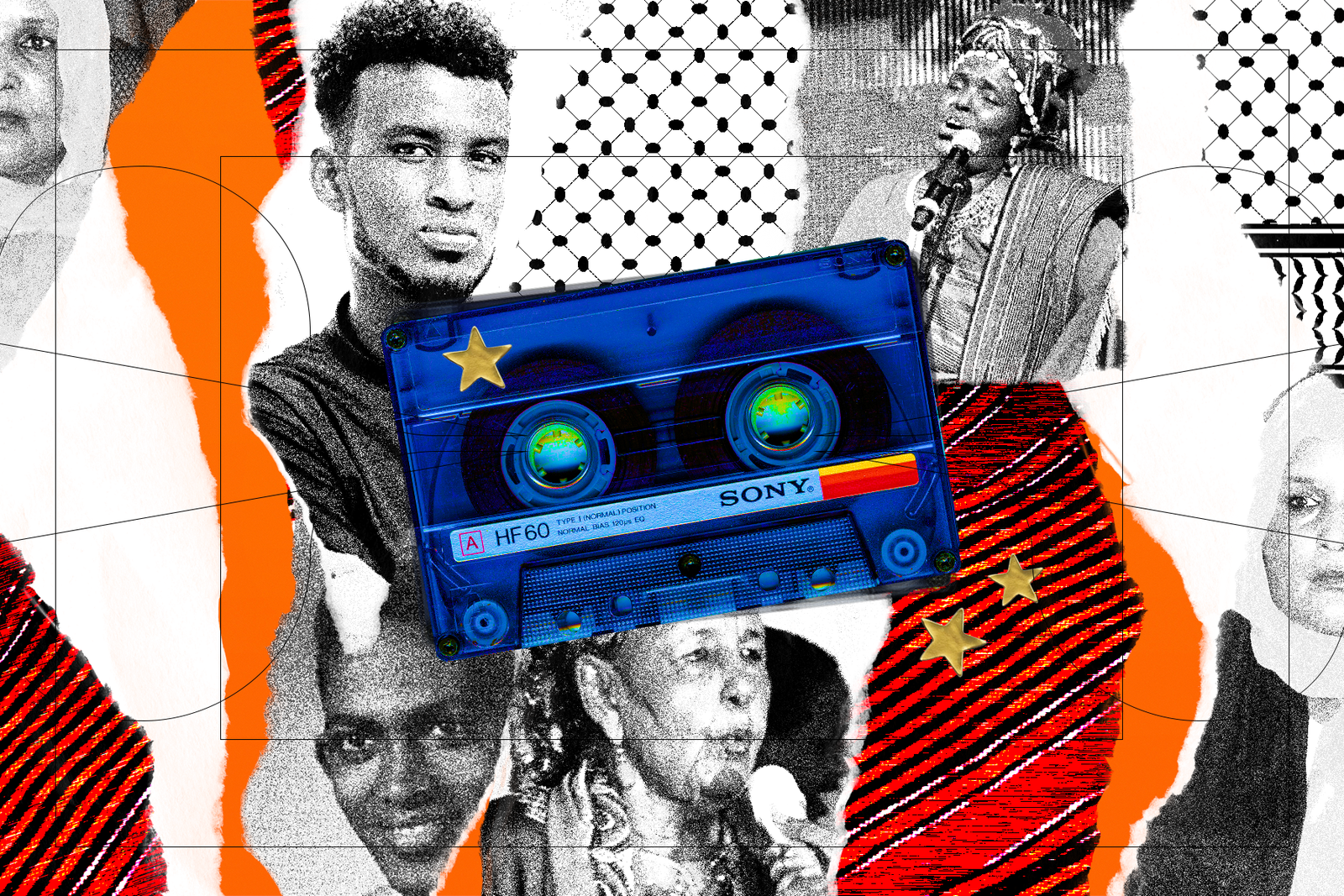
As a child of the 90s, a core memory of mine was being given a bunch of Somali music cassettes with the instruction to spin a pen through the spools, rewinding the tape to the beginning. I sensed this was an important task and I rolled the tape with care and intention.
These cassettes were precious, and not just because on-demand music was uncommon. In 1991, the civil war in Somalia was officially declared, and many Somalis sought refuge around the world or were internally displaced. The music on the cassettes were an attempt by the Somali community to keep alive the immense power, joy and resistance of the oral tradition.
Rather than being kept in secure places, these cassettes were borrowed by friends, neighbours and casual acquaintances, swapping hands so often it would be difficult to know who the original owner was.
Transgressing art forms and borders
Orality holds immense value in Somali culture. For the Somali people, spread across five territories in the Horn of Africa, it was a vital way to preserve history, cultural knowledge, and even record legal judgements. The Somali script was not standardised until 1972, and the oral tradition, often in the form of long-form classical poems called gabay, was used for centuries and passed down from generation to generation. Gabay would be performed in public, on the streets, at town centres, or open-air community meetings.
Where gabay was a public forum, complex and intellectualised, the balwo genre emerged from the periphery, pioneering the bridge between classical poetry and modern Somali music today. Discussing themes like misfortune and love over strings, drums, reed flutes and simpler lyrics, the genre spread. In the 1940s, balwo parties became sites of gathering, dancing and khat-chewing, to the dismay of religious scholars who viewed balwo as ‘debauchery.’
But balwo was pioneered by lorry driver Abdi Sinimo, who composed his first song as he frustratedly fixed his broken lorry on the journey from then-British Somaliland (modern-day north Somalia/Somaliland) to then-French Somaliland (modern-day Djibouti). Sweltering in the arid heat, he sang:
Balwooy, hooy balwooy,
Wahha i balweeyay mooyane,
Wahha i balweeyay baabuure.
Suffering oh suffering
I am unaware of what caused me to suffer.
What caused me to suffer was a truck.
Returning from that trip to the city of Borama, Abdi Sinimo performed his song with immediate success, and people gathered at his home to hear him perform, drumming his hands on a tin can. A small group of artists gathered around him and they formed a touring group, performing across towns in the north. By the time he returned to Djibouti in 1950, balwo was popularised.
In this way, Somali music and poetry often coalesced and transgressed frontiers of both art forms and colonial borders. It is a reminder that music cannot be contained by a border, gate, wall, checkpoint or visa.
Anti-colonial sonic practices
During colonisation, Somali musicians and artists played an essential role in communicating discontent and amplifying calls of resistance.
Whilst balwo was born on the border, the qaraami genre emerged in urban centres like Zeila, Hargeisa and Mogadishu, which were sites of trade, cultural exchange and interaction. From the Arabic word غرام (gharām), meaning ‘infatuation’, qaraami was influenced by Arab, specifically Sudanese, music and Somali Sufi chants. Qaraami sounds were characterised by soft and soulful melodies, oud strings and light drumming; its lyrics were famous for discussing themes like romantic love and yearning.
Dr Ubah Christina Ali Farah wrote about how metaphors of love were used in Somali music to cryptically cloak patriotic imagery. She recounted that the composer and singer Abdullahi Qarshe was asked to perform in front of the British colonial governor in the city of Berbera and used the genre as a tool of protest. Taking advantage of the language barrier, Qarshe broke the spell of the performance and the concert became a call to action: ‘Ka kacaay!’/Rise up!’ Qarshe was a pioneer of the heelo genre from which qaraami evolved from and he spearheaded the Walaalaha Hargeysa group, which is cited as having initiated the qaraami genre.
This concert-turned-protest in front of the British colonial governor embodied revolutionary love; a love that is courageous and truthful and, most importantly, concerned with transforming the conditions of oppression. The longing imbued in the oud strings reverberated into a longing for freedom and justice.
It also wasn’t the last time Qarshe subverted a colonial invitation. In 1957, the BBC asked Radio Hargeisa for a theme tune for the newly established BBC Somali. Qarshe, a broadcaster for Radio Hargeisa at the time, provided the instrumentals for his song Dadkaan dhawaaqayaa. However, the original accompanying lyrics were:
Dadkaan dhawaaqayaa,
Join our mailing list
Sign up for shado's picks of the week! Dropping in your inbox every Friday, we share news from inside shado + out, plus job listings, event recommendations and actions ✊
Sign up for shado's picks of the week! Dropping in your inbox every Friday, we share news from inside shado + out, plus job listings, event recommendations and actions ✊
Dhulkooda doonayaa,
Hadday u dhiidhiyeen,
Allahayow u dhiib
These people are calling out,
yearning for their land.
If they rise up for it,
Oh God, grant them (their wish).
The identifiable whistles of the lute and piping melody over the oud penetrated the radio waves, and, recognisable only to Somali speakers, the BBC had unwittingly been broadcasting an anti-colonial message.
Resistance was also embodied in traditional folk song-dance combinations like dhaanto and buraanbur, both characterised by drums and handclapping. Dhaanto, a communal song-dance combination, was used as a way to lift the morale of resistant fighters in the Ogaden, the Somali region of Ethiopia. The dance experienced a revival during the Dervish Movement, a 25-year armed struggle against British, Italian and Ethiopian imperialism from 1899-1920.
In circular communion, buraanbur is recited over drums exclusively by women who would communicate gendered issues, celebrations and resistance to colonial rule. This became an effective messaging tactic used by women in the Somali Youth League (SYL), the first major Somali political party who fought for independence.
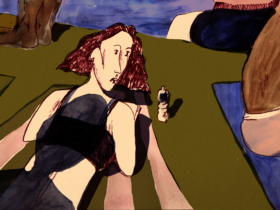
Blurring the lines between poetry and music, Hawa Jibril, a member of the SYL, composed Sisters, which described the activities of women in the struggle for independence and criticised the continued patriarchy once Somalia gained independence. She recited:
At the time we were fighting for our flag
Sisters, we chanted and we clapped
Till our hands and jaws got sore
Sisters, we sold our jewelry
Depriving ourselves
And donated to our League
Enriching the struggle
Whether explicitly like dhaanto and buraanbur, or subtly like Qarshe’s hidden message in the BBC Somali theme song, artists subverted colonialism through performance, dance, and movement, with and without lyrics. In overt and covert ways, these examples show us that music is a powerful method to stir, disrupt and agitate.
Unjust rulers fear music
In the epoch of decolonisation, the air was alive, and 1960 was dubbed the ‘Year of Africa’. Across the continent, in Somalia, Nigeria, Senegal, and the Democratic Republic of Congo, European colonial rule fell like dominoes as 17 nations in total achieved independence that year and more in the decade that followed. Independence marked an era of cultural and artistic renaissance, and of Black and African pride.
But just as a cassette has two sides, legacies of underdevelopment, extraction and border-making revealed new challenges. Somali artists did not just compose and perform songs on anti-colonial resistance but also on corrupt Somali leaders too.
In the 1970s-1990s, the then-President and military dictator Siad Barre recognised the power of artists and musicians and deliberately sought to force artists to compose songs to honour him. When the singer Maryan Mursul criticised President Barre in her song Ulimada/The Professors, she was banned from performing. To earn a livelihood, she later became the first woman taxi driver in Somalia.
In January 1989, as Somalis faced economic hardship, the country relied heavy on foreign aid, the genocide of the Isaaq clan in the north, the air pregnant with Mogadishu riots, and the assassination of religious figures which would occur in a few months, the singer Saado Cali Warsame performed her song Land Cruiser at the National Theatre in Mogadishu. To an audience which included government officials and President Barre himself, who arrived with one hundred and fifty Land Cruisers, a symbol of wealth, she sang the lyrics:
“Go ahead and drive a Land Cruiser in the dusty street of Mogadishu with your outsized ego, while you beg for grain to feed your hungry people”.
The song was a damning indictment of the kleptocratic extravagance of his dictatorship and the widespread poverty of the country. Saado Cali Warsame was arrested, and not for the first time. During questioning, she said it was hot and asked for the air con to be switched on but the interrogator said the electricity was cut. She asked for a glass of water but the interrogator said the water was cut. Finally, she asked why she had been arrested, when she had simply reflected the reality of life under the regime.
The experiences of Maryan Mursul and Saado Ali Warsame are ones that many musicians still know and experience today. Faced with censorship, loss of livelihoods and freedom, their stories are a reminder of the role artists play in society. Through truth-telling, their songs form both sonic evidence and resistance. Listening to these artists and their music today is an inspiration for how to be audacious and confront power with art, honesty and wit.
Sonic protests and the role of artists
The power of artists, musicians, poets and cultural workers is widely recognised in Somali culture as a tool for change, even by agents of oppression. As many Somali artists, musicians and poets risked their freedom and lives to speak truth to power, I don’t seek to romanticise the loss of freedom and livelihoods that artists have faced as a glamourised pastime. Their experience is painful, and their stories are a reminder of the long tradition of defiance against the co-option of their power by oppressive forces.
In June 2026, the popular Somali singer Khalid Kaamil was taken from his home in Hargeisa by the Somaliland intelligence agents and detained for several weeks. His family was told he was being held for an unreleased song about Jerusalem, which included lyrics that the city ‘has been stolen’.
Somaliland, an autonomous region in northern Somalia, was recognised as a state by Israel at the end of last year and has had increasingly deepening relations with Israel. The government in Somalia called Israel’s recognition an act of “state aggression” on Somalia, with the aim of further displacing Palestinians to Somaliland and establishing a naval base in Berbera, a coastal city facing Yemen where the Houthis have enforced a blockade on Israeli-linked ships.
Khalid Kaamil’s song and arrest as part of a long tradition of Somali artists and musicians using music, poetry and orality to defy injustice and tyranny. Across genres, Somali musicians have held a vital role in communicating political and social discontent, resistance and unity.
For us all, not just the Somali community and diaspora, these stories of artists and musicians should mobilise us and inspire us to use whatever tools we have. More than hope, it is a promise that no empire or tyrant lives forever.
The majority of artists have long faced asymmetries of power, and as we are reckoning with the world’s new and old challenges – climate disasters, seemingly unending wars and multiple genocides – it is still the time for bravery. The act of solidarity is an indiscriminate, generous and mutual flow – just as freely given and received as the Somali cassettes of the 90s.
What you can do:
-
- Read this brilliant article by Professor Safia Aidid – Haweenku Wa Garab (Women are a Force): Women and the Somali Nationalist Movement, 1943–1960)
- Support Sudanese-led initiatives for aid such as @freedomforsudan
- Support @artistsforcongo using art and music to fundraise for vital services in the DRC and Sudan
- Check out the Somali Arts Foundation, providing creative opportunities in Somalia and Africa
- Join Artists for Palestine UK, a network of artists and cultural workers standing for Palestinian liberation
- Check out this important organisation, Artists Frontline
- Take action with campaigns and boycotts with WRITERS AGAINST THE WAR ON GAZA
- Read more articles from shado’s HEAR section
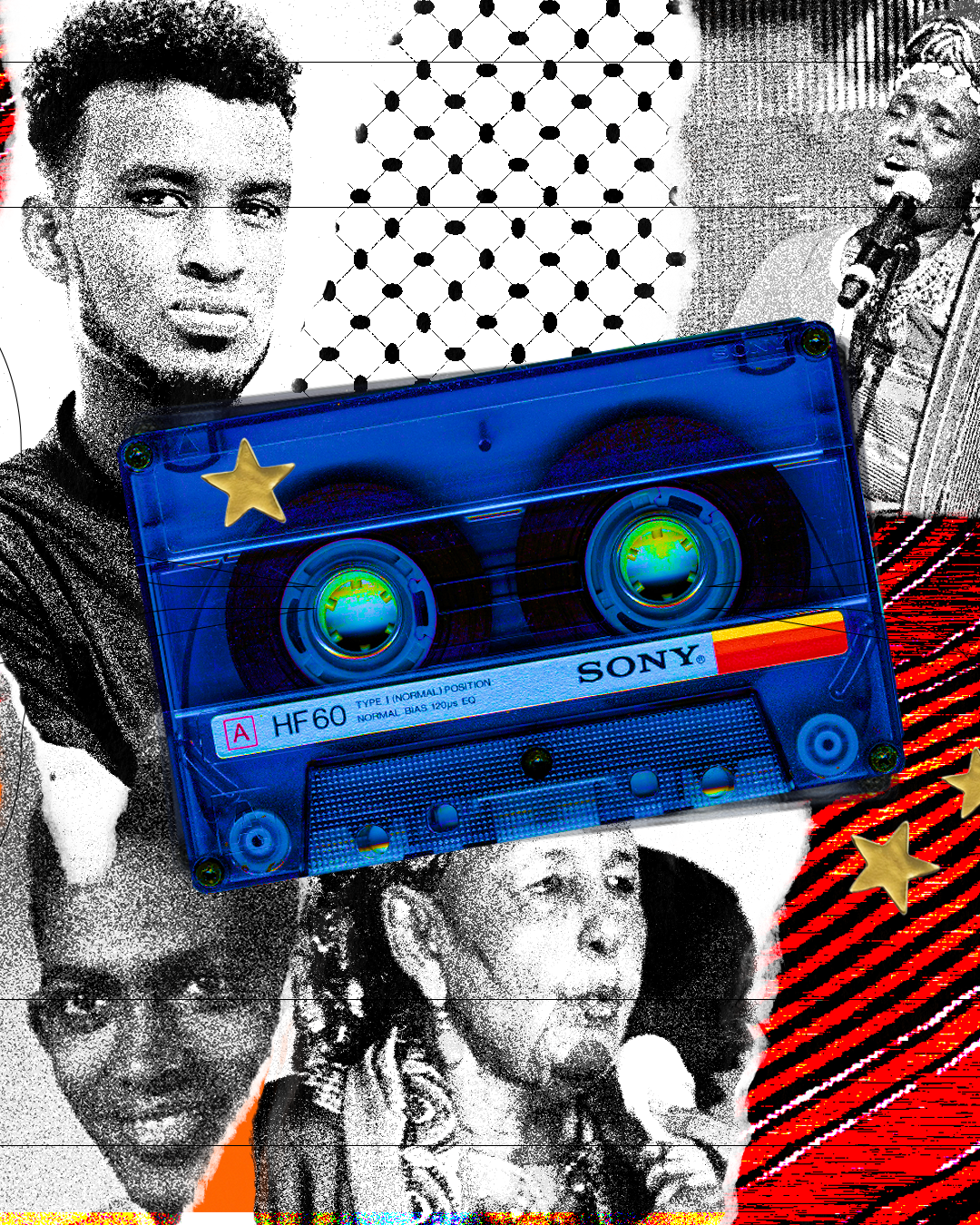 Illustration by Alexandra Francis @alexefrancis