At shado, we’ve been encouraged by the resources being shared around social media in support of the Palestinian cause. But in the hope of cutting through the noise and hearing a nuanced opinion, we sat down with editor Elia J. Ayoub to ask his thoughts on what is happening in Palestine and talked about language, the facade of religion, abolition through a Palestinian lens and everything in between.
First off, we want to ask why it’s so important to immediately debunk the idea that the situation in Palestine/Israel is ‘complicated’ or too complex to talk about.
On a very basic level, there’s no equal side of power. Palestinians have no army, no navy, no airforce – no airports, even, because Israel bombed Palestine’s only airport in 2001. Palestinians don’t control their own borders. They don’t even control the Gaza sea. So on a basic, power dynamic level, there are no ‘two sides’ to this.
There’s media coverage whenever any overt violence flares up – and I say ‘overt’ violence to distinguish from the daily violence which is just there as a constant, but that doesn’t reach headlines. Other than what has been happening in the past week, the violence is just business as usual and therefore rarely ‘newsworthy’.
As for why it’s not a complicated situation, that’s because understanding ethnic cleansing, mass murder and apartheid doesn’t require much. Israel adopts a supremacist worldview whereby native Palestinians are simply not viewed as equal under the law, and especially Palestinians living under military occupation in Gaza, East Jerusalem and the West Bank. The main complicated aspect is just how deeply rooted Israel’s attempt to dominate everything that affects Palestinian life is.
On this, why is it damaging to refer to what is happening as a ‘conflict’?
Conflict implies that two sides have some equal say, and that both parties are making rational decisions. Just today, the EU Commission President released a statement condemning Hamas’ rockets over Israel. That’s it. She didn’t even say that ‘both sides were committing crimes’, she didn’t even both-sides this, which is already a very low bar. This is still where we’re at in Europe.
So, conflict as a term implies forces on both sides – and I’m not denying Hamas as a force, and I’m not condoning Hamas, who are fucked up in many different ways – but at best, they have those rockets, which Israel for the most part can intercept. The shelters in Israel function pretty well; shelters in Gaza are a cruel joke. There are no shelters. If your building is targeted, that’s it – you can’t go anywhere. And Gaza is obviously closed on both sides, with Palestinian residents unable to leave its borders. This is with Egypt’s complicity, I must add. I get really annoyed at the language of “the Israeli-Palestinian conflict” or “the Israeli-Arab conflict”, because it just doesn’t mean anything. It’s a completely meaningless term.
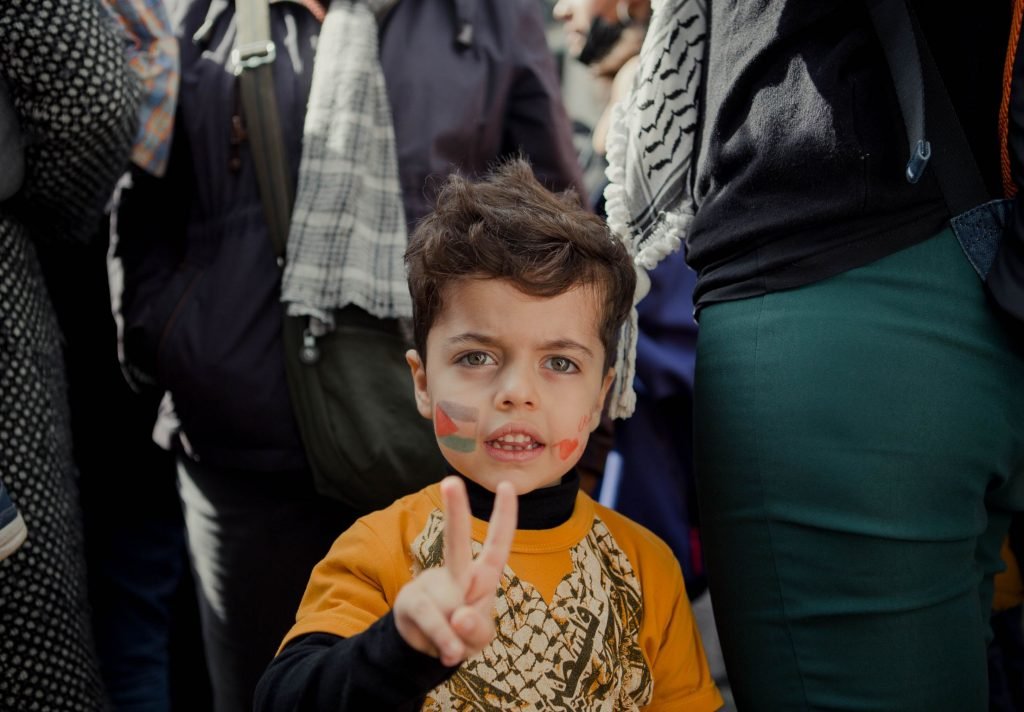
An argument people use in favour of bowing out of the conversation is that religion makes it more complicated – what would you say to this?
It’s not religion, it’s nationalism. Honestly, I don’t care for the argument about the Jewish importance of the Western Wall (the site of a now-viral clip of religious Jews singing a vengeance song as Al Aqsa mosque burns in the background). There’s more on this by Israeli scholar Yair Wallach in the Guardian.
And it’s not even completely significant that Al-Aqsa is a religious site for Islam. It’s certainly not negligible, but the Palestinian cause is not just about Al-Aqsa. There are Palestinian Christians, there are Palestinian atheists and even Palestinian Jews. It’s actually very simple. It’s mind-boggling how simple it is. Pro-Israel people like to trap you in details, you know, ‘the Jordanian government did this in the 50s, the Egyptian government did that in the 70s’, or whatever – but it’s not about that. None of this changes the fact that this is a military occupation. None of this changes the fact that Palestinian refugees do not have the right to return (which is much more feasible than most people think). And as long as that’s not taken into consideration, the rest is just noise.
It comes down to a battle of narratives; it’s this false ‘Jews versus Arabs’ discourse, or the imagined ‘Israel is the Western outpost in the Middle East.’ Lots of people like to get into that, and take a lot of their identity from it, so it’s not easy to undo, but at the end of the day it’s about human rights. If a right is being violated, in what name, and how, and for which god – it doesn’t matter. The Israeli government’s apologists would rather you spent your time entertaining manufactured ‘culture wars’ rather than simply look at what the Israeli government is doing.
In the last few days, social media discourse has been trying to focus on the discourse of human rights rather than religious conflict. Are you seeing a shift in the way people are talking about the Palestinian cause?
There’s no doubt about it. I’m especially motivated by seeing the shift in American discourse regarding Israel-Palestine. This matters a lot because Israel simply cannot do what it is doing without direct American complicity. Biden clearly doesn’t really care, but there’s much more pressure at both the political and electoral level within the Democratic party. There are two crucial things at play here for the Democratic party: the ongoing discourse around Black Lives Matter, and the far right’s attacks on Jews and/or people of colour. These attacks have also allowed Arab and Muslim-Americans to link up with other minorities, and this is helping shift the discourse on Israel-Palestine. Historically, it was enough to say that Palestinians are Arabs to render a large part of the American population disinterested (and erasing non-Arab Palestinians in the process). There’s been a concerted effort to link up African Americans with the Palestinian cause, especially given the similarities in police tactics used by Israeli and American cops. And we’ve also seen the rise of many progressive Jewish-American groups, largely appealing to younger generations, and who are highly critical of the Israeli government – groups such as Jewish Voice for Peace, IfNotNow etc.
I’m a bit less optimistic about much of Europe, where governments have been too busy appeasing their far right, and are clearly not really bothered by Israel’s actions on any fundamental level. I think this goes back to Europe’s unwillingness to deal with its own white supremacy. I’d go even further and say that Europe is utterly unwilling to deal with its own antisemitism, and they’ve been instead equating fighting antisemitism with appeasing, excusing and supporting the Israeli government. That way, Europe doesn’t get to deal with its anti-semitism, and instead Palestinians get to pay for Europe’s centuries of antisemitism and for the Holocaust. The fact that Palestinians are mostly Sunni Arabs, the same ethno-religious group as many Syrian refugees already dehumanised and demonised in Europe, is yet another convenient component explaining the general disinterest among white Europeans.
I’m always a bit cynical when I see protests for Palestine on the streets of Europe – not that I disagree with them, because I participate in them too – but I always wonder if it’s really about Israel-Palestine or whether it’s a domestic issue. In Northern Ireland, famously, Catholic republicans would wave the Palestinian flag and Protestant unionists would wave the Israeli flags, but this has nothing to do with Israel and Palestine. Its actually messed up to be honest; they erase Palestinians and Jews like this. But that’s another story I suppose.
Another thing is that the PA in the West Bank is extremely unpopular. Palestinian protestors even burned down a PA police station. The PA are acting as collaborationist thugs, essentially, and have been beating protestors up since Sunday. It doesn’t look good – Gaza is being bombed by Israel on the one hand, and the PA is treating protestors like this on the other hand. Palestinians are organizing despite the PA, not thanks to them.
Can we talk a bit about the importance of connecting global struggles. You mention the connecting of Black Lives Matter to the Palestinian cause and we are seeing this more recently with the linking of what is happening in Colombia to the Palestinian cause. Is it useful for us to connect struggles in this way?
Yes definitely. I’m very anti-nationalist. For example, I have lots of issues with the way Syria is portrayed in the West amongst Western leftists; I also think there are a lot of missed opportunities in building bonds between Ukrainians and Syrians, Hong Kongers and Palestinians, and many more.
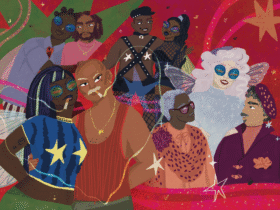
The thing about the Palestinian cause is that it is so internationalised by default. A lot of Palestinians have never been to Palestine – they’ve been in exile, they’ve grown up in exile. My grandfather who passed away last year was from Haifa, but I’ve never been and my parents have never been. And that’s the case for a lot of Palestinians, and so the relationship to the land is very complicated. The relationship to home is very complicated. We’ve had to build our own homes away from home, something which Jews I think know very well (one of many cruel historical ironies).
The point is that most governments are internationalist by default. They learn from one another a lot and I find it a bit self-defeating to also not learn from one another. An amazing example was in 2019 when you had everyone learning from the Hong Kong protests about how to fight tear gas and that sort of thing. But the practicalities of it will only help to an extent. You’re not going to defeat the IDF by knowing how to fight tear gas, but the principle is what matters really – it’s the effort of building bonds. And we’ve been seeing a lot of building bonds between Palestinians and African Americans, which is important.
There’s a lot of political power and political capital around Israel-Palestine which can be easily manipulated and governments have decades of experience of doing that. The ‘anti-imperialist’ governments of Syria, Iran and China can pretend to care about Palestinians while repressing people within their borders, and the pro-Israel governments of the West and India happily evoke racist discourse to demonise both Palestinians as well as their racialised minorities.
Angela Davis writes and speaks a lot about how Palestinians are forced to be prisoners within their ancestral lands and how abolition as a movement has to include freeing Palestine. What are your thoughts on viewing Palestine within the context of abolition?
Yes completely. We need to view Palestine within this lens because the Israeli government relies on carceral logic to dominate Palestinian life, from its obsession with collective punishment to it turning Gaza into what can only be described as an open air prison. It continues to adopt an inherently colonial logic. It is very difficult for me to imagine any real abolitionism without taking that into consideration.
At the same time, we also need to recognise that there is a reality there. You’re not going to displace half of the people who live there and Palestinians know that and they don’t even necessarily want that either. You cannot replace one injustice with another but there has to be something that gives. There has to be something that forces them to the negotiating table.
Join our mailing list
Sign up for shado's picks of the week! Dropping in your inbox every Friday, we share news from inside shado + out, plus job listings, event recommendations and actions ✊
Sign up for shado's picks of the week! Dropping in your inbox every Friday, we share news from inside shado + out, plus job listings, event recommendations and actions ✊
Similarities have been drawn between the systems of apartheid in South Africa and Israel-Palestine, and there are indeed loads of similarities. Another way to look at it though is that post-Apartheid South Africa is still deeply unequal. We have to take that into consideration too. Ending Apartheid is one thing, and it is crucial, but healing from years of Apartheid will require just as much work. Israeli Jews, with some exceptions, are still not ‘there’ in terms of recognising the ongoing Nakba of Palestinians, but there was a time when it felt impossible in South Africa too. Some groups, like Zochrot, are trying to remedy that. Other groups, the Refuseniks, are refusing to join the IDF out of principle. These are groups that deserve our support.
What I’m saying is that it’s useful to combine abolitionist ideals with practice, with thinking about how this can be applied today. In the immediate short term we need an immediate ceasefire. Israel, as we are seeing, can and is doing a lot of damage very quickly. They are clearly collectively punishing Palestinians for the actions of Hamas. They’ve bombed hospitals and bookshops, schools and media offices as a result.
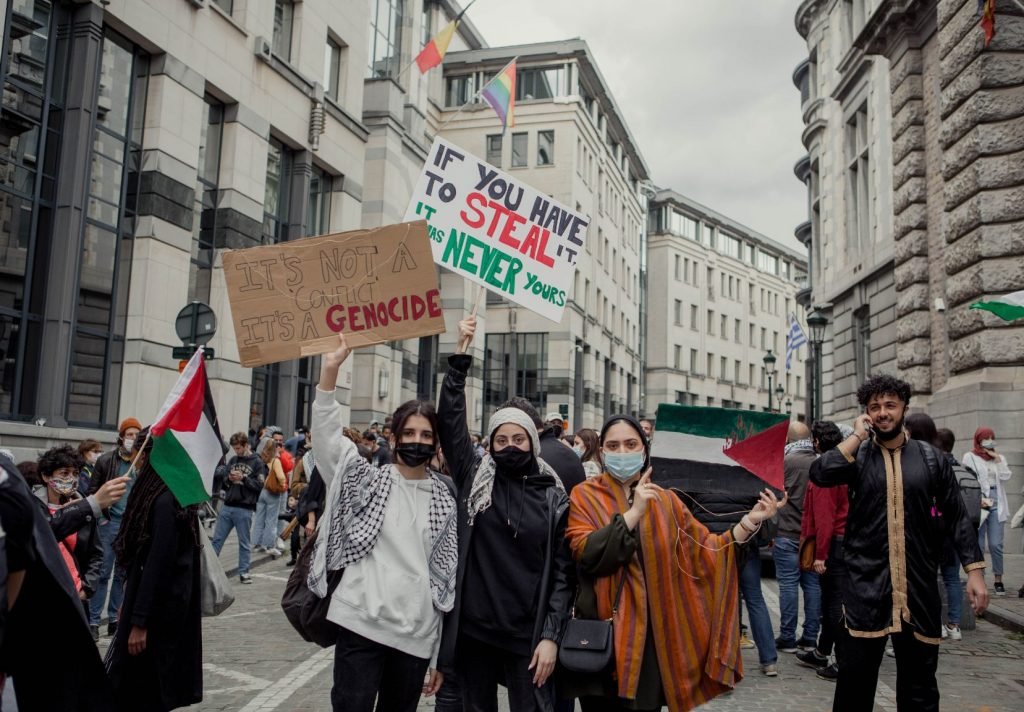 Photography by @abdulazez_dukhan