
Climbing up the stairs to visit my friend’s new apartment in the Gràcia neighbourhood of Barcelona in fall 2024, I passed by a door with a carefully typed sign posted on it:
Here lived Eli’s family. Afterwards came Ana Maria and her son. In September 2024 they were evicted despite being a vulnerable family. The property owner wants to earn a greater profit at the expense of a basic right.
– Stories of Sant Agusti 14
I was struck by the plain language and direct appeal – asking, and implicitly assuming, that passers by would care that this had happened to one of their neighbours. I had spent the last two years working to develop housing cooperatives in my hometown in the US, trying to build buffers against this kind of displacement. But I had only just arrived in Barcelona to begin a Master’s program and didn’t know about the scope of the housing crisis here, the way average rents had risen by more than 60% over the past ten years and new long-term leases were being overtaken by new short-term contracts. I took a photo of the sign out of curiosity and continued up the stairs.
Reaching my friend’s shared flat, I was greeted by a startlingly corporate aesthetic. Everything below the curved brick ceilings looked like an IKEA catalogue and every bedroom door locked with an electronic keypad. My friend had found this room rental just as most of us international students did – endlessly scrolling through housing posts and jumping at any that replied. Through the sign on his neighbour’s door, we began to see that these picturesque listings reflected an ongoing battle over housing in Barcelona – and that we were a part of it.
What’s behind the sign?
A few months later, my friend had already moved out of this room to live with a classmate when we saw the organised fight emerge on social media. We learned that the building had been sold two years prior and that the new owner had been steadily emptying the flats of their long-term residents by refusing to renew their leases. During this time, the owner had been converting the units from family homes into “co-livings” made up of individual short-term room rentals targeted at international migrants with foreign incomes.
At this point, short-term rentals and room rentals were not governed by the rent control regulations that applied to long-term leases. This meant that the new landlord was getting away with charging nearly three times the prior rent of the full flat by listing each room separately. And by marketing to international visitors, they had found tenants that could not only afford this higher rent, but that, as newcomers not connected to the neighbourhood, would be unlikely to grasp how directly their accommodation had come from someone losing their home. This combination created a powerful incentive for landlords to evict their long-term tenants in favour of these “temporary” rentals – a loophole in the housing law that residents had been pointing out since its inception.
The remaining residents of Bloc Sant Agusti took notice of the unpermitted construction work happening in the newly vacant apartments and raised complaints demanding the city intervene. In addition to pursuing this legal approach, they decided to organise themselves collectively and fight to stay in their homes past the ends of their current contracts. To do so, they sought the support of their neighbourhood housing union, the Sindicat d’Habitatge de Gracia, and the city-wide tenants union, the Sindicat de Llogateres.
“Do not choose to abandon your home”
The Sindicat de Llogateres was launched in 2017, growing out of the post-2008 housing movements that spread across Spain and building upon Barcelona’s deep network of neighbourhood associations. A dispute with my own landlord the following summer led me to attend a series of their weekly open assemblies.
At my first assembly, the newcomers were directed to form a circle off to the side and explain what issue had brought each of us to the meeting. For a handful of attendees, the recommended first step from more experienced organisers was to come to the following week’s meeting where they could speak with a lawyer who would examine the details of their contracts. This advice felt familiar to me from my work in the non-profit housing sector in the United States. Eviction prevention charities in the US could provide pro-bono legal services, mediation with landlords, and some limited funds to pay off arrears – but all within the bounds of the legal system. After that, there was frustratingly little left to offer.
But here, the meetings took a different route. One attendee described being at the end of her contract, with a landlord who wanted her out even though she had the money to keep paying rent. She was crying, asking if she had to leave her flat, asking if a lawyer could help her. An organiser explained to her [paraphrased from Catalan]:
“A lawyer can read your contract, but then they will tell you that there is nothing they can do, that you have to leave if your contract has expired. But we are not lawyers. We will tell you: do not, under any circumstances, choose to abandon your home. There are many others here who are currently outside of their contract and negotiating with their landlords. If you decide to stay, we can fight together.”
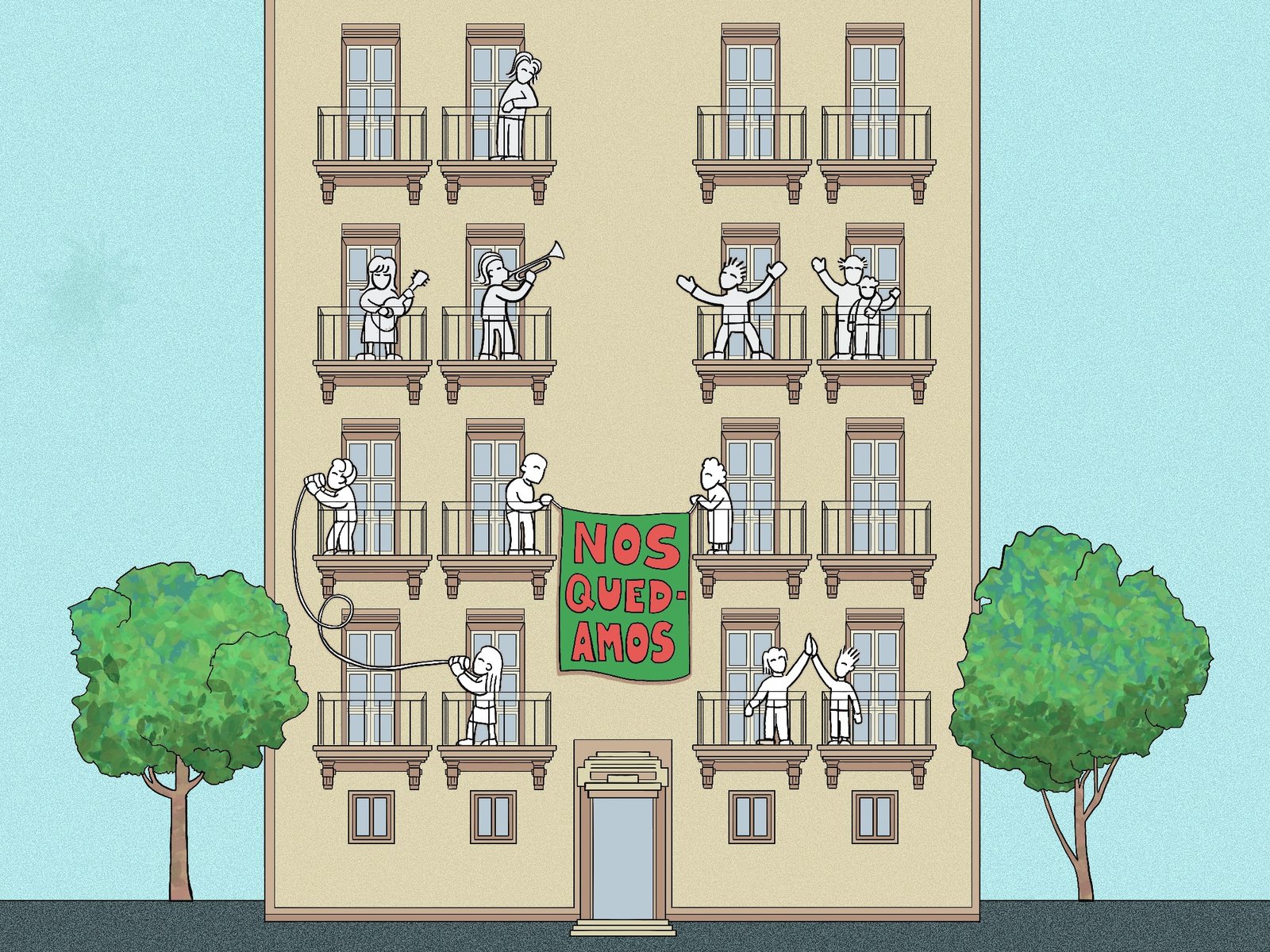
The Sindicat calls this the strategy of “Ens Quedem” or “Nos Quedamos” – We’re Staying Put. Refusing to leave buys time to build pressure on the landlord. It was clear to see why meeting together in person is so core to the union’s work. In order to negotiate with your landlord from such an oppositional position, you need to know that you have others who will support you.
After everyone had shared their situation, our group of newcomers joined the larger circle. Each member identified themselves by name, property, and landlord before giving an update on where they were in their process and if they had any requests for support. The possible means of support were broadly:
- Knocking on doors to see if others in your building were facing the same threat of eviction or rent increase.
- Creating media campaigns to highlight how a particular landlord or bank is pushing you out of your home.
- Accompanying you to directly negotiate with your landlord.
- Assembling as a group to physically block attempts at carrying out an eviction.
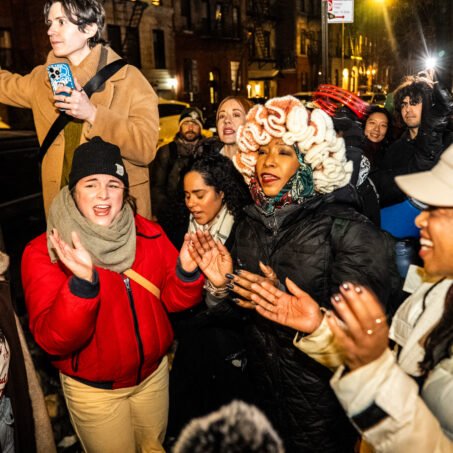
The theme that ran through the conversations was: we are all the sindicat. The sindicat cannot swoop in and save you from your situation – what it can offer is the space to meet others in your situation and decide together what to do. This took a lot of repetition before it sunk in for me, and I think the same was true for many other attendees searching for a quicker, easier solution. But in listening to each of these actions being discussed, I was struck by the simple assertion that we all have the power – even as a foreigner, even with a language barrier – to show up for our neighbours.
Fighting every battle
This struggle has already borne impressive fruit – a law put forward by the Sindicat de Llogateres closing the loopholes around temporary rentals and room rentals was passed by the Catalan parliament in December 2025. In addition to several other regulations, it states that the neighbourhood price caps per unit that apply to long-term rentals must also be applied to temporary ones, as well as to the sum of the rents charged per room. This is a huge win for tenants across Catalunya and has already gone into visible effect – when I had to venture back into the rental market after the end of my short-term student lease, many listings showed that prices had been reduced and explicitly referenced the price cap by area in the listing to demonstrate compliance. By cutting out the profit advantage for short-term rentals, this law should also put the Sant Agusti residents in a better position to negotiate with their landlord, as resident Txema Escorsa explained.
But the work continues; not only to actually secure new contracts for the Sant Agusti residents, but also to keep limited eviction moratoriums for vulnerable households in place; to protect subsidized housing via an active rent strike; and to build the struggle for decent housing across the region and the country. Across these scales, the legal and legislative fronts are backed up by organising at the level of the building and the neighbourhood.
Not every battle is won – I’ve watched police in my neighbourhood physically remove organised protesters in order to evict an elderly man – but every battle asks more and more neighbours to take a stand. Each struggle takes something that could have happened quietly and invisibly, with a sense of inevitability, and makes it a matter of public debate and political choice. Even though the legal landscape differs across the globe, this is the principle that translates.
I continue to grapple with the contradictions of living in Barcelona when it’s under such housing stress – I know that I encountered this block’s resistance because I’m part of the demographic that the owner was trying to attract. I would advise anyone considering a move to Barcelona, or any city under similar conditions, to try and rent from locals with an extra room, rather than businesses who have purchased entire blocks.
If you’ve just moved here, seek out the struggles that are happening – don’t let ignorance or embarrassment lead to treating the city as just a backdrop for Zoom calls. And most importantly, bring the energy to fight back home. Barcelona’s pressures are not unique and neither is the strategy of building a tenants union. Talk to your neighbours. Imagine what you could do together.

Join our mailing list
Sign up for shado's picks of the week! Dropping in your inbox every Friday, we share news from inside shado + out, plus job listings, event recommendations and actions ✊
Sign up for shado's picks of the week! Dropping in your inbox every Friday, we share news from inside shado + out, plus job listings, event recommendations and actions ✊
What can you do?
- If you’re in Barcelona, join the demonstration on 28 Feb: “Prou excuses: els pisos, per viure-hi!”
- Wherever you live, look for a local tenants union, even if only to learn more about how they work. Some incomplete directories:
- In Catalunya: COSHAC
- In North America: ATUN tenant unions
- Globally: Members – IUT
- Read about the story of Moms 4 Housing in Oakland, California for direct action in a US context.
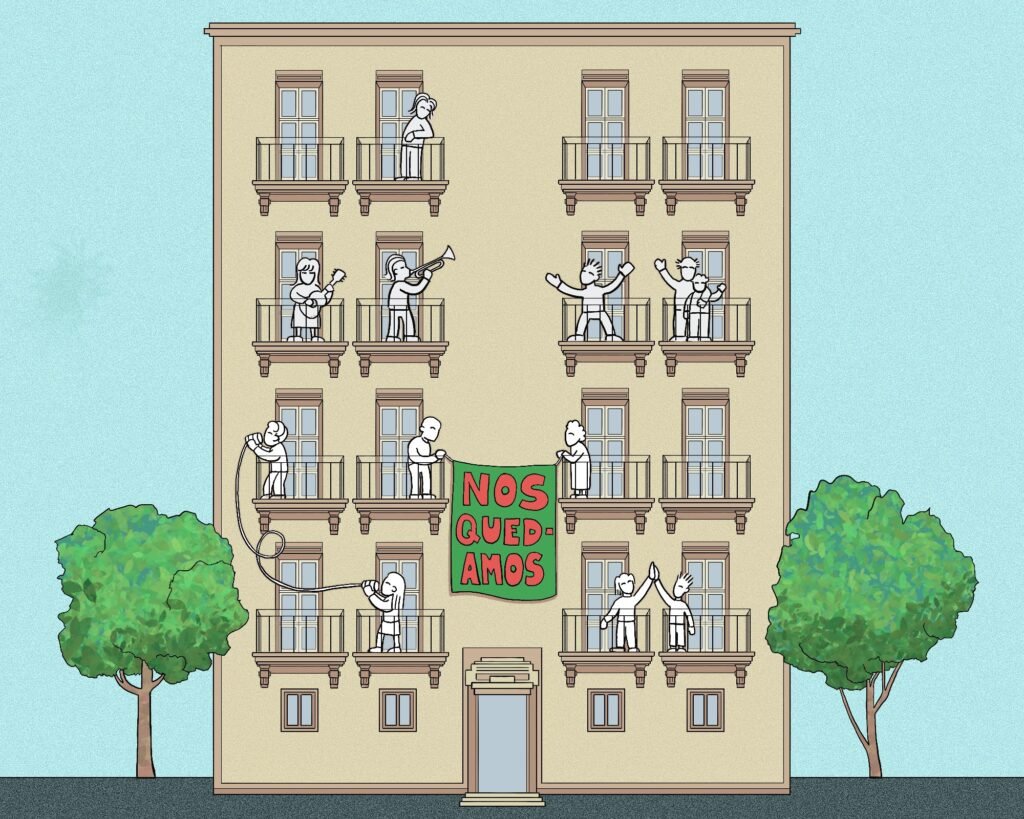 Illustration by Walker Gawande who says: “I wanted to emphasise how tenants’ unions not only provide information and support for tenants, but also can bring renters together as a community. At the centre of the illustration, I added Sindicat’s strategy of “Nos Quedamos” or “We Stay Put”: To remain in one’s home when landlords try to illegally oust their tenants.”