Before my conversation with Akinola Davies Jr., I called my mum to ask about her memories of the 1993 Nigerian elections. This was partly out of curiosity, partly because I wanted a sense of what she had lived through, and, as always, her answer came in the form of a lecture, somewhere between scolding and storytelling.
“We couldn’t leave the compound for weeks because of all the armed forces and the riots. We just stayed at home,” she recounted over the phone, and I could hear the weight of decades in her voice. “Nigerian politics has always been mad and bad, even today, everyone is in it for themselves.”
Her words reminded me that the Nigeria I carry in my head, the one I return to in dreams or scraps of memory, has never been simple. It’s always been an amalgamation of what I’ve been told and what I barely remember. And the stories we tell about our country are always filtered through survival and through the necessity of moving forward.
Children of elsewhere
So much of my understanding of Nigeria has always come through how much the adults in my life desperately wanted to leave it. My brother and I are still ridiculed for not being fluent in one of the many languages, for our boorish accents, for our westernised ideals, as if it were somehow our fault for being brought here.
It’s a contradiction that feels inherent to the diaspora, that constant push and pull between longing for home and the reality of living elsewhere. I asked her about Nigerian media, and she mentioned some of the Nigerian films she had seen on Netflix, shaking her head, “It’s all make-believe. Not the Nigeria I grew up in.” I couldn’t help but laugh a little at this, because it is so her; such love for a nation wrapped up in criticism, a reminder that the Nigeria I barely remember visiting when I was 12 is never quite the Nigeria imagined on a screen, and perhaps never can be.
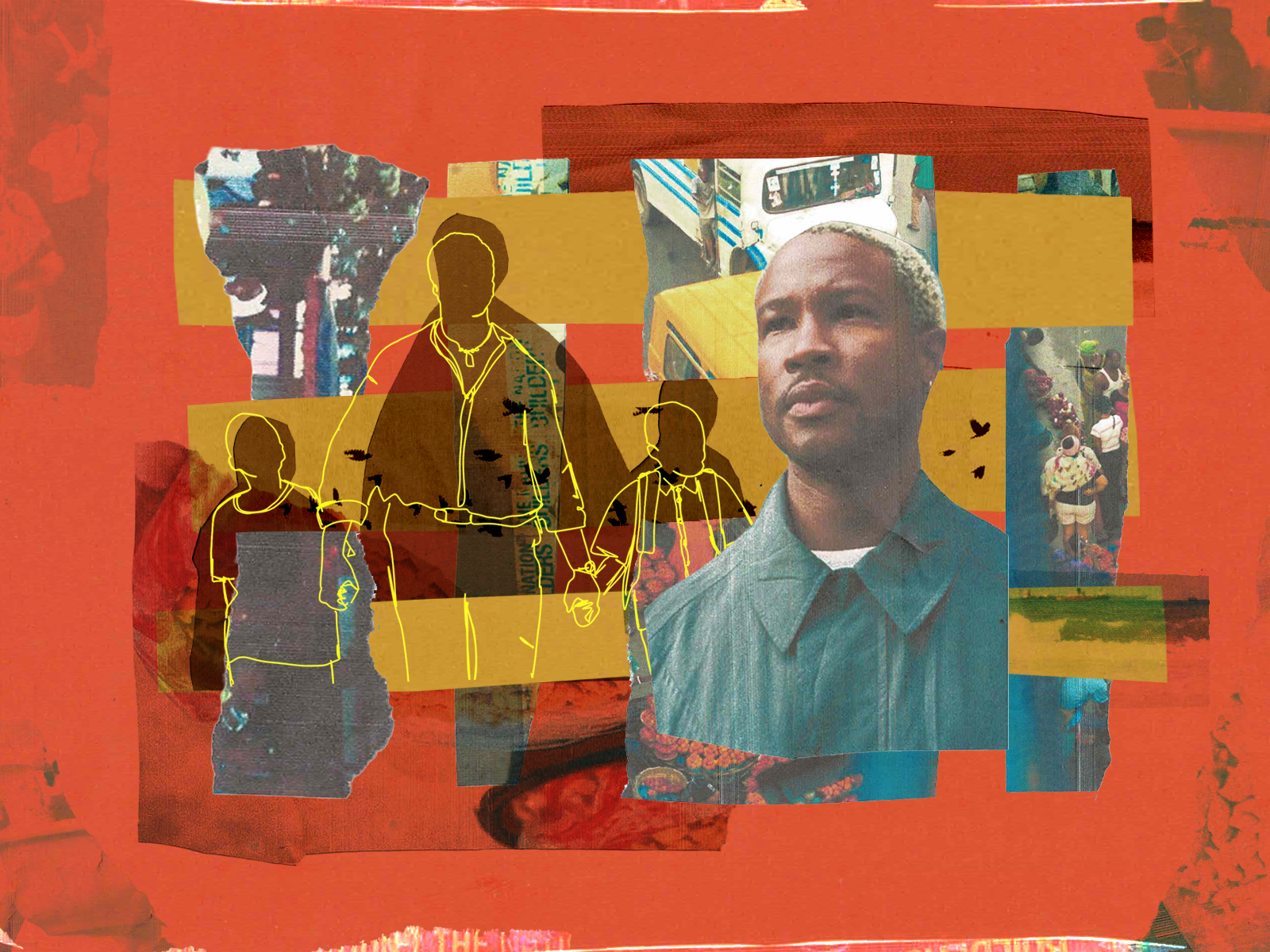
My Father’s Shadow premiered at Cannes Film Festival last year, marking the feature-length debut of director Akinola Davies Jr., who co-wrote the screenplay with his brother Wale Davies. Starring Ṣọpẹ́ Dìrísù, the film follows a family reunion set against the chaos of the 1993 Nigerian elections.
Though the story unfolds over a single day, real events that stretched across weeks were condensed, and on a Monday morning a few weeks ago I got to chat to Akinola about the film that is blazing a trail for Nigerian cinema.
The stories beyond the film
I congratulate Akinola on his BAFTA win and he is humble, brushing it off over Zoom. “It’s not about the award,” he says. Our call had begun with him on the way back from the gym and now he sits in what I assume is his living room. He is warm and kind and institutional recognition means little to him.
Not all films are created equal, he explains, and that there is simply value in the work existing as a reference point for future filmmakers. Later, he told me he has a very competitive spirit so while he wasn’t expecting it he was very happy with the outcome, which I laughed at, as it is very Nigerian of him.
I ask Akinola how he navigates the tension between realism and imagination in his work, and he speaks carefully, almost as if sifting memory through his hands to find its shape. “Memory is subjective, especially during trauma,” he says. “The film blends lived experience with imagination, particularly our childhoods and our relationship with our father, while remaining anchored in research and historical fact.”
Without spoiling anything, the almost-autobiographical film follows two brothers, Akin (Godwin Egbo) and Remi (Chibuike Marvellous Egbo), and their father, Fola (Ṣọpẹ́ Dìrísù), out and about in Lagos on a kind of quest, moving through streets and buildings that are at once chaotic, vivid, and unmistakably alive.
Akinola tells me he’s very open about his life, and that he has made numerous films about his mother and the past she never had. “I’ve explored different aspects of our story,” he says. “Divinity, spirituality, the experience of being alive, being in this body. You only really get one experience, and for me, that’s what I try to capture in my work.” I relate to this, and recognise something of my own impulse in that, the urge to cycle through my memories in order to find a story worth telling.
Between memory and fiction
There are moments in the film that felt like home in a way I wasn’t expecting. In my Letterboxd review, I wrote that despite not having returned to the motherland in over two decades, I could still smell this film – the searing heat, the dust of Lagos streets, the fried akara at a roadside stall, the busyness of it all.
There is a beautiful scene in which we get to see a murmuration of birds in the sky, and at a Q&A Akinola spoke about desperately wanting to capture these real and precise natural moments. That’s the Nigeria he wanted to show.
Watching his rendition of Nigeria, I felt the strangeness of the familiarity: how memory of a place can linger in you even when you are so far away, and how it can travel with you, sink into your bones and your imagination, and how a film, at its best, can make that transposition tangible for anyone watching.
I thought about the ways memory works in Nigerian households, how we tell and retell stories, adding and taking away details, how we shout and scream and gossip, how history sits in fragments, in family anecdotes and family albums, how recipes never get written down but still get passed on in the spaces between one generation and the next, and how all of that shapes the way we see ourselves and our country.
For Akinola, making the film was a way to connect, holding grief, joy, and memory all at once. “The idea of creating connection points based on our grief or our experiences is what brings humans closer together,” he says.
Mythology, faith and destiny
Names are important to Nigerians. Akinola reveals to me that his name means brave and wealthy. We Nigerians know what it means to try to live up to the legacy of our names; my own, for example, means “give thanks to God.”
I broach a subject that is often difficult for the diaspora: how ingrained Christianity is in our culture and how it can and has been used to further oppress us. I wondered how Akinola sits with this conflict.
He tells me our lofty names are not necessarily intrinsic to the Christian faith; that we have always been a spiritual nation, long before the British came, and in fact our faith systems actually predate Abrahamic religions. Our names are about destiny, he says, and I agree.
Join our mailing list
Sign up for shado's picks of the week! Dropping in your inbox every Friday, we share news from inside shado + out, plus job listings, event recommendations and actions ✊
Sign up for shado's picks of the week! Dropping in your inbox every Friday, we share news from inside shado + out, plus job listings, event recommendations and actions ✊
Later, he said something I repeated to my mum over the phone: “Our names are a way for our parents to chart out a course for their children.” My mum paused, silent for a moment, and then said, “Yes, he’s exactly right.” She tells me that when her grandparents chose her name, they chose one that meant “God has given us wealth,” and she laughs when she says it, because it was only after she was born that the family actually came into some money.
Identity has always been a theme I return to in my writing, and it was no surprise when Akinola says: “You don’t have to look far away from the self when you’re Nigerian. It’s right there in our names.”
Nollywood Boulevard
At the screening I went to, someone had asked how it felt to make a movie that moves beyond Nollywood, and Akinola had disagreed, saying the film sits firmly in the Nollywood canon, it just might be the arthouse or A24 strand.
I remembered a friend hosting a Bollywood party when we were younger; she dressed us in beautiful saris and her mother, my aunty to this day, made some of the best Indian food I have ever had, and we had all sat resplendent in our shiny clothes eating freshly made samosas and watching some of the best Bollywood had to offer.
I remember thinking wistfully about hosting my own, but adolescent shame stopped me from ever really doing it – I didn’t have an appreciation for Nollywood then, only the smug teenage point of view that looked down at the shoestring budgets with disdain.
I ask Akinola what he would screen if he were to host a Nollywood party, and he smiled, listing a few films off the top of his head: Living in Bondage, Beyonce and Rihanna, Lionheart, King of Boys, Mami Wata, and, of course, My Father’s Shadow.
There is something inherently communal about Nollywood, he tells me. The way it shaped a generation, the way films were passed between cousins, stacked in houses, laughed over, memorised, and returned to. Watching his film, I understood that it is part of that continuum, serving as mooring for other diaspora writers and makers, but also as an attempt to tell our stories in a way that honours both memory and imagination, the personal and the political, and the messy, beautiful spaces where they collide.
Nigeria to the world, always
Akinola has been vocal about how the film goes beyond Nigeria. He told me he was astonished at just how many diaspora audiences beyond Africa around the world connected with it.
It doesn’t surprise me though; cultural goop can always be distilled in the ways we love and the ways we grieve, which, when you think about it, is still love. I thanked him for his BAFTA speech, because it was so important, and I really loved how, in that moment, he made the point that it’s not just about Nigeria, it’s about a Free Sudan, and it’s about a Free Palestine. “Because whether you’re Nigerian, Sudanese, South African, or from Zimbabwe, Zambia, Senegal, Mali, whatever,” he said, “our experiences are all completely interconnected through this prism of colonisation and now imperialism.”
That linking of struggles, that recognition that this isn’t just a story of one people but of all people away from their homes all over the world, felt urgent and necessary. As Toni Morrison wrote: “Perhaps that’s what all human relationships boil down to: Would you save my life? Or would you take it?”
My last question was simple: what is your favourite film to watch? His answer delighted me. The Sound of Music (1965). He explained, “What’s more Nigerian than a musical film about faith, nationhood, and a house girl falling in love with the widowed father?”
What can you do?
-
- Watch Akinola Davies Jr.’s Rituals: UnionBlack (2025), documenting the Black British experience.
- You can also watch Spirit (2026), Akinola’s latest short film made in collaboration with CKTRL.
- Read more pieces by Fopé HERE
- Catch My Father’s Shadow in cinemas or online from April 10th at MUBI.com
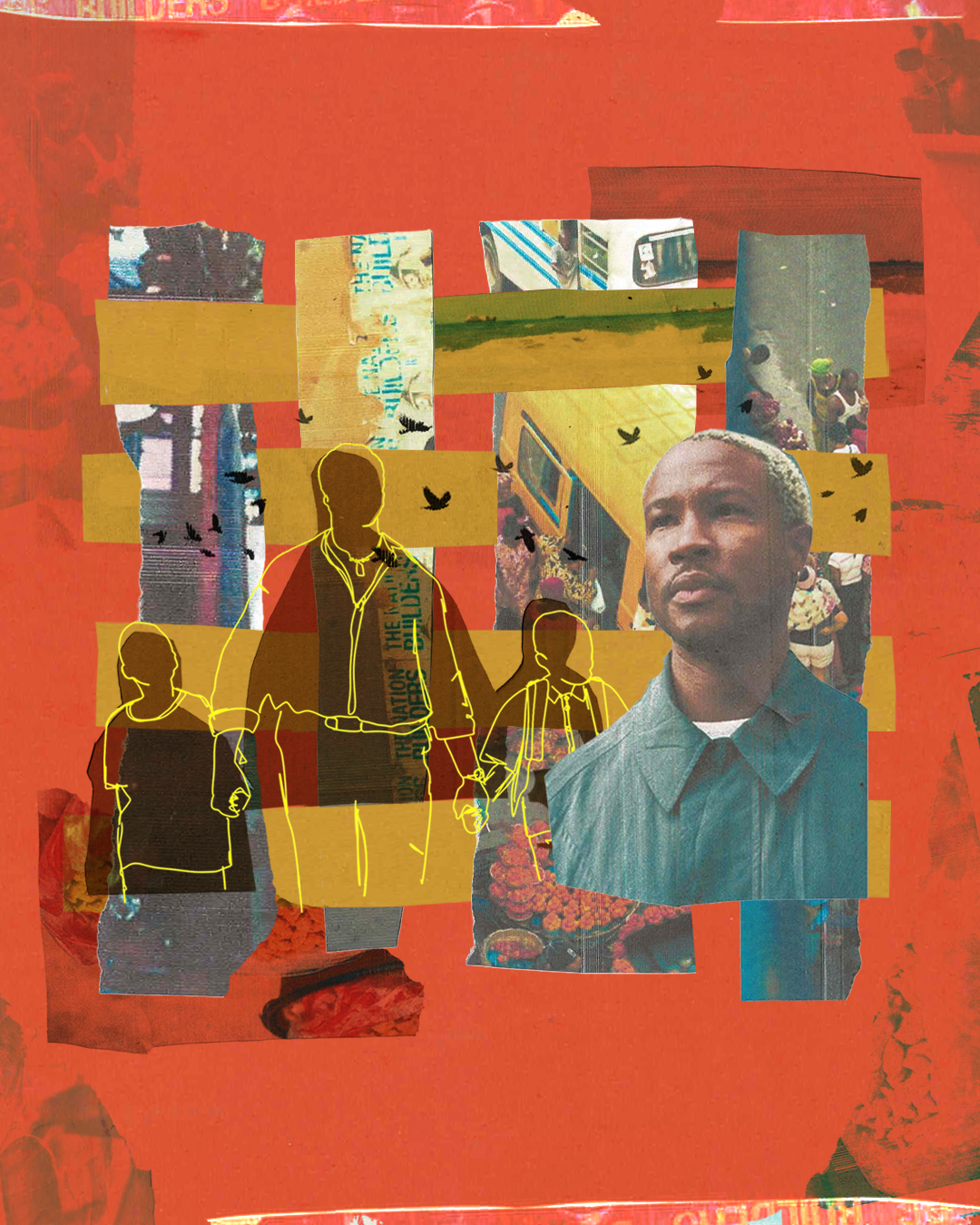 Illustration by @nn.aa.ii Photography credit: @zeeeeeea