
What is the Venn diagram overlap between hardened movement organisers and readers of sultry, bodice-ripping fiction? Not a question that has ever previously crossed my mind, but now, dear reader, I have the answer – it’s at least one person, set on recruiting more.
Well-known as a leader in the movement for climate and democracy, Keya Chatterjee became the Executive Director of the US Climate Action Network after a stint at NASA, USAID and WWF monitoring our changing climate. After a decade of her stewardship, the climate movement has bubbled into a force for change in the United States, winning historic breakthroughs in the 2022 Inflation Reduction Act, and repairing America’s commitment to the Paris Climate Agreement after the first tumultuous Trump presidency.
Now, nine months into the second Trump presidency, Keya is co-founder and Executive Director for Free DC, a movement for real political representation for Washington, DC now fighting for lasting democracy and dignity under a National Guard occupation. Yet, on 5th November, the day after the 2024 election, Trump 2.0 wasn’t the only thing on her mind. She had just gotten a call back from the Green Writer’s Press offering to publish her first novel – The Revolution Will Not Be Rated G.
“When I wrote it I was reading Ministry of the Future and Fifty Shades of Grey at the same time,” Keya says. “I thought to myself, so many people have read Fifty Shades of Grey – what if I could write a spicy romance novel about overthrowing fascism?”
Now tell me that isn’t a compelling pitch. I’m not in the Venn diagram overlap myself, but when I first heard a summary of The Revolution Will Not Be Rated G a few weeks ago, I knew I had to get my hands on it.
The Revolution Will Not Be Rated G
A few weeks ago, I sat down with Keya at a Brooklyn coffee shop straight out of a meet-cute to talk about how her career in organising and her love for romance make unlikely bedfellows in her newest work.
The Revolution Will Not Be Rated G is a climate-fantasy romp set in an authoritarian future America divided into the haves and have-nots, and revolving around the revolutionary Aria and unexpected defector Neil. Over the course of the book, political and sexual tensions reach a boiling point, and the plot features both a successful general strike to topple the regime and ideological reconciliation for our main characters, facilitated by copious copulation.
In movement terms, this is a successful culmination of a decades-long fight for justice and unity, where key stakeholders Aria and Neil successfully leverage relational organising to put in practice a theory of change that successfully shatters the oppressive status quo. In romance-reader terms, it’s a spicy, opposites-attract, enemies-to-lovers/second-chance romance, forced proximity, fake-dating scenario of a better world.
I read all 300 pages in a sprint from the evening to past midnight, like how I would lie in bed as a kid under the covers racing through a book until my eyes physically couldn’t stay open. There were parts that stretched my disbelief, parts that made me physically put the book down and have to take a lap around the room, parts where I thought, hmm, that person seems a lot like (insert real-life person-here) – all to say it was an immensely entertaining read, set against a vivid backdrop a few steps from reality.
Romance in the sheets, real movement tactics in the streets
At the same time as she was writing as a hobby, Keya was noticing disturbing patterns that pointed towards a slippery slope for American democracy. Situated in the climate movement, she drew from reality to sketch out a vision of what that world would look like for Aria and Neil in 2042, and what conditions her fictional movement, Expectus, would be facing. She never expected to be promoting this book in the midst of a period of authoritarian consolidation eerily similar to the setting of The Revolution Will Not Be Rated G.
“There were parts of this book that I felt I had to overexplain, because my editor would tell me, That doesn’t feel realistic, I’m not sure that’s believable to the reader,” she laughs wryly.
“Even then, in November, nobody expected that there would be a military presence in the streets of DC, or a silencing of free speech like what happened with Jimmy Kimmel, or that our Congress would capitulate so fast. I even wrote about devastating wildfires in LA, and then a few months later they happened and I felt a little guilty, like, did I make that happen?”
It just goes to show how much of MAGA has been fomenting for years – not in the least because they follow an explicitly authoritarian playbook, and that very playbook was laid out in Project 2025 as early as April 2023. For people on the left, who have been frontline to the fight the first time around in 2016, the omens have been written on the wall.
Yet, I don’t think anybody expected the crush of changes to happen so quickly. It’s been less than nine months. Today, almost half of all of Project 2025’s goals have been completed – from eliminating USAID, to increasing ICE funding for 100,000 detention beds.
However, Keya is quick to point out that the world of Aria, Neil, and Expectus is a reflection of our current, strained civil society, but not a precise mirror image. Rather, the parts that feel very grounded in reality draw from her years of organising within a mass movement for social change. While people are facing an authoritarian consolidation, Keya wants people to see realistic solutions on and off the page.
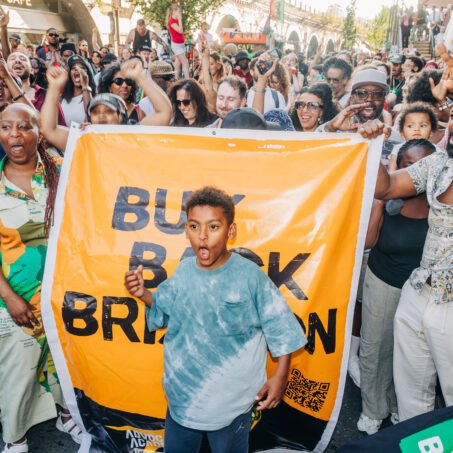
Just as she goes into detail of where hands wander and heated gazes linger, she also goes into the weeds of quotidian movement tactics – mutual aid, banner painting and dropping, strike organising, historic methods of social ostracism, and cross-country activist training, to name a few. A memorable scene in the first half of the book can, in a way, be a how-to for chaining yourself up… as part of a human barricade.
“I wanted this book to be familiar with organisers, but I also hope it makes it out to a wider audience of people who enjoy the romance aspect and can take away more about the movement from it,” she says. “Like, here, have some vegetables with your dessert.”
The stamp of approval from organisers is the gold standard – not every smutty book can boast a blurb from THE Bill McKibben (“Saving the world is going to take many tools, from solar panels to . . . sweaty, taut torsos.” Ooh la la.)
When I first read the blurb, I struggled to imagine Bill McKibben on his couch flipping through pages of brewing romantic and sexual tension. There’s something about movement work that seems deeply serious, mostly because it is, frankly, deathly serious for many people. But there isn’t a moratorium on playfulness when you are neck-deep in fighting for a better future – see the frogs that descended on Portland to resist the National Guard, or politicians like Chi Ossé calling Andrew Cuomo the “glizzy goblin former governor” in a video. Fun is contagious.
It also has the effect of bringing in people who otherwise wouldn’t find themselves persuaded to engage. There’s a reason why, famously, the war is fought in hearts and minds. By reaching out to an audience in search of a steamy read, an audience in search of fun, we effectively guerilla-garden seeds of change in unexpected environments.
Join our mailing list
Sign up for shado's picks of the week! Dropping in your inbox every Friday, we share news from inside shado + out, plus job listings, event recommendations and actions ✊
Sign up for shado's picks of the week! Dropping in your inbox every Friday, we share news from inside shado + out, plus job listings, event recommendations and actions ✊
“I believe there are infinite futures where we win.”
And Keya considers that there’s lots to the romance genre that organisers could find unexpected value in. Firstly, how compatible the genre is with organising (“every good romance novel is about tension, it just grows and grows and eventually it explodes. It’s the same for the movement”), and second, how the genre’s inherent optimism can be a gateway to imagining a better world.
“You can’t have a romance novel without a Happily Ever After or a Happily For Now,” Keya says. “It’s not a spoiler to say that the couple gets together, and similarly, of course the movement and general strike succeed.”
She continues: “It’s important to imagine our movements being successful – and movements have been successful, even as recently as in South Korea. I believe there are infinite futures where we win. There are infinite futures where we succeed, and live in the world that we are trying to build now. This is just one avenue towards it, and it’s a fun, silly, romantic avenue.”
It’s a necessary exercise for any organiser to answer the question of what they are fighting for, and important to acknowledge that even in dark times there is room for joy and humanity. Here, Keya draws from the oeuvre of Beverly Jenkins, an author who walked that line in her own romance fiction about the love lives of people of colour in the Civil War and Antebellum era.
Jenkins’ work asks the reader to do the radical work of imagining and identifying with people of color finding hope and optimism and love in situations where mainstream history and media demand they be suffering. The Revolution Will Not Be Rated G attempts to do the same for the difficult path ahead fighting for a better future.
Despite the many practical and inspirational questions The Revolution Will Not Be Rated G raises about how we can inspire revolutionary reverie and praxis in the masses, Keya insisted that readers remember her novel is not meant to be a manifesto – it’s meant to be a good time.
“You know, I just wanted to write a sex-filled book about revolution,” she said. “It’s serious, but it’s also not that serious. It’s important to prioritise joy.”
What can you do?
- Pick up your own copy of The Revolution Will Not Be Rated G
Keya has also provided a short reading list of books that were instructive in her writing and imagining process:
-
-
- Monk & Robot by Beverly Chambers
- Parable of the Sower by Octavia Butler
- Ministry of the Future by Kim Stanley Robinson
- Why Civil Resistance Works by Maria Stephan and Erica Chenoweth
- Works of Beverly Jenkins
- Read more pieces by Ning HERE
-
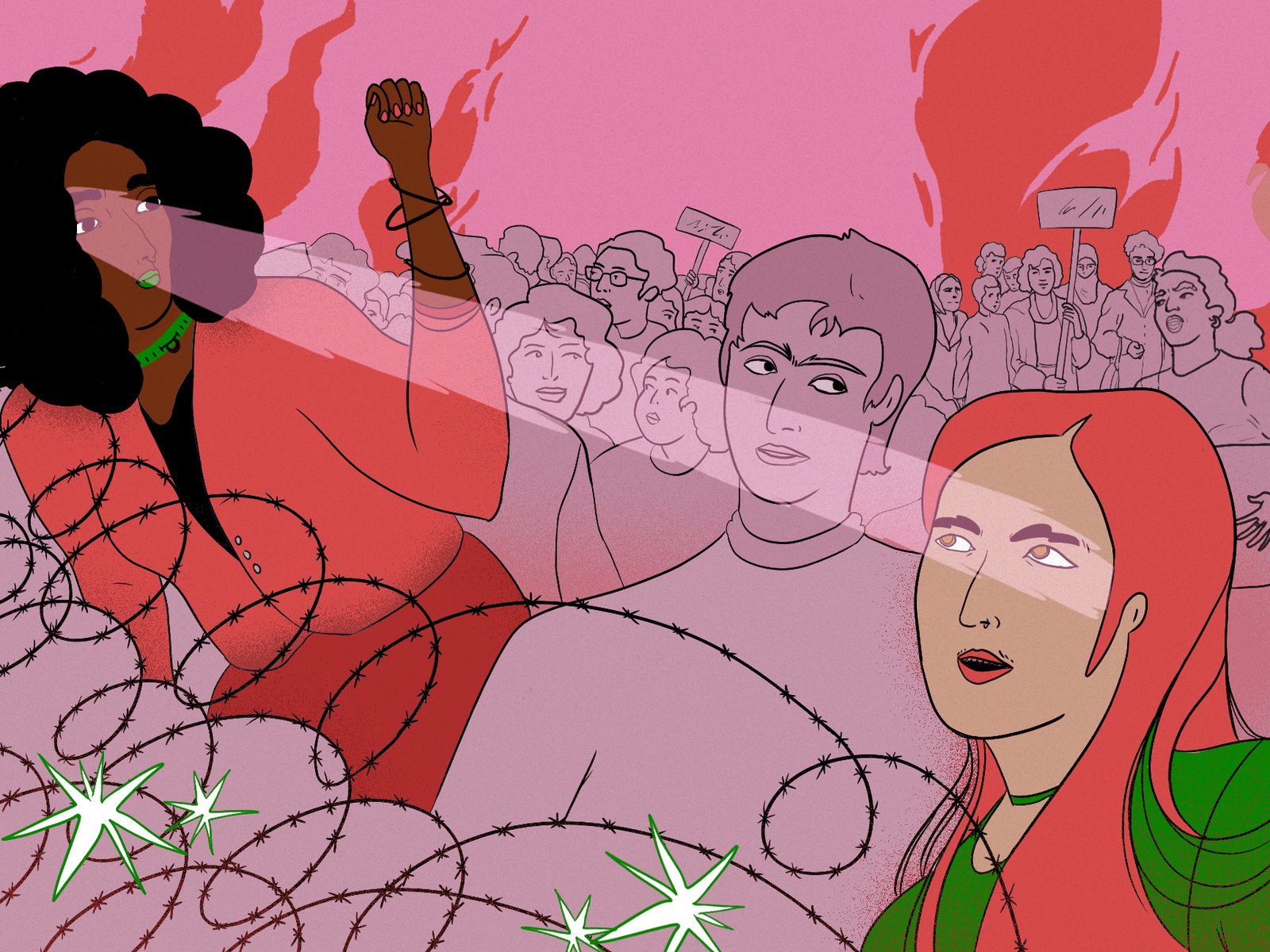
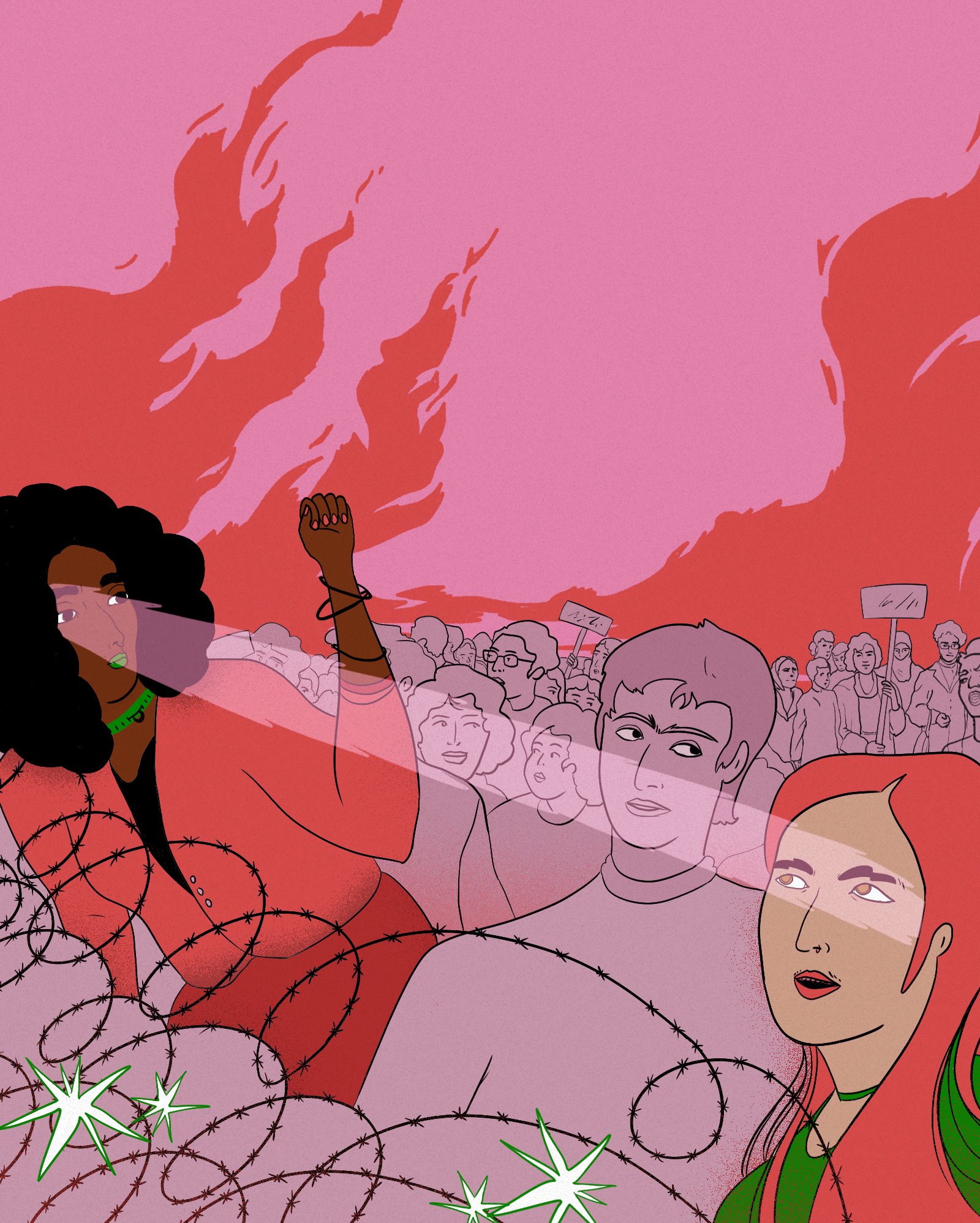 Illustration by Christina Atik @c3atik who says, “Revolutions are so electric and tense and chaotic, in the most beautiful and intense ways. I’ve seen so many high-intensity connections happen on the streets, I wanted to reflect a sliver of that intensity in this drawing.